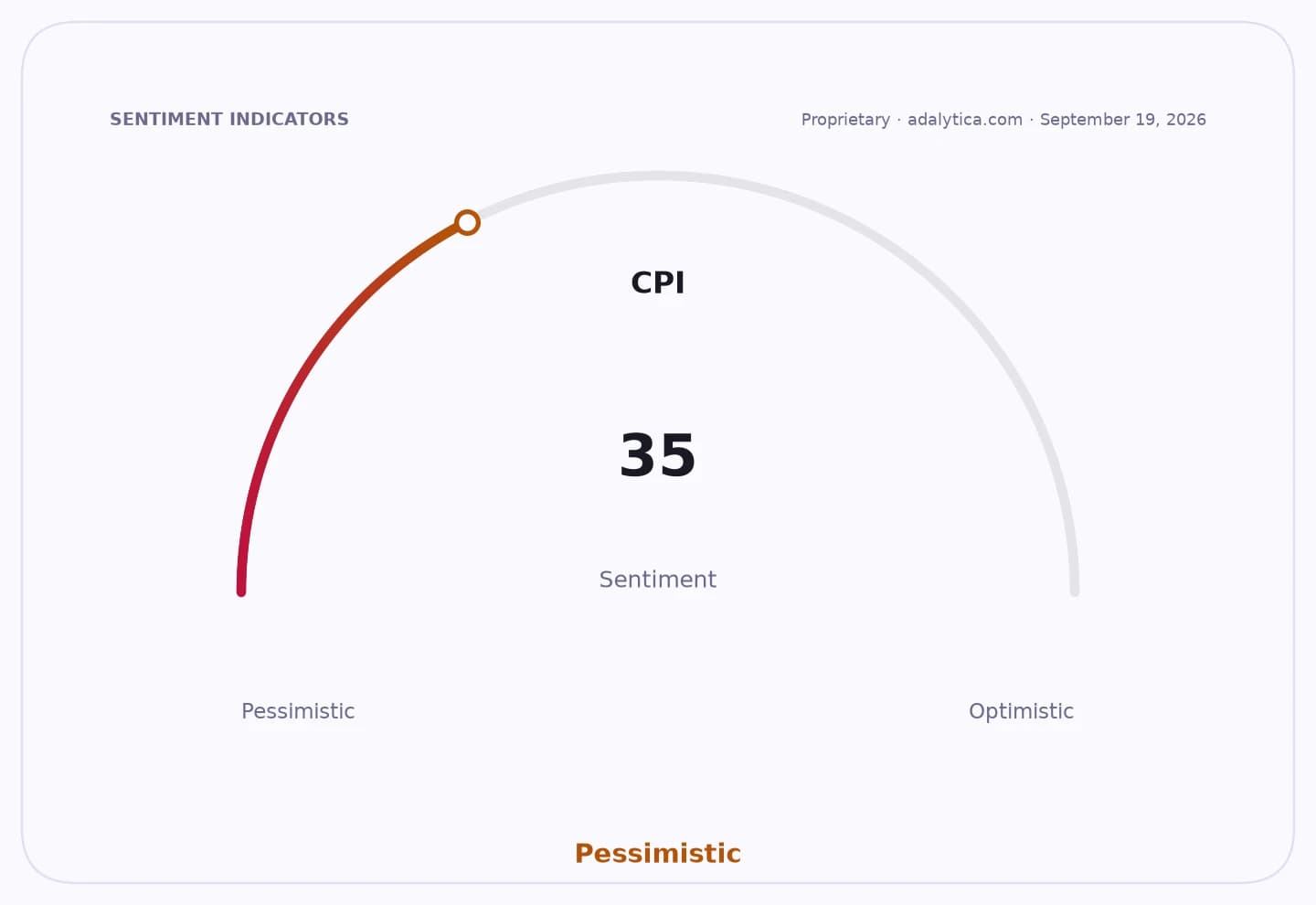
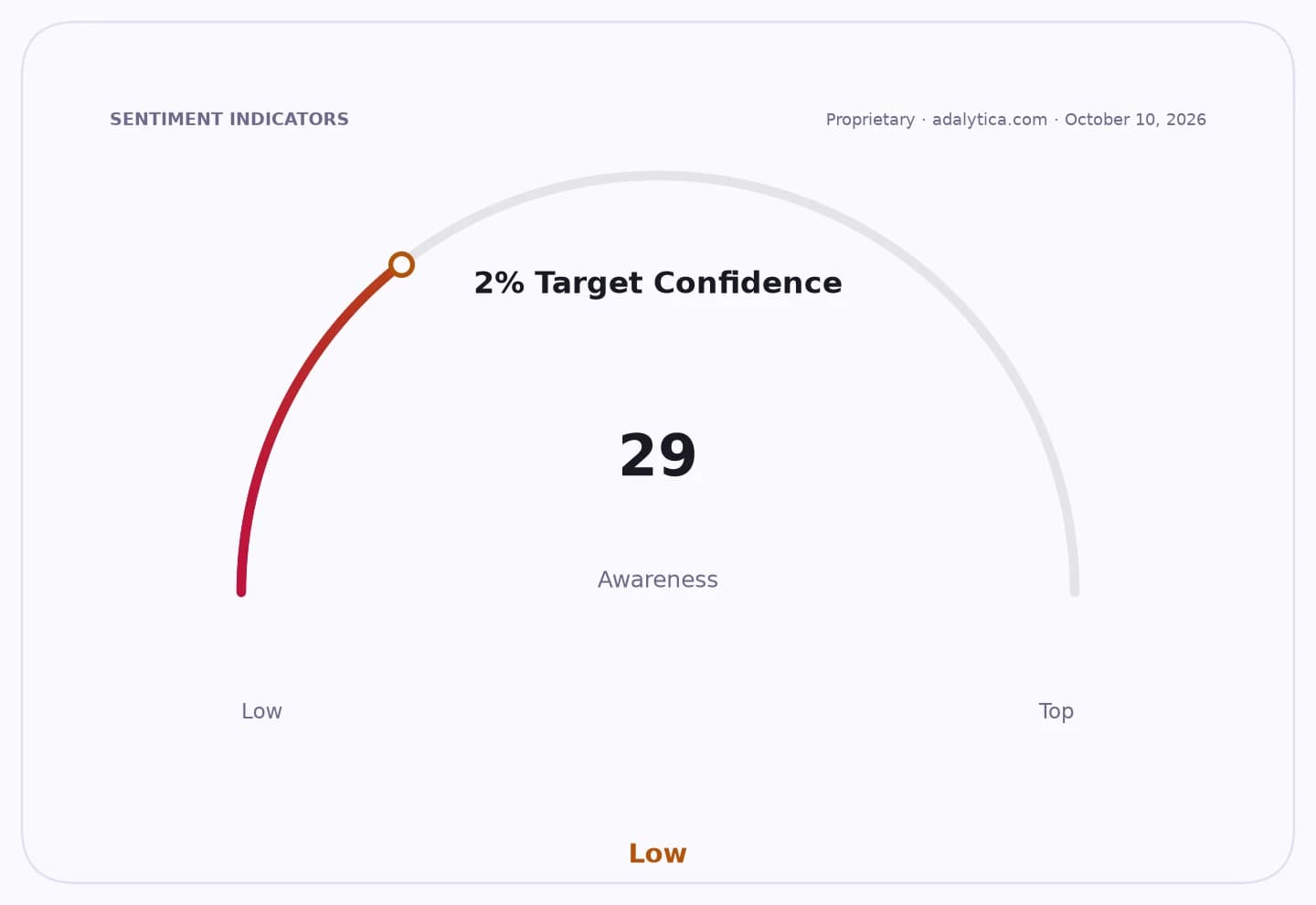
Colombia’s annual inflation rate held at 6.29% in September, underscoring how stubborn food and services costs remain and keeping the country well above the central bank’s 2%-4% target range.
Colombia inflation holds at 6.29% in September
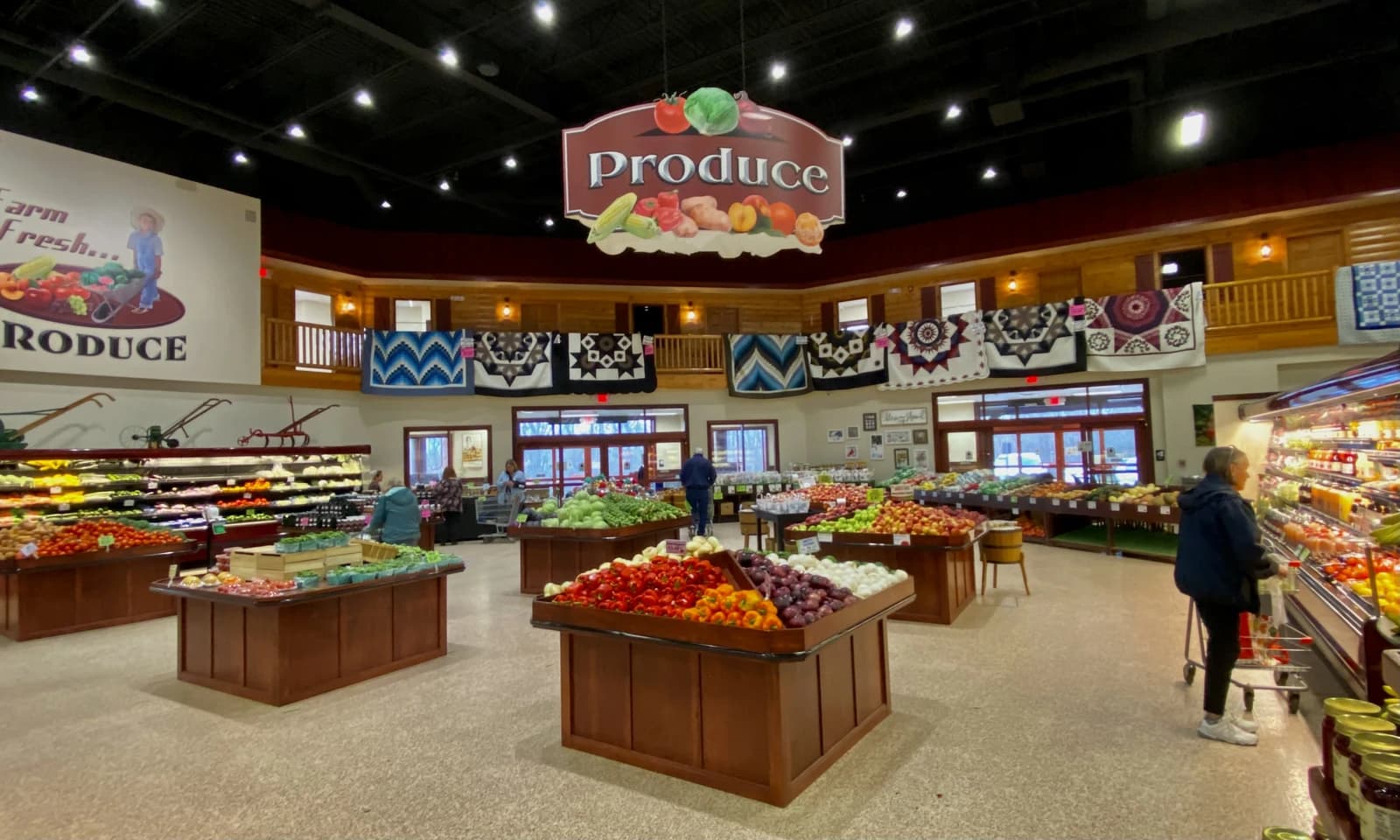
The reading, published by the statistics agency Dane, was driven mainly by restaurants and hotels, health, education, food and household goods. On a monthly basis, consumer prices rose 0.37% in September, with food and beverages, housing utilities and education accounting for most of the increase.
Sentiment IndicatorsⓘProprietary · adalytica.com · October 9, 2026
This is a snapshot — live sentiment, awareness and momentum for 130+ markets update continuously in the dashboard.Open AlphaPulse

The details show where inflation is proving hardest to shake. Restaurants and hotels rose 9.44% over the past 12 months, while health climbed 7.79% and education 7.49%. Food and non-alcoholic beverages advanced 6.74%, with fresh fruit up 16.64%, beef and related products 14.22% and urban transport 10.65%.
That mix matters because it points to broad-based price pressure rather than a narrow shock in one item. It also suggests policymakers will have limited room to ease quickly, even as headline inflation stays below recent peaks.
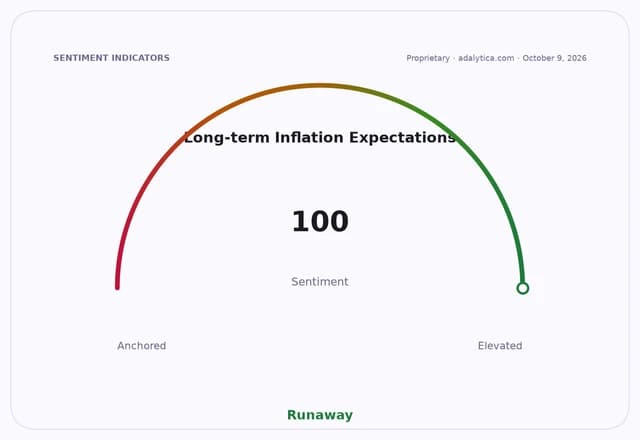
Economists surveyed by Citi had expected September inflation at 6.33%, only slightly above the official print. The median forecast for year-end inflation is 6.91%, implying Colombia is on track to miss its inflation target for a seventh straight year and remain above the tolerance band.
For investors, persistent inflation keeps pressure on local bonds and complicates the outlook for interest-rate cuts by Banco de la República. It also raises the risk that consumer demand stays uneven, with higher borrowing costs and sticky service prices weighing on spending and margins across retail, hospitality and consumer-facing sectors.
The next catalyst is the central bank’s reaction function: markets will watch for any shift in guidance if food inflation moderates, services stay sticky, or year-end expectations continue to drift higher.
| Entity | Gains | Losses |
|---|---|---|
| Banco de la República | ▲policy caution | ▼rate-cut expectations |
| Local bondholders | ▲inflation-linked protection | ▼nominal bond prices |
| Consumers | ▲none | ▼purchasing power |
| Restaurants, hotels and services firms | ▲pricing power | ▼demand sensitivity |