Mexico’s inflation accelerated for a second straight month in September, but the bigger market question is whether the pickup is enough to slow the central bank’s easing cycle or merely a bump in a still-manageable disinflation path.
Mexico inflation rises as Banxico easing slows

Consumer prices rose 3.45% from a year earlier, up from 3.26% in August, according to the national statistics agency Inegi. The reading remained inside Banco de México’s 3% target band, but it came alongside a 0.42% monthly increase, faster than August’s 0.20%, and was driven by food and other volatile components rather than a broad-based reacceleration in underlying prices.
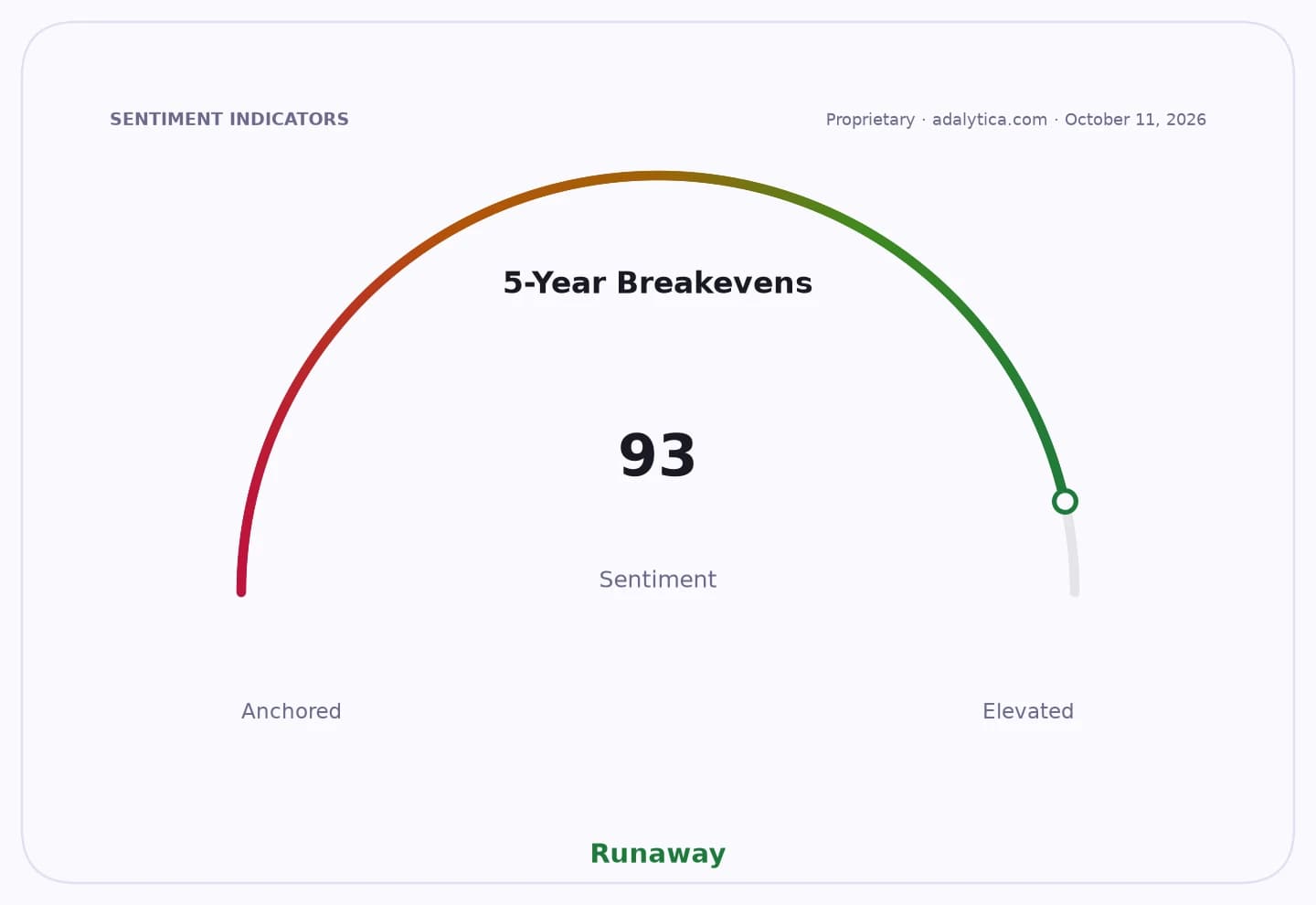
Sentiment IndicatorsⓘProprietary · adalytica.com · October 10, 2026
This is a snapshot — live sentiment, awareness and momentum for 130+ markets update continuously in the dashboard.Open AlphaPulse
That distinction matters. Banxico has been able to cut rates only because inflation has been easing toward target without signs of a wage-price spiral or a renewed services shock. September’s report still gives policymakers room to argue the trend is intact, but it also shows how fragile the progress remains. Core inflation eased to 3.75% from 3.88%, helped by slower services inflation at 4.27%, yet services stayed above 4%, a level economists watch closely because it tends to be stickier than goods prices.
The non-core component did most of the work in pushing the headline higher. Food prices remained volatile, with fruits and vegetables up 8.78% on the year, while tomatoes and onions were among the biggest monthly drivers, rising 30.25% and 23%, respectively. Those swings are economically important because they hit household purchasing power without necessarily signaling persistent inflation pressure. Still, they can complicate the policy outlook if they keep headline inflation from drifting lower in the months ahead.
For investors, the report keeps Mexico in a delicate middle ground. The inflation data do not argue for an abrupt policy shift, but they do reduce the odds of aggressive rate cuts if Banxico wants to preserve credibility around its 2%-4% target range. That has implications for the peso, local bonds and carry trades tied to Mexico’s relatively high real yields. A slower easing cycle would support peso-denominated assets, while a clear cooling in services and core inflation would revive expectations for more cuts.
The market response has to be read against broader risk appetite as well. The iShares MSCI Mexico ETF, EWW, has been volatile in recent weeks and is trading below both its 50-day and 200-day moving averages, suggesting investors are still hesitant on Mexico exposure even as inflation remains contained. That leaves room for a relief rally if upcoming prints confirm that September’s acceleration was led mainly by transient food and utility items.
The key test now is whether the next one to two inflation readings show services continuing to cool and core inflation drifting lower. If they do, Banxico can keep trimming rates without unsettling the currency. If headline inflation keeps inching higher while services stay above 4%, markets may start pricing a more cautious central bank and a longer period of relatively tight financial conditions.
| Entity | Gains | Losses |
|---|---|---|
| Banxico hawks | ▲Policy credibility | ▼Faster rate cuts |
| Peso and local bondholders | ▲Higher carry support | ▼Easier monetary stance |
| Mexican households | ▲Inflation still in target band | ▼Higher food bills |
| Importers/borrowers | ▲Stable inflation expectations | ▼Sticky borrowing costs |