Turkey’s annual inflation slipped below 30% in September for the first time in about five years, giving Vice President Cevdet Yılmaz a politically important marker of progress but leaving the central problem for the economy unresolved: price growth is still far too high for a meaningful restoration of purchasing power or a clean path to lower rates.
Turkey Inflation Falls Below 30% in September
Yılmaz said consumer prices rose 1.84% on the month and 29.73% on the year, arguing that the decline in inflation had accelerated even as external shocks weighed on the third quarter. The reading is significant because it brings inflation broadly into line with the government’s medium-term program framework and strengthens the case that Ankara’s coordinated tightening of monetary, fiscal and income policies is starting to bite.
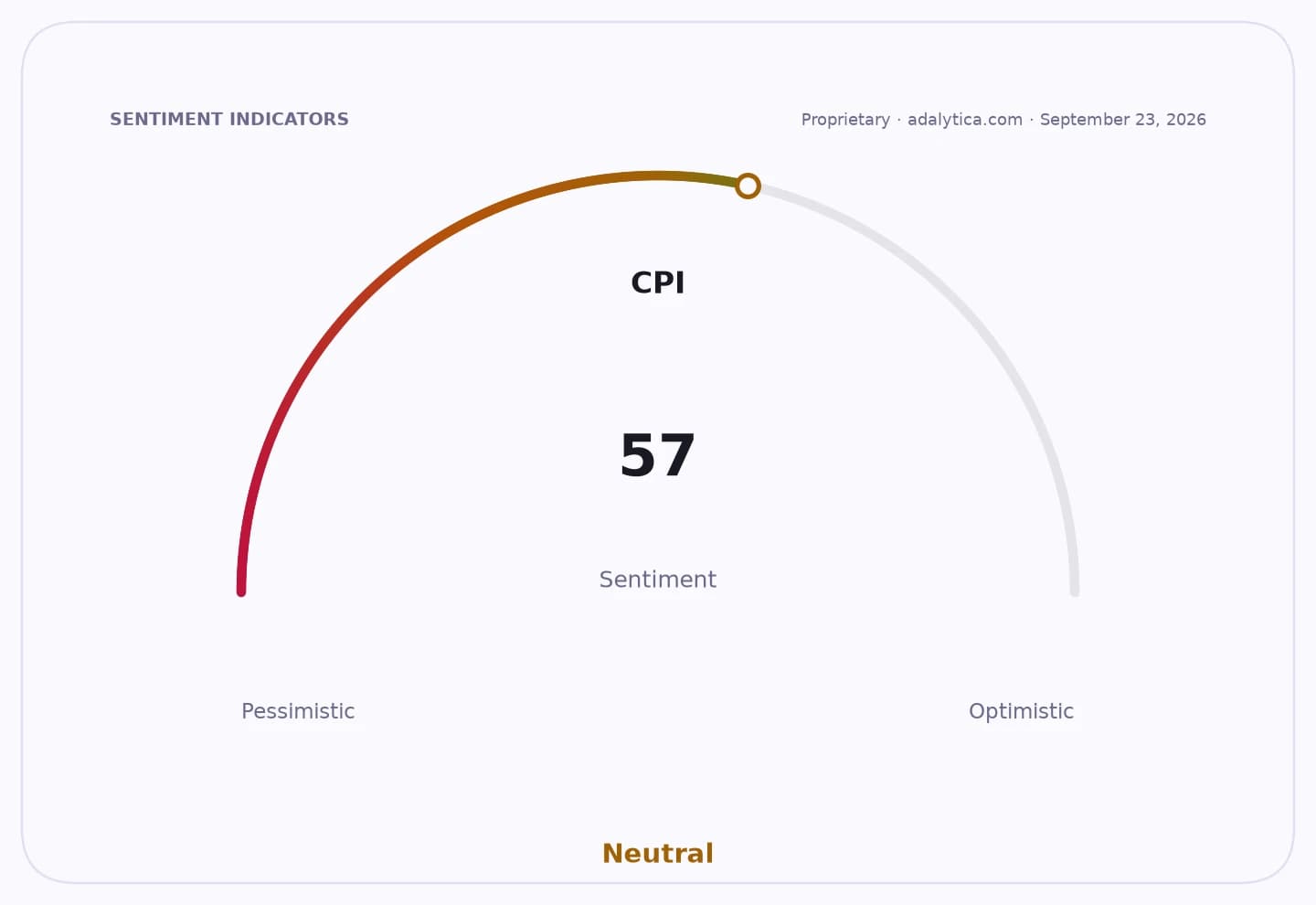
Sentiment IndicatorsⓘProprietary · adalytica.com · October 5, 2026
This is a snapshot — live sentiment, awareness and momentum for 130+ markets update continuously in the dashboard.Open AlphaPulse
For households, the improvement is modest rather than decisive. Food inflation helped push the headline rate lower, with annual food inflation easing to 27.6% from 33.8% in the prior month, helped by declines in fresh fruit and vegetables. But services inflation remained stubborn at 37.7%, and rent inflation, while improving, remains a key source of pressure on core living costs. That matters because services and housing tend to be stickier than goods and often dictate how long disinflation takes to reach consumers’ daily spending.
The policy signal is more important for markets than the monthly data alone. A sub-30% annual rate gives the government room to argue that its anti-inflation program is gaining traction, potentially supporting local assets and helping anchor expectations in a market that has spent years pricing chronic price instability. Yet the gap between official inflation and private estimates remains a credibility risk. Independent measure ENAG reported annual inflation at 46.61% for September, underlining how contested the inflation story remains and how sensitive domestic confidence is to data quality and methodology.
For the central bank, the September reading does not remove the need for restraint. The pace of disinflation is improving, but inflation is still running many multiples above the policy rate and far above levels consistent with sustainable household savings behavior or stable long-term investment planning. That leaves bond investors watching whether easing pressure on food prices and a stronger policy mix can bring core and services inflation down fast enough to justify a more durable turn in rates later.
FX and rates markets are also likely to focus on the distribution of inflation, not just the headline. The lira has remained under pressure from persistent inflation and Turkey’s wider external financing needs, and any confidence that September marks the start of a cleaner disinflation path could help stabilize the currency at the margin. But a single month’s improvement, even one that pushes annual inflation back under 30%, is not enough to alter the broader macro narrative: Turkey still needs several more months of falling prices, tighter demand and more credible policy transmission before investors can treat the disinflation story as settled.
The key test now is whether October and November confirm that the decline is broadening beyond food and temporary base effects. If services and rent begin to ease more convincingly, Yılmaz and the government will have a stronger case that the economy is moving toward a lower-inflation regime. If not, the September milestone may prove mainly symbolic — useful for messaging, but insufficient to change how investors value Turkish assets or how households experience the cost of living.
| Entity | Gains | Losses |
|---|---|---|
| Turkish government | ▲Disinflation narrative | ▼Data credibility gap |
| Households | ▲Slower food inflation | ▼Still-high living costs |
| Turkish lira | ▲Lower inflation expectations | ▼Policy uncertainty |
| Bond investors | ▲Chance of softer inflation path | ▼Sticky services inflation |