Inflation in Buenos Aires City edged higher in September, but the more important message for markets is that price pressures remain sticky in services and regulated items even as the monthly pace stays below 2% for a second straight month.
Buenos Aires City inflation rises 1.8% in September

The city’s consumer price index rose 1.8% in September, up from 1.7% in August, according to the local statistics agency IDECBA. On an annual basis, inflation eased to 32.9%, while core inflation slowed to 1.7% from 2.1% in August, suggesting underlying momentum is still moderating even as housing, education and health costs keep pushing headline prices higher.
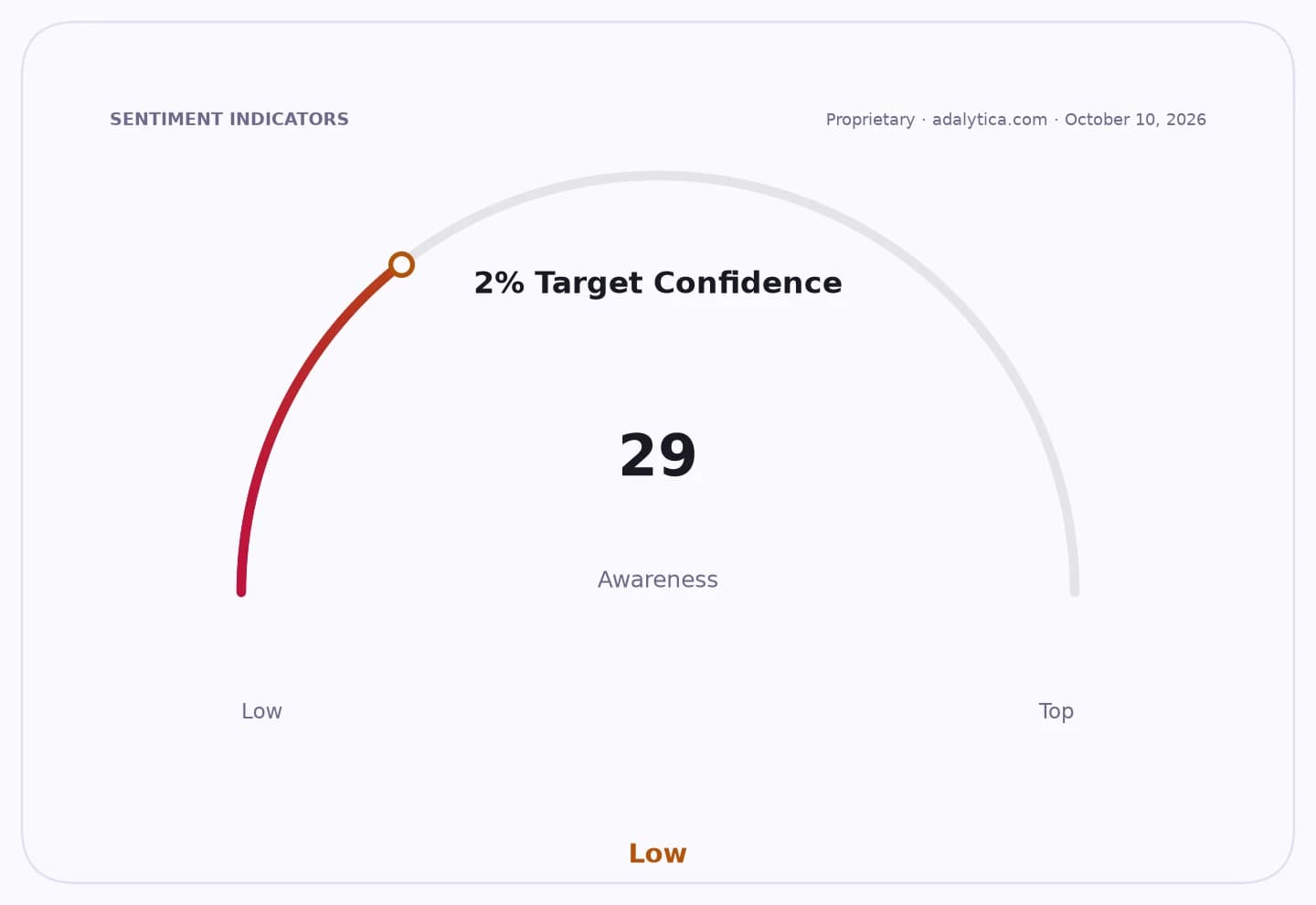
Sentiment IndicatorsⓘProprietary · adalytica.com · October 10, 2026
This is a snapshot — live sentiment, awareness and momentum for 130+ markets update continuously in the dashboard.Open AlphaPulse
That mix matters because Argentina’s disinflation story depends not just on lower monthly readings, but on whether services can cool enough to offset recurring increases in regulated prices and household essentials. In September, housing, food, health and education accounted for 64.9% of the monthly increase, with education up 2.9%, housing-related costs 2.3%, food 2.1% and health 2.2%. Within food, vegetables jumped 11.3%, underscoring how volatile fresh produce can quickly feed into household budgets.
The breakdown also shows why the decline in core inflation should be welcomed, but not overstated. Core, measured as the “Resto IPCBA,” fell to 1.7% from 2.1%, while seasonal prices rose 2.3% and regulated prices climbed 2.1%. Services increased 2.0%, outpacing goods at 1.6%, a sign that rent, maintenance fees, education and private health insurance are still doing the heavy lifting in the inflation basket.
For consumers, that means relief remains uneven. For policymakers, it suggests the inflation trend is improving, but not cleanly enough to call the job done. For investors, the reading supports the case for continued disinflation in Argentina, while also warning that price inertia in services could complicate the path toward lower nominal rates and a steadier currency backdrop.
The report is closely watched as a lead indicator for Argentina’s national inflation data due next Tuesday, and economists surveyed by local consultancies are already looking for a monthly reading in the 1.8% to 2.0% range. If the national figure comes in near that band, it would reinforce the view that inflation is decelerating, but only gradually, leaving bondholders, policymakers and consumers focused on whether core prices can keep drifting down in the months ahead.
| Entity | Gains | Losses |
|---|---|---|
| Consumers | ▲Slower core inflation | ▼Higher housing and food costs |
| Policymakers | ▲Evidence of disinflation | ▼Sticky services inflation |
| Peso and local bonds | ▲Support for lower inflation expectations | ▼Risk from persistent price pressures |
| Education, health and housing providers | ▲Higher fee pass-through | ▼Households facing budget strain |