Argentina’s latest market survey points to a slower economy, sticky inflation and a weaker peso path into year-end, underscoring why investors are still treating the country’s macro stabilization as unfinished business.
Argentina REM cuts growth outlook, lifts inflation view
The Banco Central’s September REM, based on forecasts from 44 consultancies and financial firms, cut short-term growth expectations while nudging inflation estimates higher. Analysts now see gross domestic product contracting 1.0% in the third quarter, a sharp 2.1 percentage-point downgrade from a month earlier, before rebounding 1.8% in the final quarter.
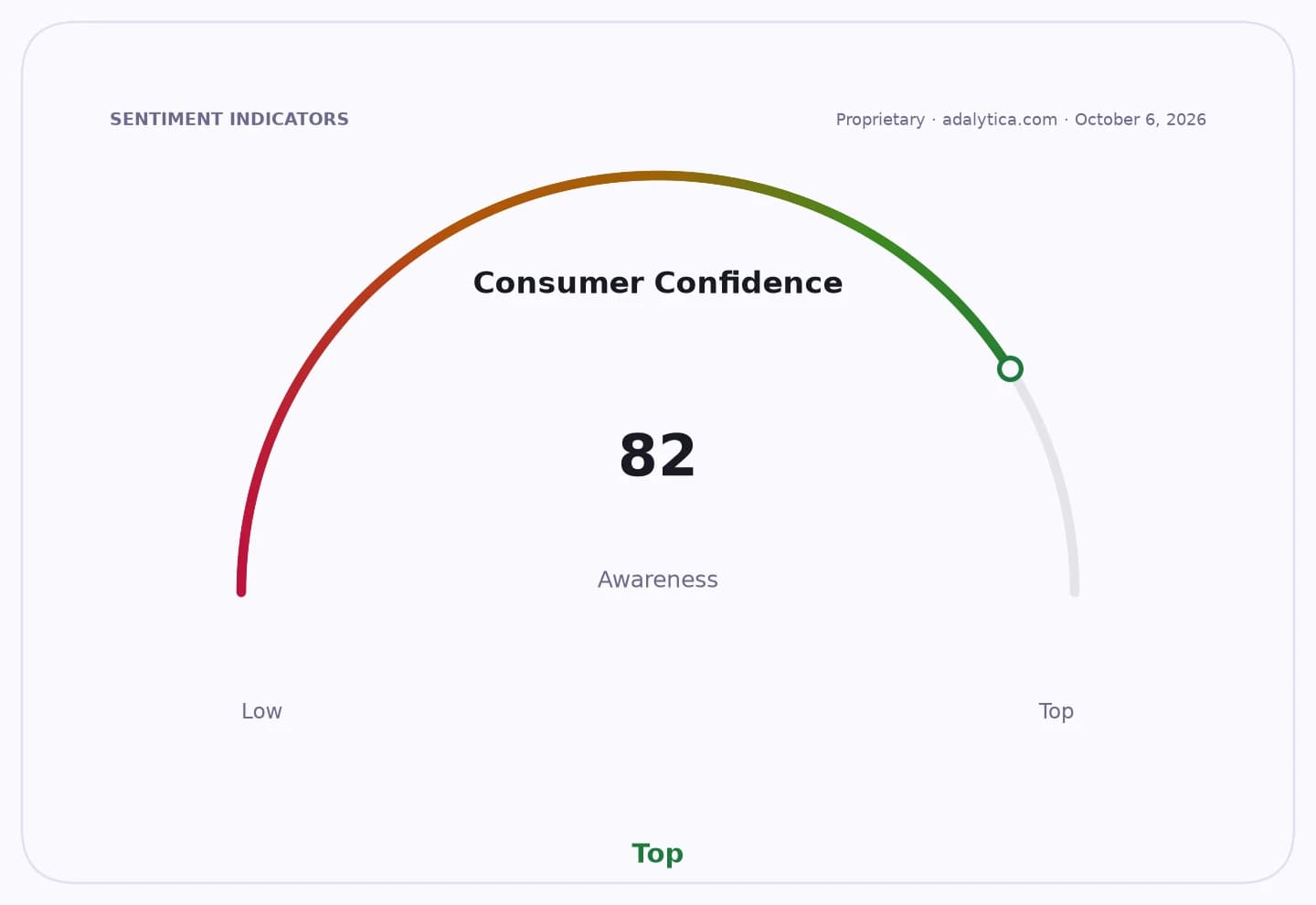
Sentiment IndicatorsⓘProprietary · adalytica.com · October 7, 2026
This is a snapshot — live sentiment, awareness and momentum for 130+ markets update continuously in the dashboard.Open AlphaPulse
Even with that late-year pickup, the survey now pegs full-year 2026 growth at just 1.5%, down 0.6 points from the previous poll. For investors, that combination of weaker activity and stubborn price pressures is a warning that Argentina’s recovery remains fragile and that policy room is still limited.
Inflation expectations remain the biggest market issue. The REM now sees consumer prices rising 1.9% in September, up 0.1 point from the prior survey and in line with the Top 10 forecasters, while core inflation is seen at 1.8%. For December 2026, the market expects year-on-year inflation of 30.0%, with core inflation ending the year at 28.0%.
The path beyond this year also stays elevated by regional standards. Analysts project inflation of 21.2% for 2027 and 15.0% for 2028, a sign the disinflation process is expected to continue but not collapse quickly enough to remove macro risk from Argentine assets.
The peso outlook is also shifting. The median forecast puts the exchange rate at 1,545 per dollar in October, 20 pesos stronger than in the previous REM, and at 1,614 by December 2026. That implies an 11.5% move over the year, suggesting the market expects only a controlled pace of depreciation rather than a sharp adjustment.
For rates, the consensus sees the TAMAR wholesale lending rate at 23.56% annualized in October and 23.50% by December 2026, indicating little near-term easing. That matters for borrowers, banks and investors alike because high real rates can help anchor prices, but they also keep a lid on credit demand and private-sector activity.
The report leaves the central bank with a familiar trade-off: slow the inflation momentum without deepening the downturn. That balance will keep the REM, the peso and policy rates in focus through the final quarter, especially if activity remains weak and inflation proves slower to retreat than officials want.
| Entity | Gains | Losses |
|---|---|---|
| BCRA / policymakers | ▲more room to defend stability | ▼pressure to balance growth and inflation |
| Peso shorts | ▲less upside if depreciation is gradual | ▼weaker case for a sharp devaluation |
| Local borrowers | ▲none from high rates | ▼higher financing costs |
| Banks / savers | ▲high-rate income environment | ▼credit demand and loan growth |