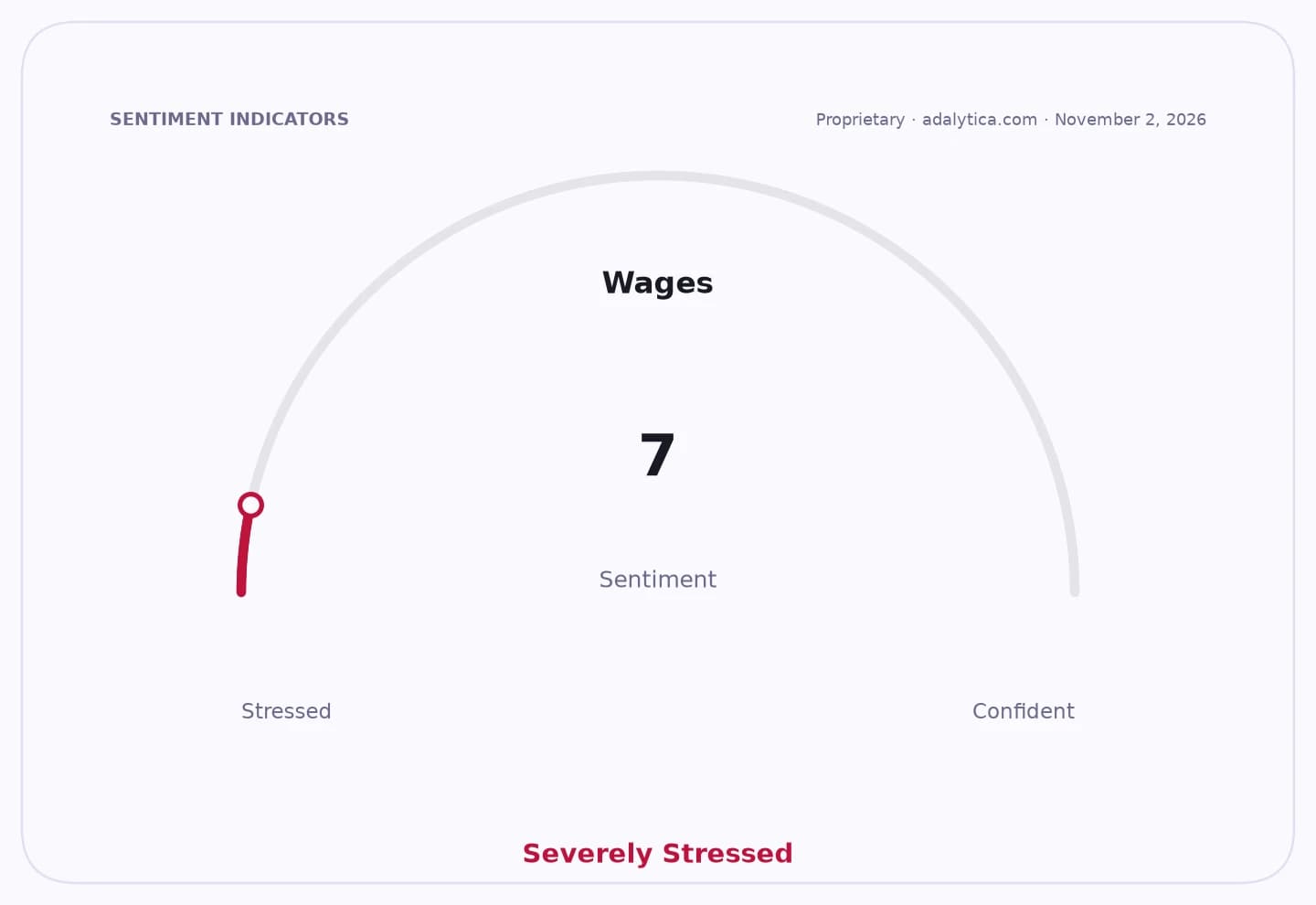
Colombia’s minimum wage negotiations are heading toward a sharp collision between labor and business, with the main union federation proposing a 38.5% increase for 2027 that would lift monthly pay by about 674,000 pesos, far above the single-digit hikes favored by employers and economists.
Colombia Minimum Wage Talks Center on 2027 Hike
Wages
That matters because the minimum wage is not just a pay floor in Colombia — it is a pricing anchor for formal employment, consumer spending and small-business hiring. A jump that large would push the basic monthly wage to roughly 2.42 million pesos, or about 2.77 million pesos once transport aid is included, according to the figures circulating in the debate. For workers, that would be a meaningful boost to purchasing power. For employers, especially smaller firms, it would sharply raise labor costs at a time when they are already wary of hiring and margins.
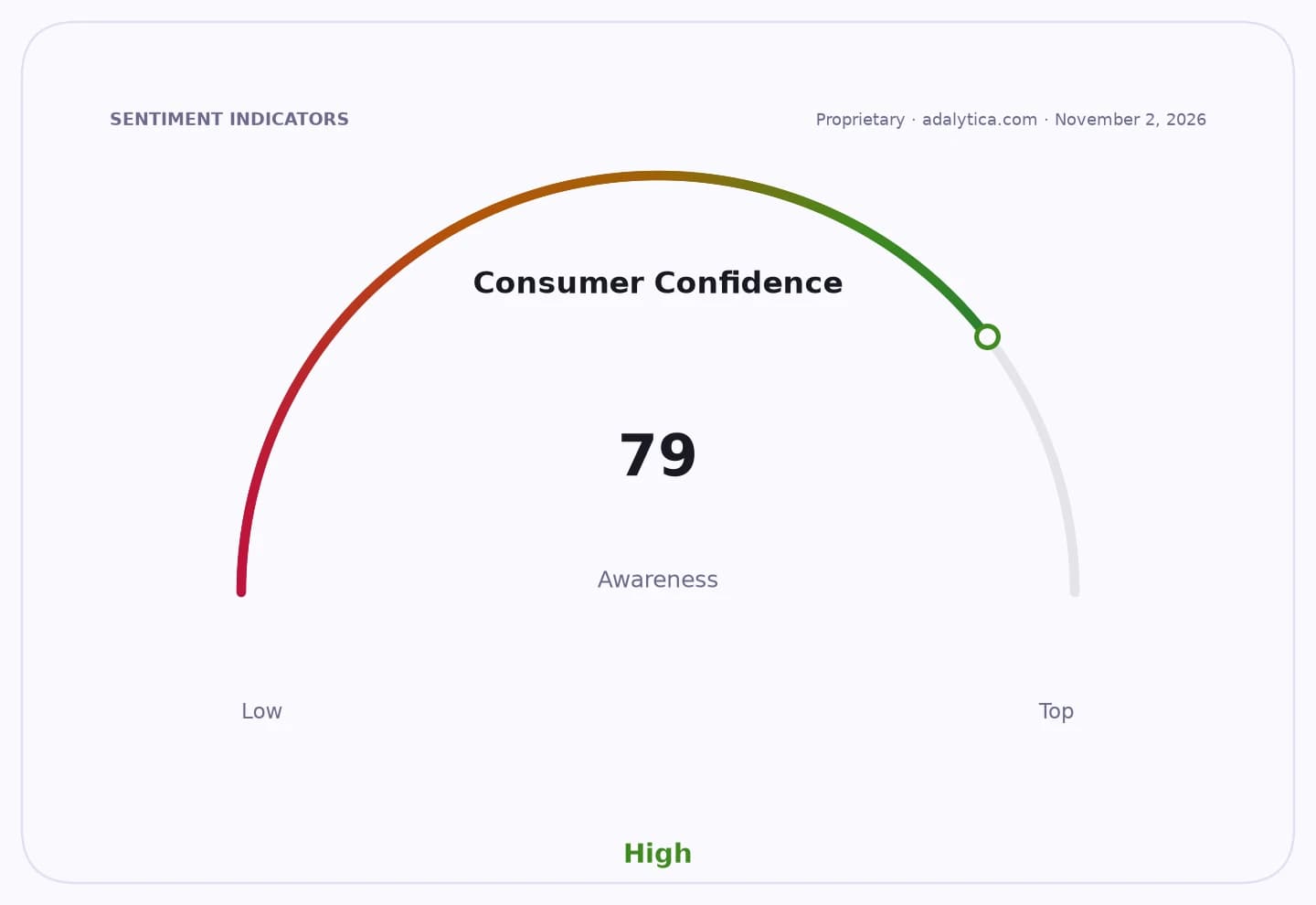
Sentiment Indicators
The proposal comes from Fabio Arias, president of the CUT, who argues that the negotiation should not be limited to inflation and productivity. Instead, he wants policymakers to close what he described as a gap between the current minimum wage and a “living wage” level. His case rests on an International Labour Organization study he says identified a roughly 50-point shortfall, of which he believes 32 points remain after the 2026 increase. Adding those 32 points to an expected inflation rate of about 6.5% produces the 38.5% figure.
That is a long way from the market consensus. Banco de Bogotá is modeling an 8% increase, which would take the minimum wage to about 1.89 million pesos, while also suggesting the government may land closer to 8.5%. The National Business Council wants a maximum of 7%. Fenalco sees room for 9%, while academics cited in the debate put the ceiling at 10%. The common thread is caution: employers say anything much above those levels would squeeze smaller companies and undermine formal job creation.
Investors should care because wage-setting in Colombia can ripple through retail, consumer staples and domestic services, where labor is a major cost. A bigger-than-expected wage hike would likely pressure margins for employers that cannot easily pass on higher costs, while potentially supporting household spending if workers keep more money in their pockets. In that sense, the outcome could create winners and losers across the domestic economy rather than a simple one-way boost.
The decision now moves to the Permanent Commission on Wage and Labor Policies, which has until Dec. 15 to reach agreement before the government steps in with a decree. That deadline makes the next few weeks important for anyone with exposure to Colombia’s consumer economy, because the final number will tell investors whether policymakers are prioritizing wage recovery or employment stability.
| Entity | Gains | Losses |
|---|---|---|
| Workers | ▲Higher purchasing power | ▼Less if wage stays near 7%-10% |
| Small employers | ▲Predictable costs | ▼Higher payroll burden |
| Consumer-facing firms | ▲More demand if wages rise | ▼Margin pressure from labor costs |
| Labor unions | ▲Bigger negotiating win | ▼Less influence if government caps hike |