Argentina’s commerce workers will receive a second monthly pay bump in November as the country’s largest private-sector wage agreement in retail and wholesale is rolled through the payrolls, adding to household income but also keeping labor costs elevated for a sector that anchors consumer spending.
Argentina commerce workers get November pay increase
Consumer Confidence
The deal, ratified by the FAECyS union and the Argentine Chamber of Commerce and Services, CAME and UDECA, sets a 5.7% wage increase in three non-cumulative instalments on top of September 2026 base pay. After October’s first tranche, the November payroll reflects a 1.9% adjustment under the CCT 130/75 agreement, covering all categories nationwide.
Sentiment Indicators
The pact also includes a one-time, non-remunerative bonus of 50,000 pesos split into two equal payments of 25,000 pesos, with the second half paid alongside November wages. For workers, that means a short-term cash boost at a time when consumer demand remains fragile. For employers, it is another reminder that wage bills are still being reset above the pace of many businesses’ pricing power.
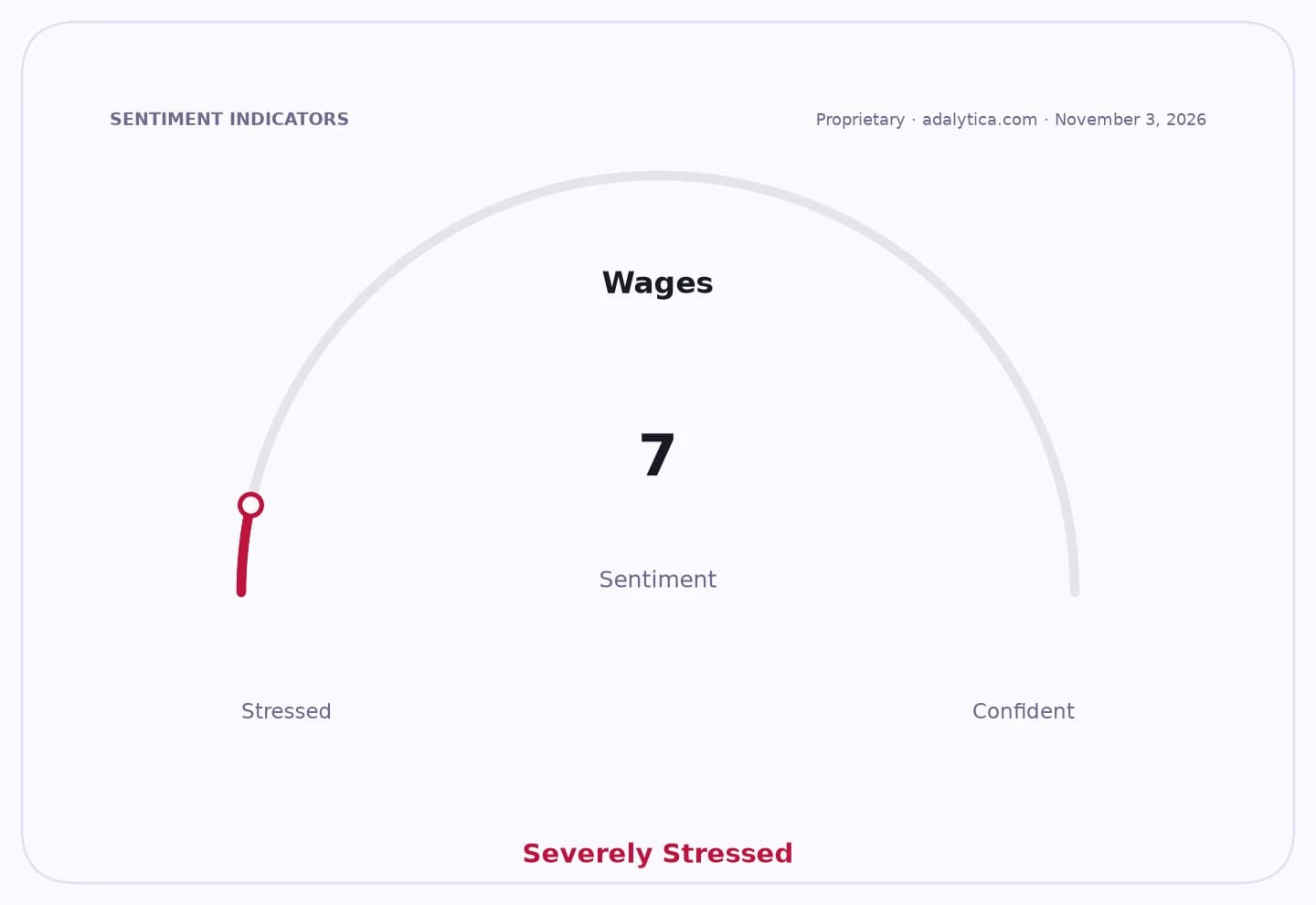
The new November scales show basic full-time monthly minimums ranging from 1.23 million pesos for maestranza category A to 1.31 million pesos for senior administrative and sales roles, before seniority and attendance additions. In a country where pay negotiations are frequently used to catch up with inflation rather than lead it, the size and structure of the deal matter less as a headline number than as a floor for labor costs across Argentina’s commercial chain.
That is why the agreement is important for investors watching Argentine consumption, retailers and consumer-facing lenders. A wage settlement that preserves purchasing power can help stabilize sales volumes, but it also squeezes margins for merchants already operating in a high-cost, low-visibility environment. The risk is that companies either pass through higher payroll costs into prices or accept weaker profitability.
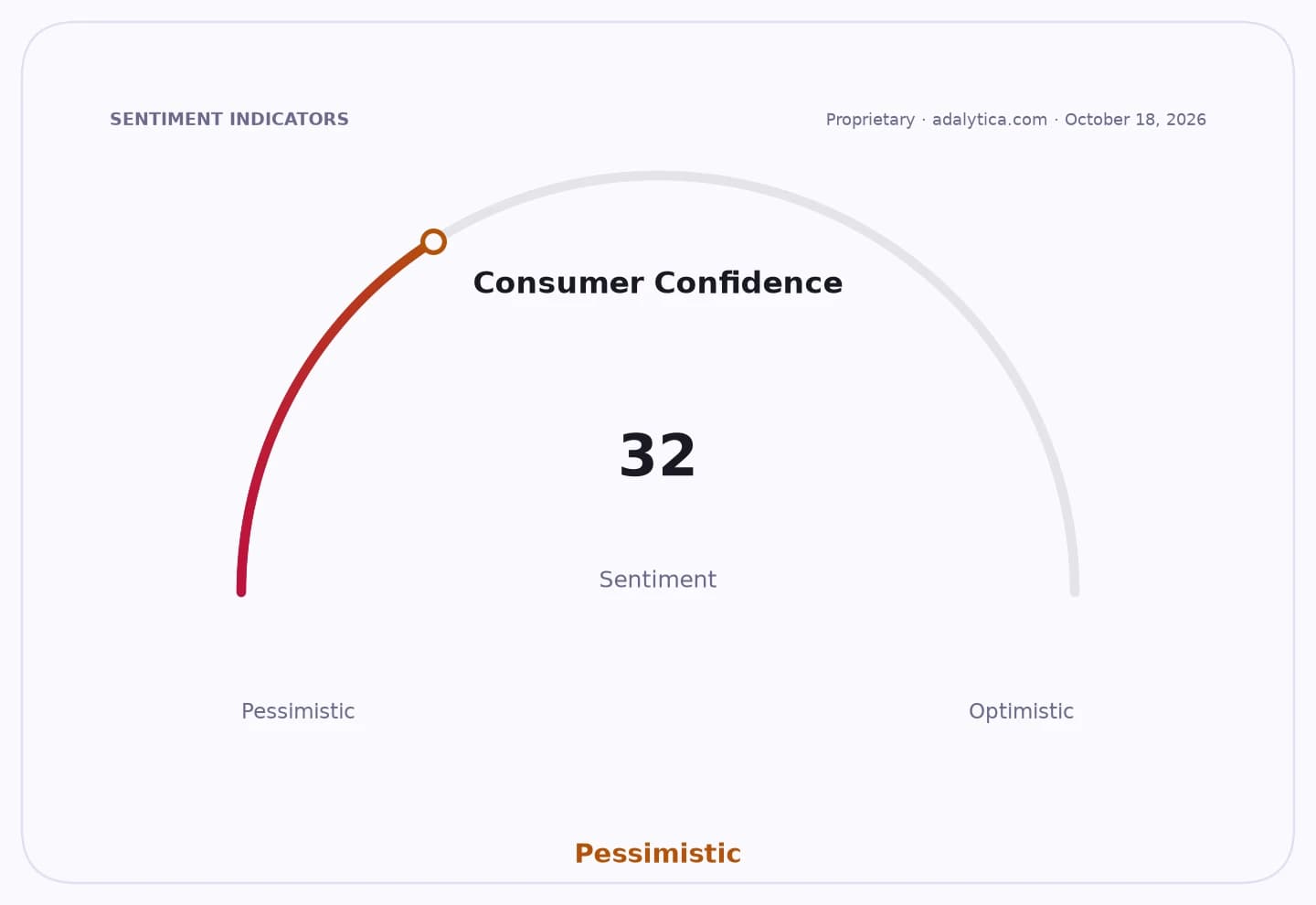
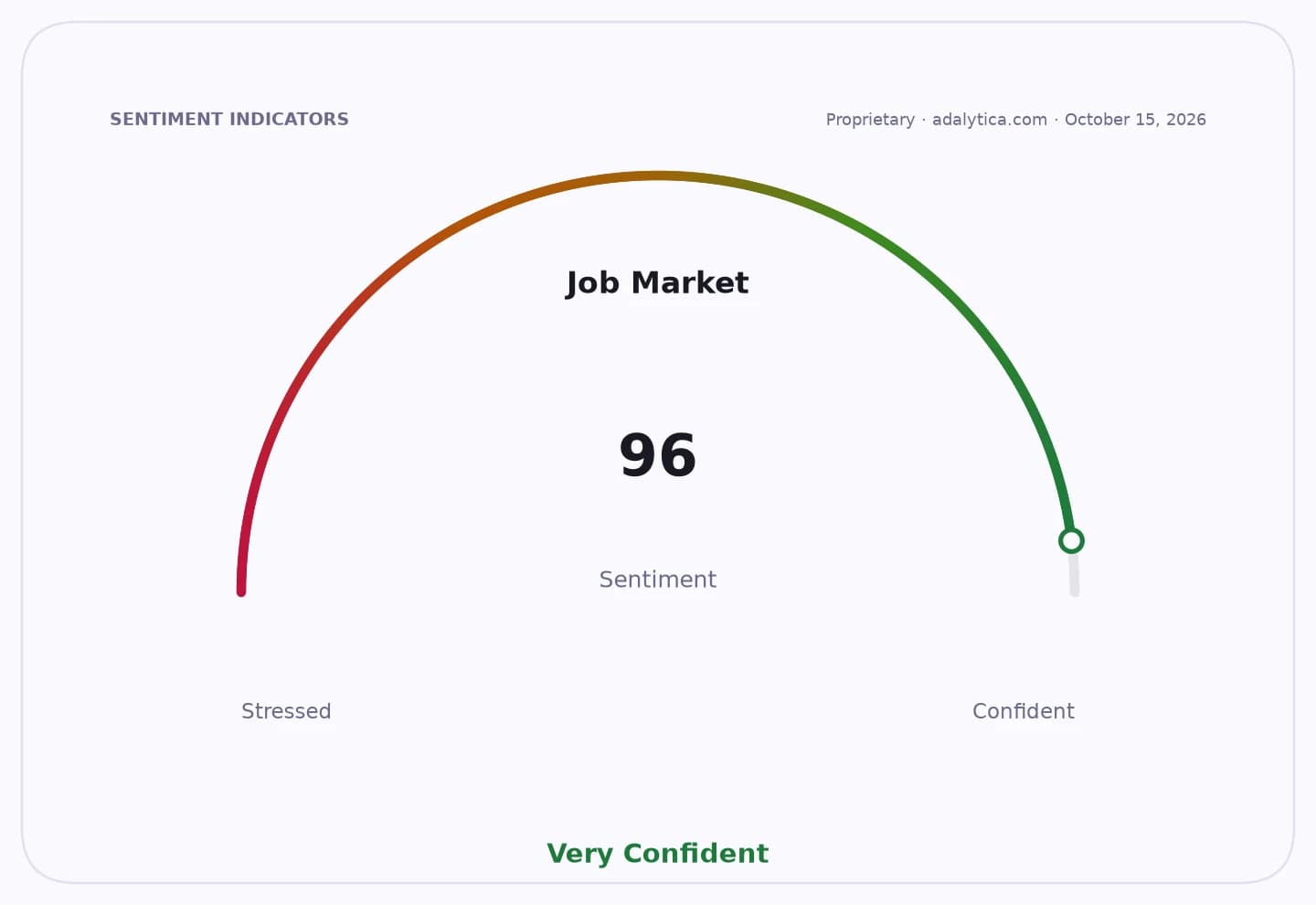
The macro backdrop makes the pact even more relevant. Adalytica’s job-market sentiment gauge shows extreme fear around nonfarm payrolls, while consumer-confidence readings remain only neutral, underscoring how uneven the recovery remains. In that setting, wage deals like this one become a critical transmission channel: they support spending, but they also feed into inflation expectations and the next round of bargaining.
For markets, the implications are clearest in consumer discretionary exposure. Exchange-traded funds and retailers tied to discretionary spending, including the XLY consumer-discretionary ETF, have held up better recently, while staples such as XLP have also remained firm as investors look for pricing power and defensive cash flows. In Argentina’s case, the winners are workers and, for now, retailers that can rely on a bit more wage-supported traffic. The losers are employers that cannot fully offset higher payroll costs, especially smaller merchants with thin margins.
The next catalyst comes in January 2027, when the parties are due back at the table to reassess the deal against macro conditions. If inflation eases, the wage support may feed real spending gains. If it does not, commerce firms will face another round of pressure just as consumer demand tries to find a floor.
| Entity | Gains | Losses |
|---|---|---|
| Commerce workers | ▲Higher pay and bonus cash | ▼— |
| Retailers and merchants | ▲Potentially steadier foot traffic | ▼Higher payroll costs |
| Consumers | ▲More disposable income near term | ▼Inflation passthrough risk |
| Margin-sensitive employers | ▲— | ▼Squeezed profitability |