Rice imports into Colombia are tilting decisively toward the United States, and that shift matters because it is reshaping food security, farmer economics and the long-term trade balance in one of Latin America’s most politically sensitive staples.
Colombia rice imports shift toward U.S. rice

By July, Colombia had imported 119,234 tons of rice, with 102,367 tons bought from the U.S., according to Fedearroz. That means American rice accounted for 85.9% of the country’s rice imports — or nearly nine out of every 10 tons of foreign rice entering Colombia — as the tariff phase-out under the 2006 free trade agreement with Washington advances toward a full zero-tariff, uncapped regime in 2030.
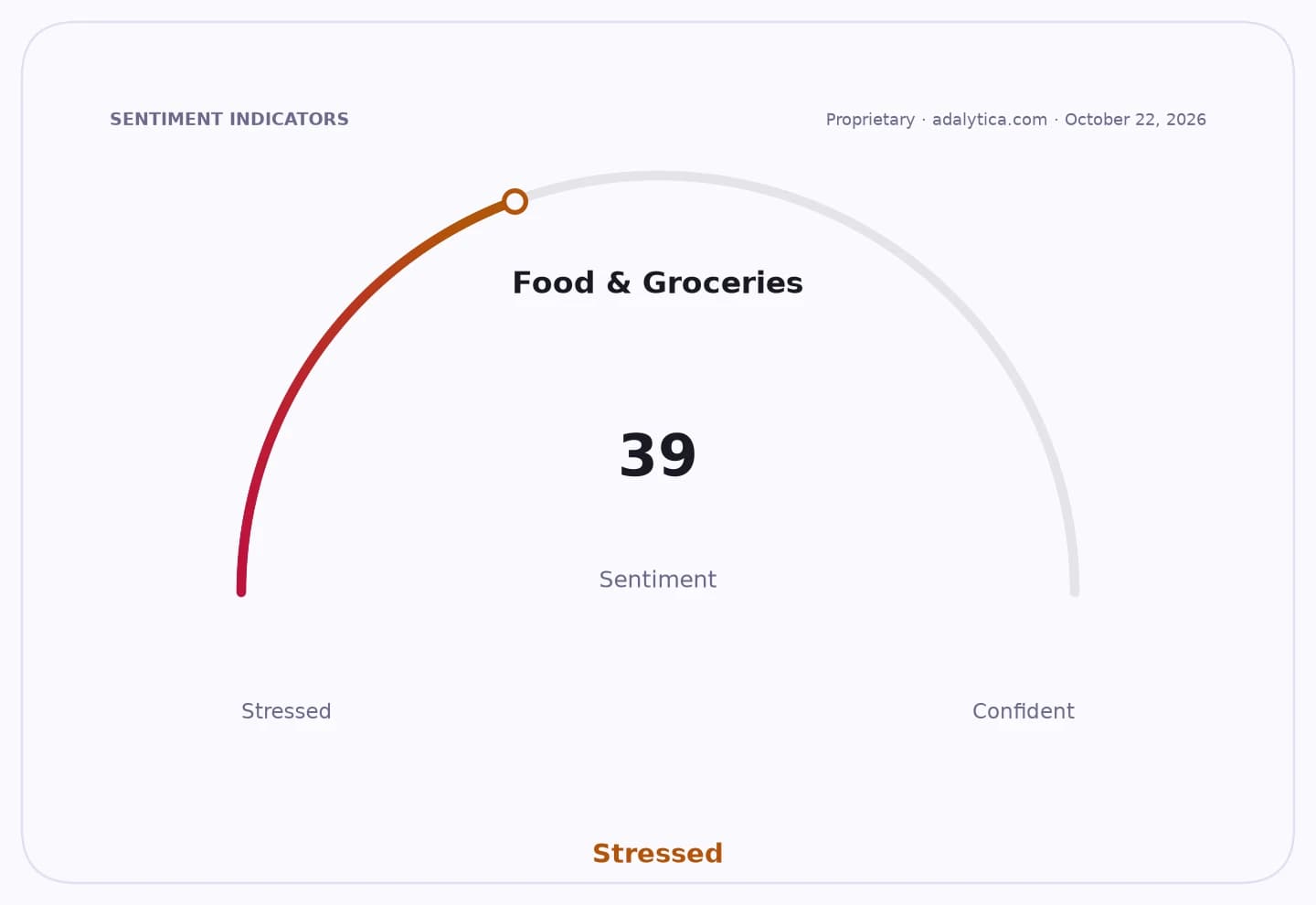
Sentiment IndicatorsⓘProprietary · adalytica.com · October 21, 2026
This is a snapshot — live sentiment, awareness and momentum for 130+ markets update continuously in the dashboard.Open AlphaPulse
The market is not waiting for 2030 to feel the pressure. Under the treaty’s quota system, duty-free U.S. rice imports began at 79,000 tons of white rice and rise 4.5% a year. By 2029, Colombia will allow 166,957 tons at a 6.2% tariff; a year later, imports from the U.S. can enter without limits and without duties. Over the life of the pact, Colombia has already brought in more than 1.5 million tons of U.S. rice.
That trajectory is economically important because it pits cheaper imported grain against a domestic industry already under strain from rising production costs, a 30% drop in farmgate prices and tighter financing conditions. Colombian growers argue the U.S. system effectively subsidizes production through programs such as Price Loss Coverage and emergency assistance, allowing American exporters to undercut local supply. In a country where rice is a dietary staple, that is not just an agricultural issue — it is an inflation, rural-income and food-security issue.
For investors, the implications run well beyond Colombian fields. The trade flow reinforces the structural advantage of large U.S. agribusinesses and grain merchants with export reach, especially those able to arbitrage policy-driven demand shifts in Latin America. Archer-Daniels-Midland, whose trading and global merchandising businesses benefit from destination marketing and export activity, is among the larger listed names positioned to capture those flows, while U.S. grain exposure remains strategically valuable in a world of fragmented supply chains and rising geopolitical risk. At the same time, the pressure on Colombian producers underscores how trade liberalization can create losers even as it lowers costs for importers and consumers.
The clearest investment lesson is that rice is becoming a policy market again. Colombia’s move toward dependency on imported U.S. grain creates opportunities for exporters, traders and logistics players, but it also raises the odds of intervention from Bogotá if domestic producers weaken further. Watch for renewed calls for storage incentives, farm support and quota changes as 2030 approaches. For now, the asymmetric bet is on the companies and countries supplying the grain, not the farmers being crowded out by it.
| Entity | Gains | Losses |
|---|---|---|
| U.S. rice exporters | ▲Higher quota access | ▼None in near term |
| Colombian importers | ▲Cheaper supply | ▼Local procurement power |
| Colombian rice farmers | ▲Short-term protection debates | ▼Pricing power, margins |
| Global grain traders | ▲More trade flow | ▼Less domestic Colombian demand |