Hawkish expectations for the Federal Reserve and worries about global growth are knocking the commodity complex off balance, with industrial metals taking the hardest hit and precious metals failing to find a safe-haven bid.
Commodities fall on Fed hawkishness and growth fears

That matters because the market is increasingly pricing a world where borrowing costs stay higher for longer just as demand momentum softens. In that combination, commodities lose two of their biggest supports at once: cheaper financing and stronger end-use consumption. For investors, that is a warning that the next leg of the commodity trade will be less about broad inflation hedges and more about picking the right subsectors, geographies and supply-side winners.
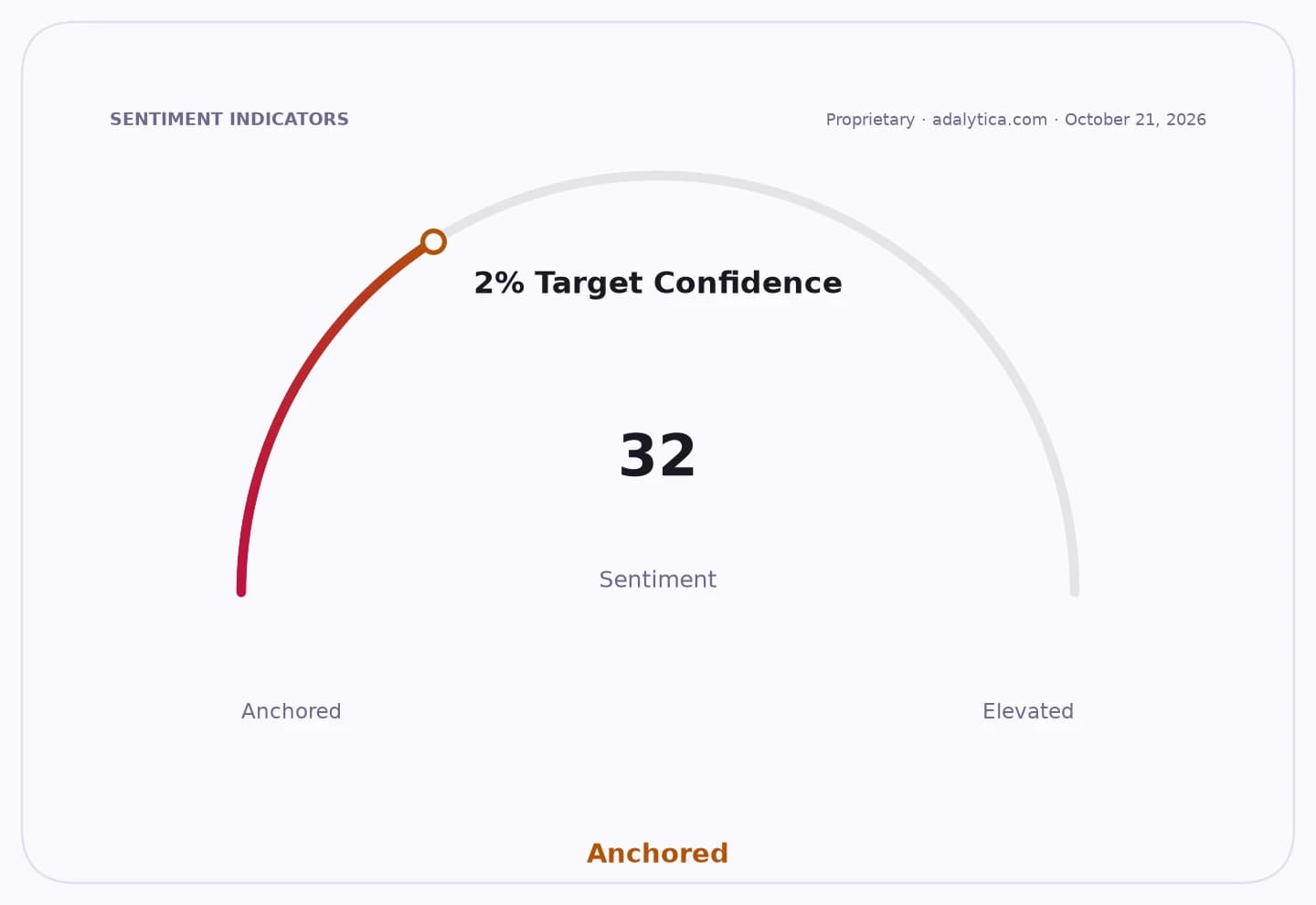
Sentiment IndicatorsⓘProprietary · adalytica.com · October 22, 2026
This is a snapshot — live sentiment, awareness and momentum for 130+ markets update continuously in the dashboard.Open AlphaPulse
Silver was the clearest casualty, falling 6.3% on the week to $55.4 an ounce, while platinum dropped 3.4% to a three-month low of $1,598.20 and palladium slid 3.2% to its weakest level since August 2025 at $1,092. Gold also finished lower, down 0.7%, even as Treasury yields eased and the dollar softened, underscoring how dominant Fed tightening fears remain in shaping positioning.
Base metals were under pressure too. Aluminum and zinc each fell 2.3%, nickel lost 2.2% and copper slipped 2.1% as global growth concerns eclipsed support from a weaker dollar. Even supply-side relief worked against prices: an agreement at Chile’s Escondida mine reduced strike risk, while higher aluminum output in Indonesia eased supply worries. In other words, the market is getting the worst possible mix for metals — softer demand expectations and fewer supply disruptions to offset them.
Market Expectations vs DJPadalytica.com
Explore this data interactively — full history, time series and cross-market comparisons.Open AlphaPulse
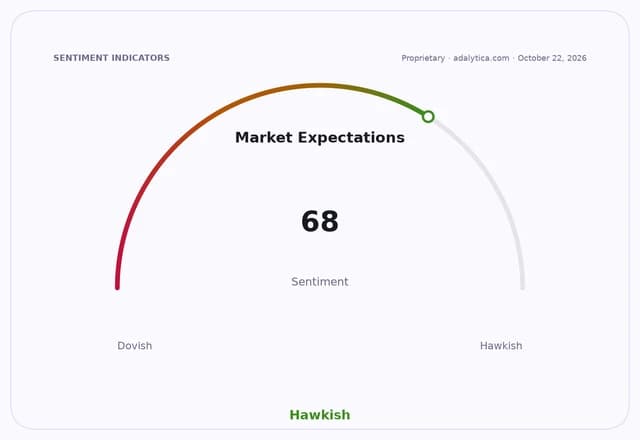
The message for investors is that the commodity trade is narrowing fast. Broad beta exposure through diversified baskets looks vulnerable if the Fed keeps rates restrictive into year-end and growth data keeps deteriorating. That is visible in the pricing of commodity funds as well: the DJP basket remains above its 50-day moving average, but momentum has cooled, while the broader risk backdrop has turned defensive, with proprietary Adalytica trade signals showing extreme fear in the S&P 500 and only neutral readings for Fed expectations.
Energy was the lone bright spot. Brent crude rose 4.75% as Middle East conflict kept supply risks elevated, even as U.S. natural gas fell 3.2% on mild weather and high inventories. That split is exactly why this environment rewards selectivity: geopolitically sensitive oil can still outperform, while demand-sensitive industrial inputs struggle.
Agriculture was mixed, but weather and supply shocks are beginning to matter more than macro. Coffee and sugar jumped on fears that El Nino could curb Brazilian output, while rice gained on tighter supply and wheat, corn and soybeans fell on stronger harvests and higher stocks. For commodity investors, that reinforces the same thesis: this is no longer a one-way inflation trade, but a market ruled by local shocks layered on top of a restrictive U.S. policy backdrop.
My takeaway: the market underestimates how damaging prolonged Fed hawkishness is for cyclicals tied to global manufacturing. I would stay cautious on broad commodity exposure, favor energy over metals, and look for the few producers and ETFs with real pricing power rather than betting on a generalized reflation rebound.
| Entity | Gains | Losses |
|---|---|---|
| Oil producers | ▲Geopolitical premium | ▼Demand-sensitive users |
| Industrial metals users | ▲Lower input costs | ▼Metal miners |
| Safe-haven buyers | ▲Short-term hedge demand | ▼Commodity bulls |
| Broad commodity ETFs | ▲Selective rotation only | ▼Broad macro beta |