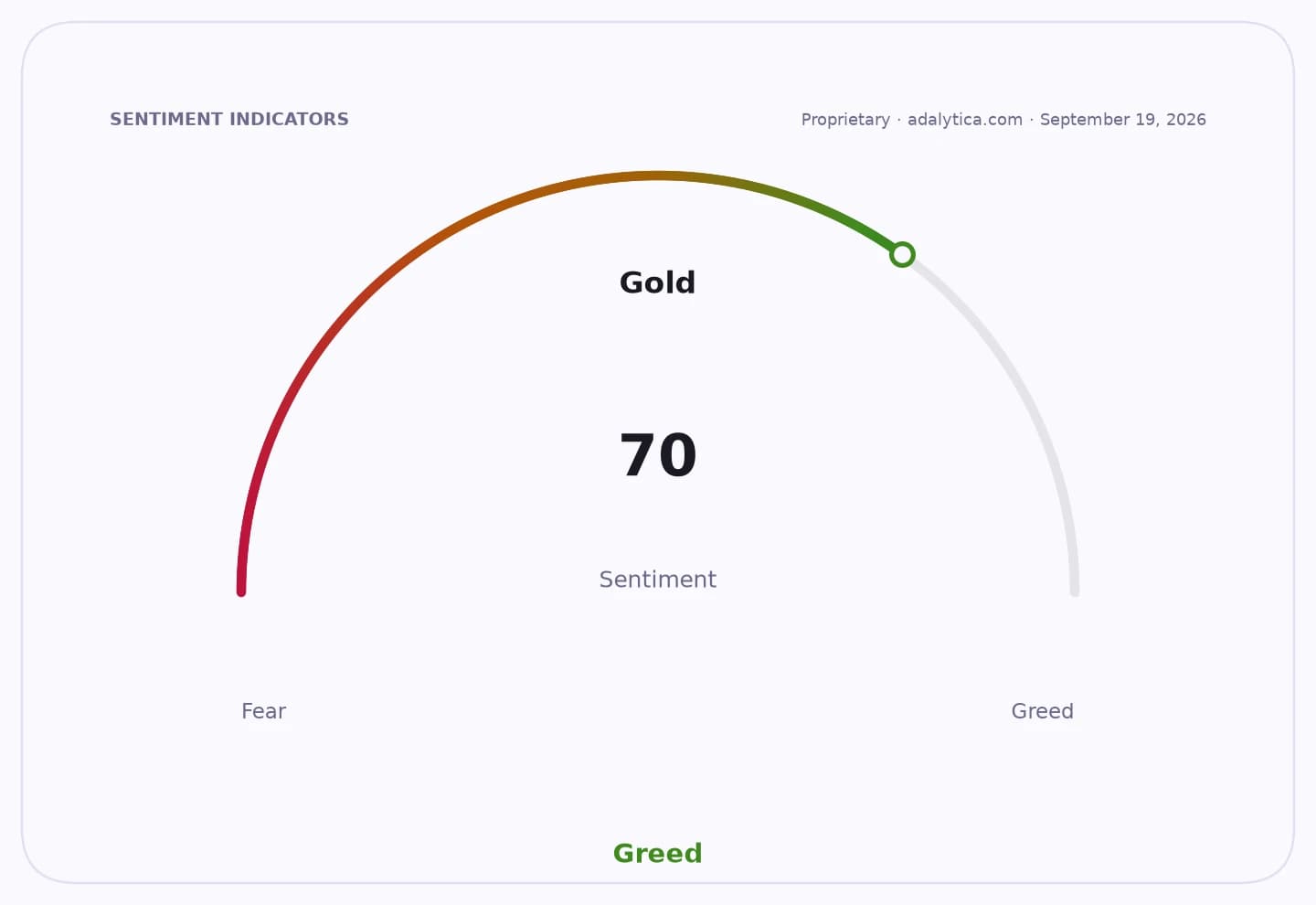
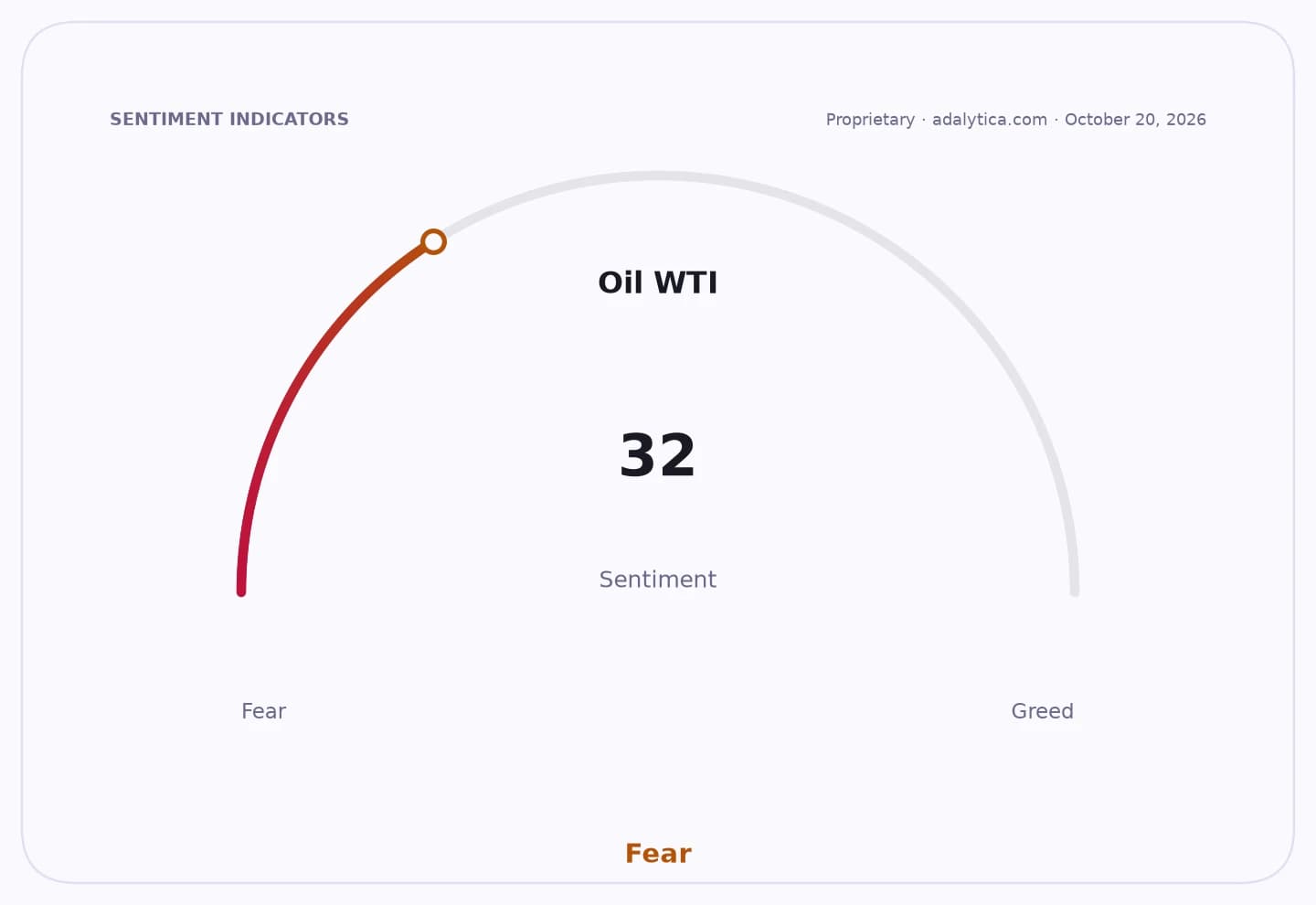
Gold is trying to stabilize above a key support zone after a sharp post-CPI selloff, with falling Treasury yields and steady ETF inflows keeping alive the chance that the metal’s 2026 rally still has room to run.
Gold Holds Above $4,000 After CPI Selloff

The market’s immediate concern is whether this week’s slide marked the start of a deeper correction or just another shakeout in a trend that has already produced huge gains. Gold futures on COMEX last traded at $4,142.50 an ounce on Oct. 20, after briefly tumbling toward the $4,000 to $3,950 support band that traders see as pivotal for the medium-term chart.
Sentiment IndicatorsⓘProprietary · adalytica.com · October 20, 2026
This is a snapshot — live sentiment, awareness and momentum for 130+ markets update continuously in the dashboard.Open AlphaPulse

The recent pressure began after stronger-than-expected U.S. September consumer prices revived rate fears and sent 10-year Treasury yields back toward 5.3%, while the dollar index jumped above 103. That combination typically hurts non-yielding assets like gold by raising the opportunity cost of holding it and making dollar-priced bullion more expensive for overseas buyers.
But the follow-through faded fast. The 10-year yield has slipped back to about 5.082%, and the dollar index has retreated to the 101.8 area after failing to hold its breakout. Those moves matter because gold’s advance has increasingly depended on any sign that the U.S. rate backdrop is cooling rather than hardening.
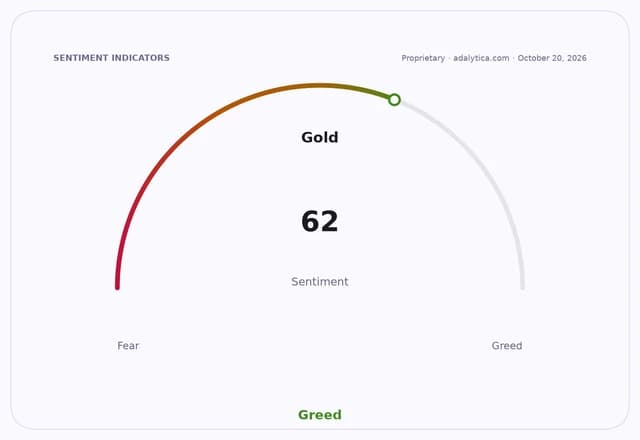
Physically backed gold funds are also still providing a floor. SPDR Gold Shares holdings have been stable to slightly higher in recent days, and the World Gold Council said September saw net inflows of $10 billion into physically backed gold ETFs worldwide. That kind of buying is important because it shows institutional and retail investors are still using dips to add exposure rather than abandoning the trade.
Technical signals are mixed, but not broken. Gold remains below its 50-day moving average, and the RSI on futures has eased to 44.9 from oversold levels earlier this month, suggesting the selloff may be losing momentum. A move back above $4,200 would be a first signal that buyers have regained control, while a push through $4,500 would strengthen the case for a renewed year-end advance.
The same dynamic is showing up across gold-linked assets. GLD, the SPDR Gold Trust ETF, closed at $377.65 on Oct. 20, while the VanEck Gold Miners ETF ended at $86.10, both well below their recent highs but still above the worst levels of the month. Gold miners such as Newmont and Barrick remain sensitive to any rebound in bullion, with higher gold prices quickly feeding through to margins and cash flow.
For investors, the key question now is whether the recent CPI-driven spike in yields and the dollar was a one-off shock or the start of a more durable reset in macro conditions. If yields keep easing and the dollar rolls over, gold could recover quickly; if inflation worries flare again, the metal risks another test of the $4,000 line and possibly lower.
| Entity | Gains | Losses |
|---|---|---|
| Gold bulls | ▲Support near $4,000; ETF inflows | ▼Any renewed yield surge |
| Treasury bulls | ▲Higher-rate narrative; tighter conditions | ▼Gold rebound trade |
| GLD holders | ▲Physical demand support | ▼Further spot weakness |
| Gold miners | ▲Higher bullion prices would lift margins | ▼Lower realized gold prices |