Gold prices are staying near record territory even as markets price a 92% chance of a Federal Reserve rate increase in December, underscoring how geopolitical shocks are overpowering the usual drag from higher US yields.
Gold Nears Record as Fed Odds and Risk Aversion Rise

The metal was trading just above $4,170 an ounce after touching an intraday low of $4,147 and a high of $4,186, while Turkey-based pricing put gram gold at about 6,654 lira. The move matters because gold typically struggles when the Fed tightens, yet this cycle is being shaped by a different force: demand for safety.
That safety bid has been reinforced by a broad selloff in equities, which pushed investors into government bonds and precious metals and helped pull Treasury yields lower. Lower yields reduce the opportunity cost of holding bullion, which pays no income, and that has softened the pressure from expectations that the Fed will keep policy unchanged this month but raise rates in December.
The bigger driver, though, is risk aversion tied to the Middle East. Escalating fighting between Saudi Arabia and Iranian-backed Houthi forces in Yemen, plus the sinking of a Singapore-flagged container ship in the Strait of Hormuz by an Iranian missile, has sharpened fears over energy flows and shipping security. With the world’s most sensitive maritime chokepoint in focus, investors are treating gold less as a rate trade and more as a geopolitical hedge.
That helps explain why bullion has remained firm even alongside a stronger-than-expected run of US economic data that is reinforcing Fed tightening expectations. In normal conditions, that combination would weigh on gold. Instead, the market is effectively balancing two opposing forces: higher policy rates on one side and heightened global instability on the other.
Technical indicators also show the market is not yet in an overextended breakout. On the gold ETF GLD, the latest close at $382.01 left it below its 50-day moving average of $397.18 and its 200-day average of $414.98, suggesting the broader trend has not fully repaired even after the recent rebound. But GLD’s relative strength index moved back to 51.5, a neutral reading, after dipping into oversold territory earlier in the week, which argues the correction may have run part of its course.
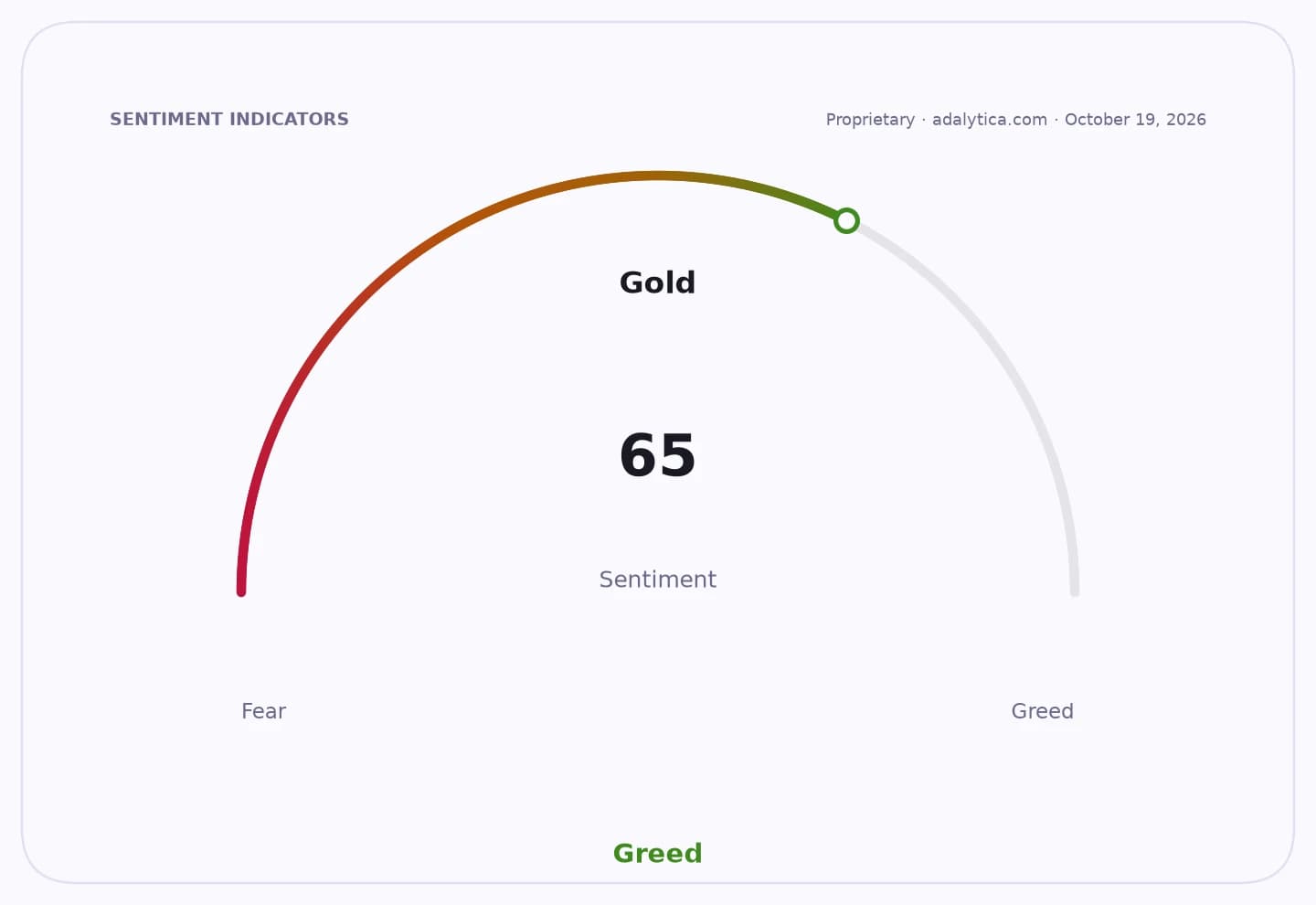
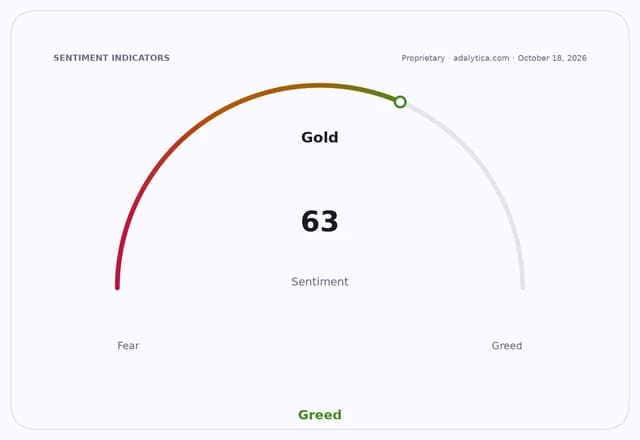
Adalytica’s Gold Fear & Greed Index also points to a market driven more by uncertainty than conviction, with sentiment at 63 — neutral — while awareness remains in extreme fear territory. That combination supports the view that gold’s advance is being driven by event risk rather than a clean macro trend.
For investors, the immediate question is whether the December rate-hike odds can eventually overwhelm the safe-haven bid. The bull case is that sustained geopolitical stress, weaker bond yields and ongoing equity volatility keep gold well supported above $4,150. The bear case is that if the Fed follows through with tighter policy and risk assets stabilize, bullion could lose one of its main supports.
Near term, the decisive catalysts are US inflation data and any fresh guidance from the Fed. Until then, gold appears to be trading on a simple but powerful premise: when rate expectations and geopolitical fear collide, fear is winning.
| Entity | Gains | Losses |
|---|---|---|
| Gold bulls | ▲Safe-haven demand | ▼Higher-rate pressure |
| Gold sellers | ▲Opportunity to lock in gains | ▼Risk of further upside |
| Fed hawks | ▲Validation from strong data | ▼Easier financial conditions |
| Global risk hedges | ▲Stronger bid in bullion | ▼Equities and cyclical assets |