Gold extended its decline for a third straight session after U.S. inflation data came in hotter than expected, pushing up Treasury yields and the dollar and sharply increasing bets that the Federal Reserve could raise rates again this month.
Gold Falls on Hot CPI, Higher Fed Hike Bets
The spot price fell 1.8% on Wednesday to $4,083.94 an ounce, its weakest since Oct. 7, before recovering modestly in early trading on Oct. 15 to around $4,119.20. December futures dropped 1.7% to $4,107.90. The move matters because gold’s appeal weakens when real or nominal rates rise: the metal pays no yield, so higher funding costs and a stronger dollar raise the opportunity cost of holding it.
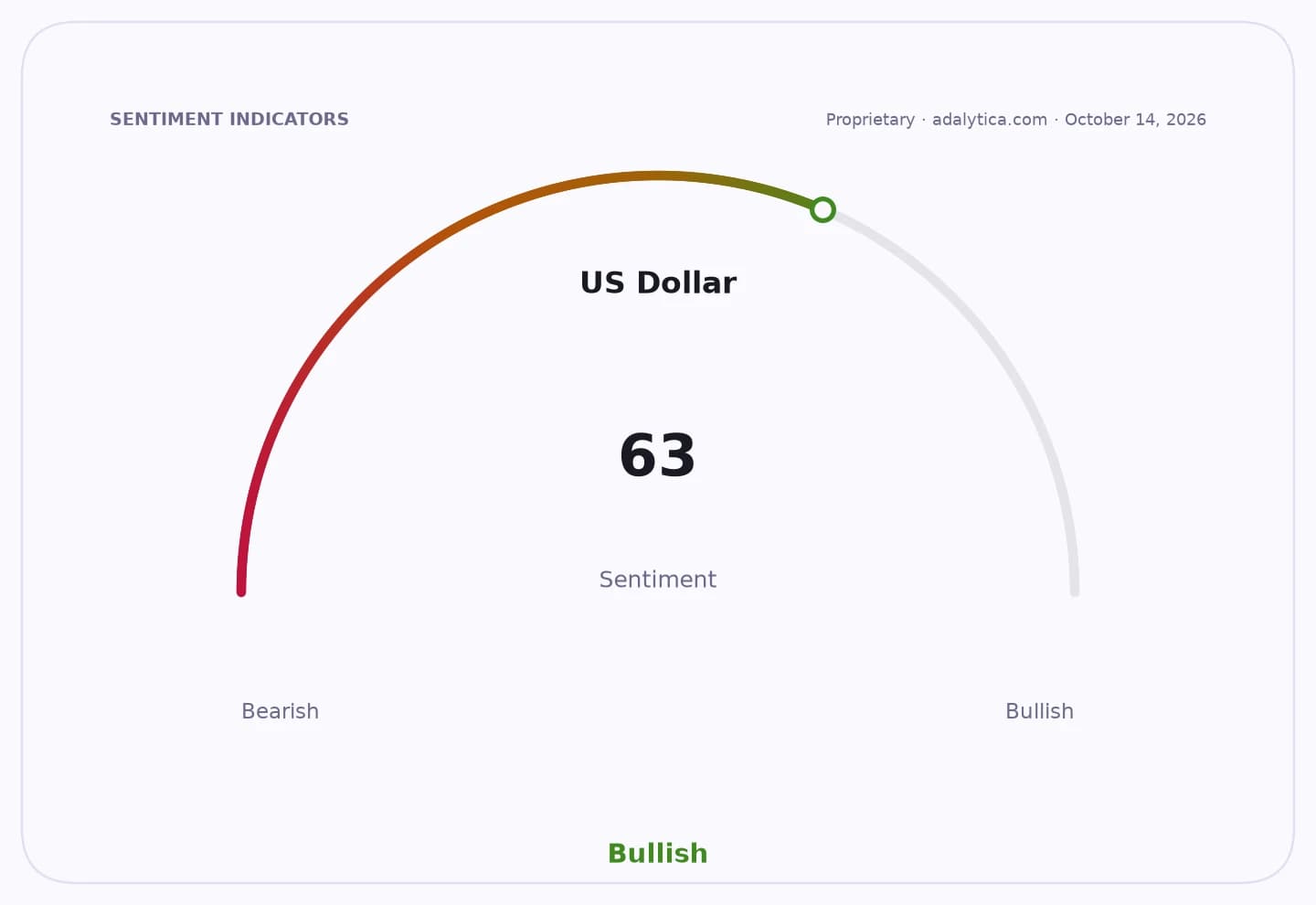
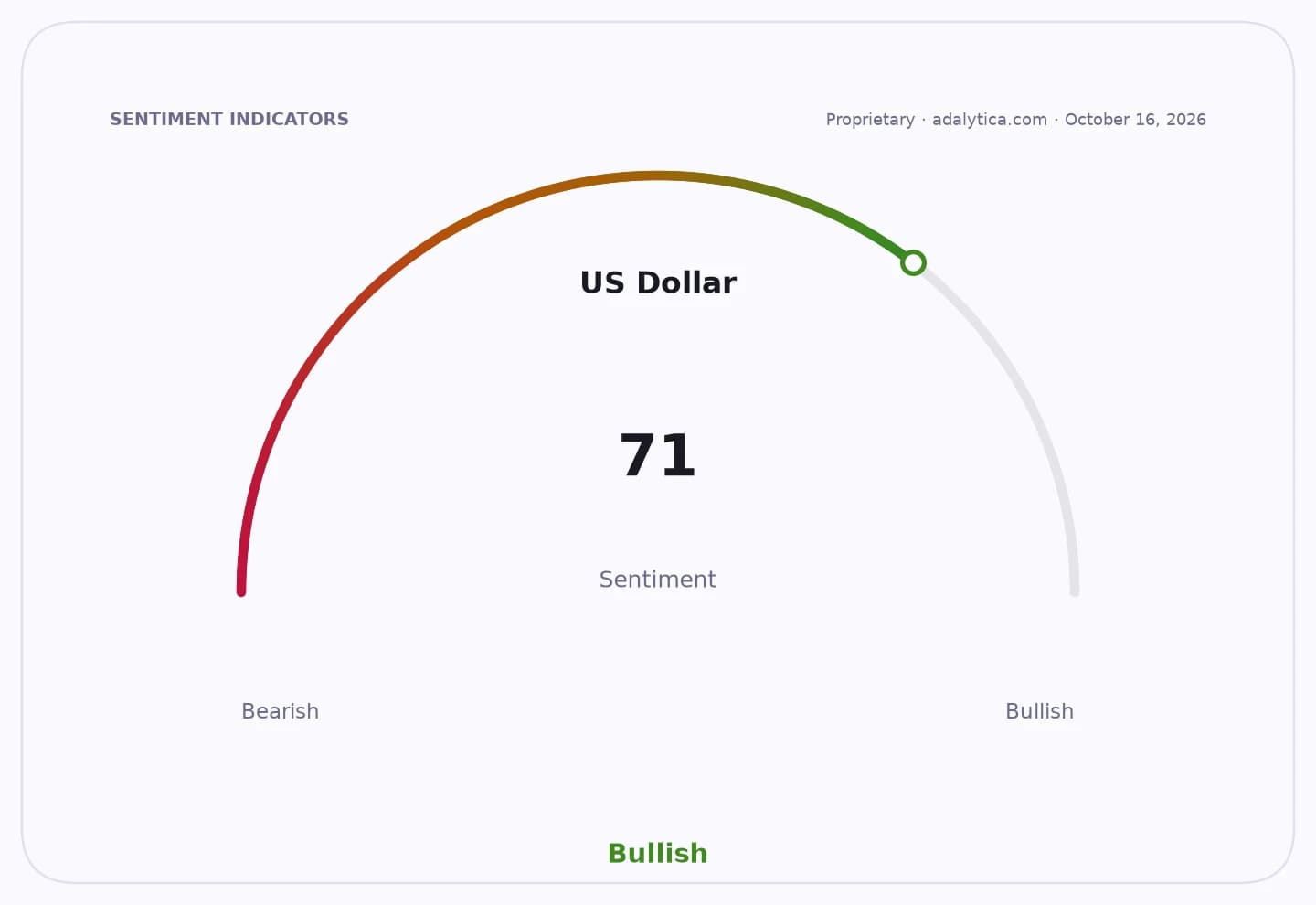
Sentiment IndicatorsⓘProprietary · adalytica.com · October 16, 2026
This is a snapshot — live sentiment, awareness and momentum for 130+ markets update continuously in the dashboard.Open AlphaPulse
The trigger was a U.S. consumer price reading that showed CPI rising 0.6% in September after a 0.4% increase in August, keeping inflation above the Fed’s target and complicating the case for an easing cycle. CME FedWatch now prices about a 42% chance of a Fed hike this month, up from roughly 22% before the data, and a 93% probability of another move by December. That repricing has fed directly into the dollar, which rose 0.5%, and 10-year Treasury yields, both of which typically pressure bullion.
David Meger, head of metals trading at High Ridge Futures, said the inflation surprise made the odds of a rate increase “larger,” with the stronger dollar adding to the drag on gold. Fed Vice Chair for Supervision Michelle Bowman offered little to relieve the pressure, saying the central bank still had time to assess financial markets and the economy after September’s hike before deciding on further action.
For investors, the selloff shows how quickly gold’s defensive bid can fade when markets shift from assuming easier policy to pricing tighter policy. The retreat also rippled through the broader precious-metals complex: silver slumped 6.6% and platinum and palladium also fell, underscoring that this was not just a gold-specific move but a wider reset in rate-sensitive commodities. Gold-backed ETFs such as GLD reflected the strain, with the fund slipping to $382.71 on Oct. 15 after trading as low as $375.99 the prior day; technical readings showed the fund still below its 50-day and 200-day moving averages, while RSI remained well off overbought territory, suggesting momentum has turned weaker even after the modest rebound.
Still, the bullish long-term case has not disappeared. Julius Baer’s Carsten Menke said central-bank buying and renewed concern over U.S. debt and interest costs should keep supporting gold over time. That leaves the market caught between two forces: short-term pressure from a firmer dollar and higher yields, and structural demand from reserve managers and investors seeking protection against fiscal strain.
The next catalyst is the Fed meeting itself. If policymakers signal that inflation is still too sticky to cut, bullion could remain under pressure; if they sound more cautious than the market expects, some of this week’s losses could reverse quickly.
| Entity | Gains | Losses |
|---|---|---|
| U.S. dollar | ▲Higher-rate bets | ▼Gold buyers |
| Treasury yields | ▲Inflation repricing | ▼Non-yielding bullion |
| Fed hawks | ▲Tighter policy case | ▼Gold bulls |
| Central banks buying gold | ▲Long-term diversification | ▼Short-term traders |