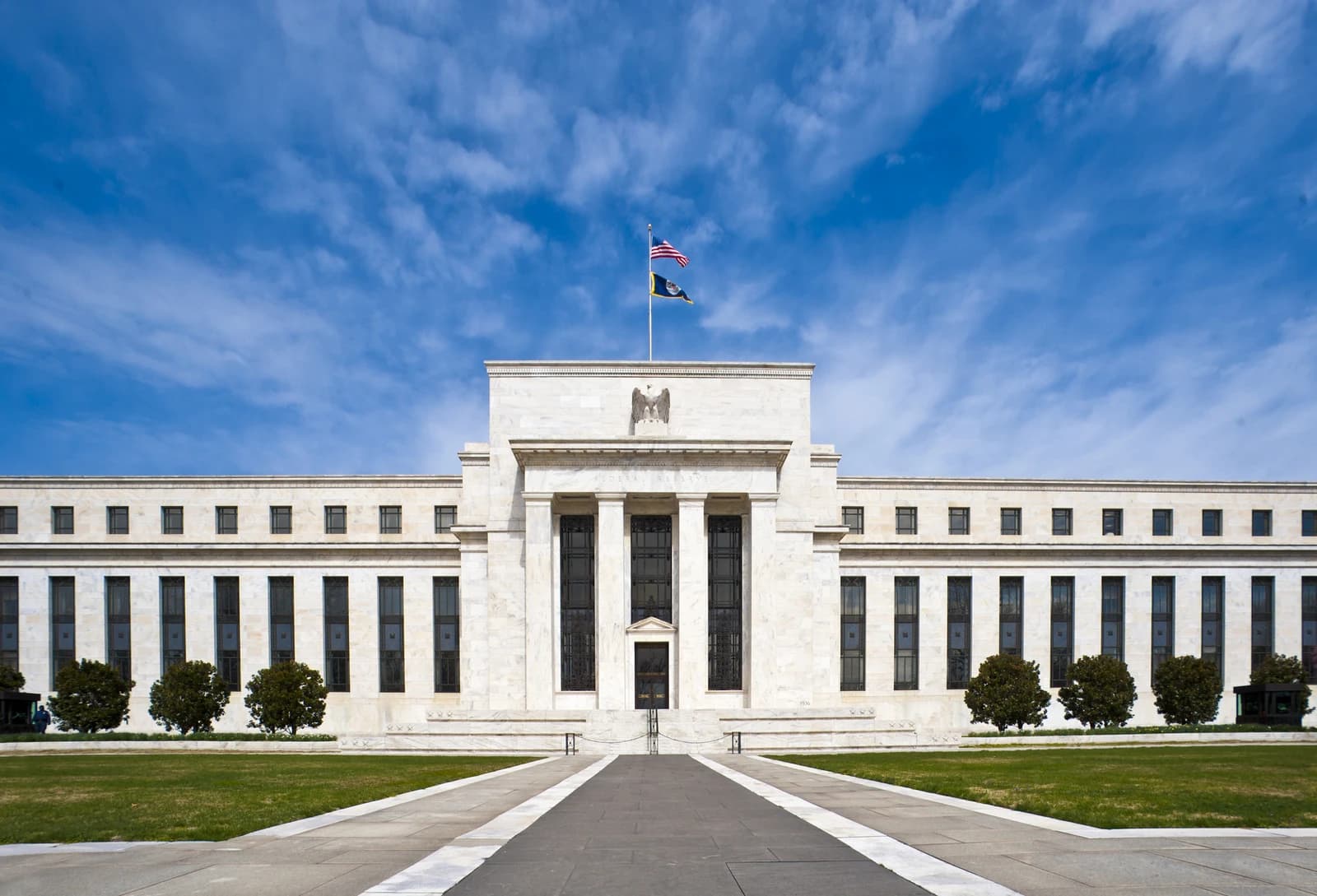
U.S. wholesale inflation accelerated far more than expected in September, strengthening the case for the Federal Reserve to keep policy tight for longer and, for some traders, to consider another rate increase.
U.S. Producer Prices Jump 1.3% in September

Producer prices rose 1.3% from August, more than double economists’ 0.5% forecast, while the annual rate jumped to 6.3% from an upwardly revised 5.6%, the highest since December 2022. Core producer inflation also overshot estimates, rising 0.7% on the month and 5% from a year earlier, underscoring that price pressures were not limited to volatile food and energy categories.
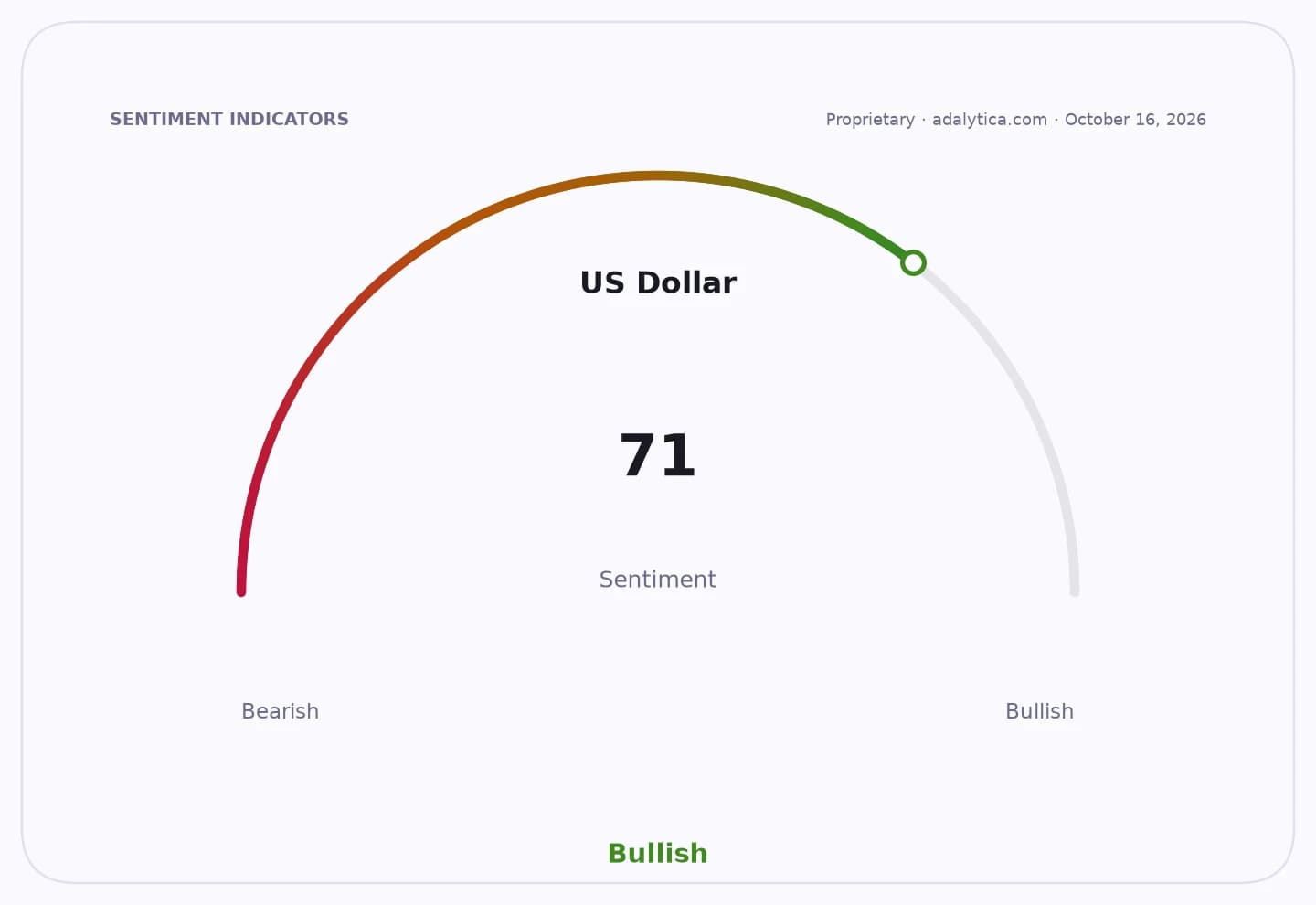
Sentiment IndicatorsⓘProprietary · adalytica.com · October 17, 2026
This is a snapshot — live sentiment, awareness and momentum for 130+ markets update continuously in the dashboard.Open AlphaPulse
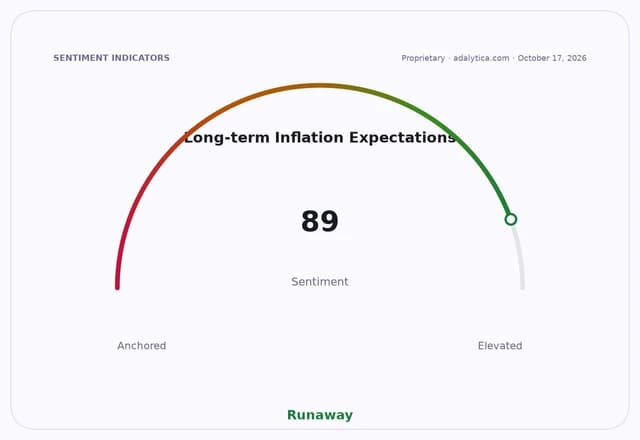
The report lands just after a hotter-than-expected consumer price reading, giving policymakers two consecutive inflation prints that argue against any quick easing in financial conditions. Fed futures now put the odds of a 25-basis-point hike at the Oct. 28 meeting at 33%, a notable shift for a market that had been leaning toward a prolonged pause.
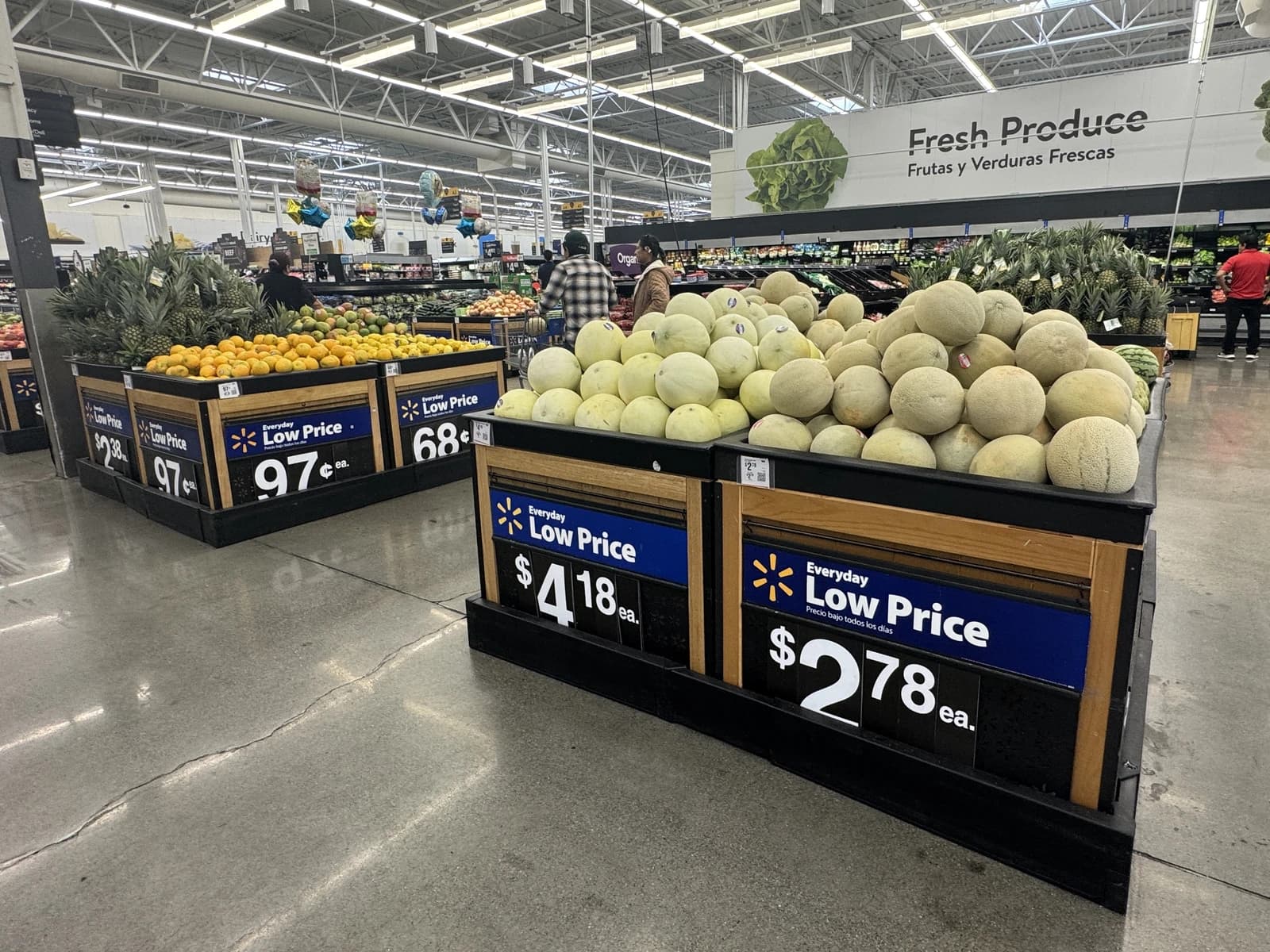
The biggest driver was energy, which pushed final-demand goods prices up 2.6% — the largest increase since the series began in 2009. More than 80% of that gain came from a 10.8% monthly jump in energy costs. At the producer level, gasoline prices surged 20.3% and diesel rose 21%, taking wholesale gasoline 64.3% higher over the past year and diesel 115.2% higher. That matters because energy filters quickly through transport, logistics and input costs, raising the risk that goods inflation remains sticky even if demand softens.
Services inflation also firmed, with trade margins up 1.4% and transportation and warehousing costs rising 3.4%. That combination suggests businesses are still able to pass along higher costs, a sign that inflation is not being driven solely by supply shocks but by broader pricing power in parts of the economy.
For investors, the immediate implication is higher yields and a lower tolerance for richly valued growth stocks, particularly in sectors sensitive to the policy rate path. The 2-year Treasury yield briefly jumped toward 4.79% after the release before easing, while Nasdaq 100 futures fell more than 1% in premarket trading, with memory chip makers among the weakest names. That reaction fits a market that remains highly sensitive to any data that could keep the Fed hawkish.
There is a counterargument: retail sales also came in strong, but the control group that feeds into GDP was weak, and jobless claims remained low, suggesting the economy can absorb tighter policy for now. That gives the Fed room to emphasize inflation control over growth support. But if producer prices keep surprising to the upside, the risk is that borrowing costs stay elevated into year-end, compressing valuations and keeping pressure on interest-rate-sensitive assets.
The broader message from the report is that disinflation has stalled at a moment when the Fed still needs convincing evidence that price pressures are fading. Until that changes, bond markets are likely to price a higher-for-longer stance, and equity investors may have to recalibrate expectations for both policy and margins.
| Entity | Gains | Losses |
|---|---|---|
| Federal Reserve hawks | ▲Case for tighter policy | ▼Pressure to signal patience |
| Treasury bears | ▲Higher yield outlook | ▼Bond prices |
| Banks and cash-rich lenders | ▲Wider rate environment | ▼Loan demand risk |
| Growth and chip stocks | ▲— | ▼Higher discount rates |