Gold prices ended lower on Friday and posted a 3.4% weekly loss after a stronger dollar and rising US Treasury yields undercut demand for the non-yielding metal, even as a softer-than-expected jobs report briefly lifted bullion earlier in the session.
Gold Falls 3.4% Weekly as Yields Rise

Spot gold fell 0.9% to $4,140.06 an ounce, while US gold futures slipped 1% to $4,162.30. The move leaves the market vulnerable after a sharp run-up in recent weeks, with investors reassessing whether the Federal Reserve can keep policy restrictive despite signs of labor-market cooling.
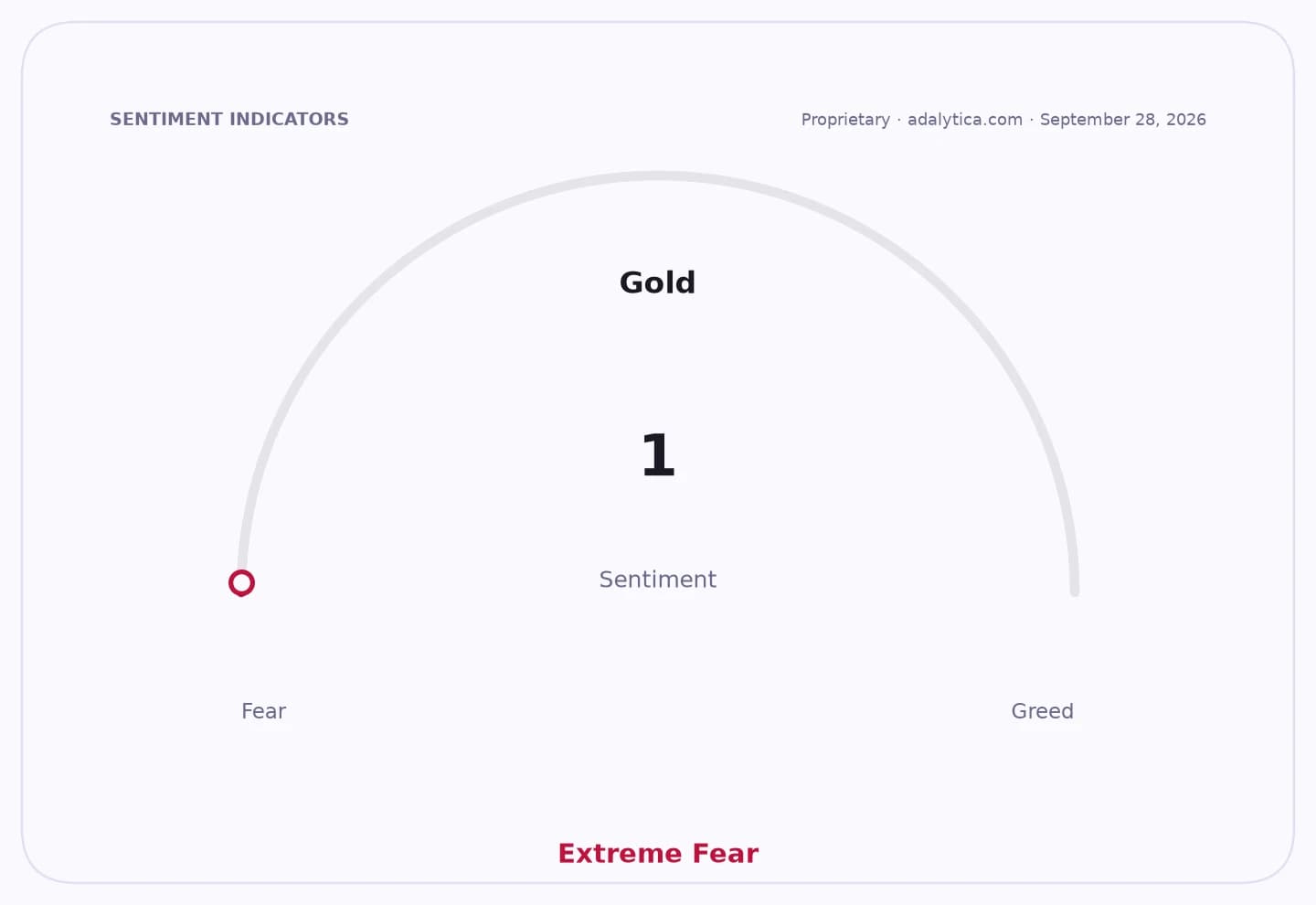
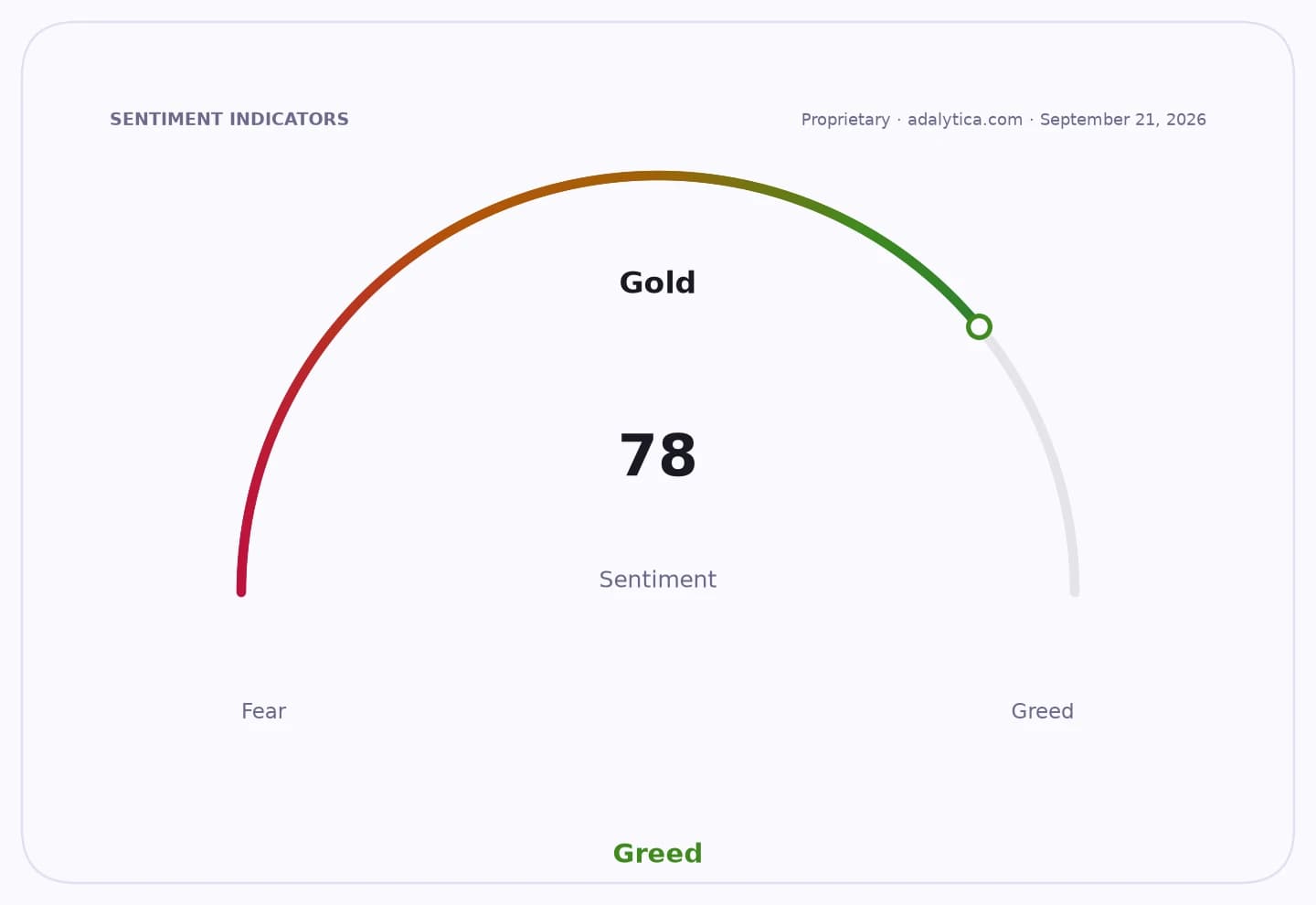
Sentiment IndicatorsⓘProprietary · adalytica.com · October 3, 2026
This is a snapshot — live sentiment, awareness and momentum for 130+ markets update continuously in the dashboard.Open AlphaPulse
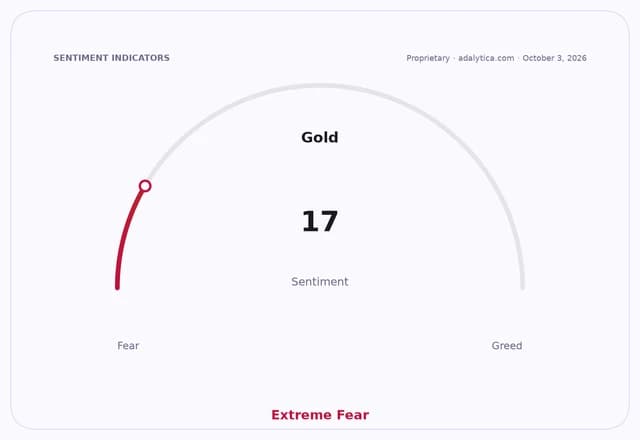
The key economic driver is the jump in Treasury yields. Benchmark 10-year and 30-year US yields hit their highest levels since 2002 on Thursday, raising the opportunity cost of holding gold and strengthening the dollar’s appeal. That combination tends to pressure bullion because gold does not pay interest and becomes less attractive when cash and bonds offer better returns.
Friday’s US payrolls data added another layer of uncertainty. The Labor Department said nonfarm payrolls rose by 29,000 in September, below the 90,000 economists had expected, after August’s figure was revised down to 133,000 from 162,000. Gold initially climbed more than 1% on the weaker labor print before reversing as traders refocused on the broader rate backdrop.
Markets are now sharply reducing odds of another immediate Fed hike. Traders price just a 22% chance of a US rate increase this month, down from about 70% earlier in the week, according to CME FedWatch. Even so, the persistent move in yields suggests investors still see policy staying tight for longer, a setup that can keep pressure on bullion if real rates remain elevated.
The shift matters for miners and gold-backed products as much as for the metal itself. SPDR Gold Shares fell to $380.14, while Newmont closed at $115.56, reflecting the broad pullback across the precious-metals complex. Silver dropped 0.8% to $60.36 an ounce, platinum slid 2% to $1,692.90 and palladium lost 0.5% to $1,165.75.
The next catalyst is whether incoming US data or more Fed commentary can reverse the rise in yields. For now, gold is trading like a market that has already priced in plenty of policy easing, but not enough to offset the pressure from a firmer dollar and the strongest long-dated Treasury yields in more than two decades.
| Entity | Gains | Losses |
|---|---|---|
| US Treasury yields | ▲Higher returns for bondholders | ▼Gold and other non-yielding assets |
| US dollar | ▲Stronger weekly advance | ▼Dollar-priced commodities |
| Gold miners and ETFs | ▲None from the selloff | ▼Lower bullion-linked valuations |
| Fed doves | ▲Softer labor data supports pause case | ▼Hawks still backed by high yields |