Gold’s recent pullback does not break the bigger story: the metal is still being underpinned by a deeper shift in how investors and central banks are treating money itself.
Gold Pulls Back as Bullish Super Cycle Thesis Stays Intact
That is the core message from the new bullish call anchored in a view that gold entered a 10-year super cycle in 2019 and could stay in that phase until around 2030. The argument is not that gold rises because the world is in crisis, but because confidence in paper currency weakens when debt, deficits and money creation keep climbing. In that framework, gold is less a panic trade than a long-duration hedge against monetary dilution.
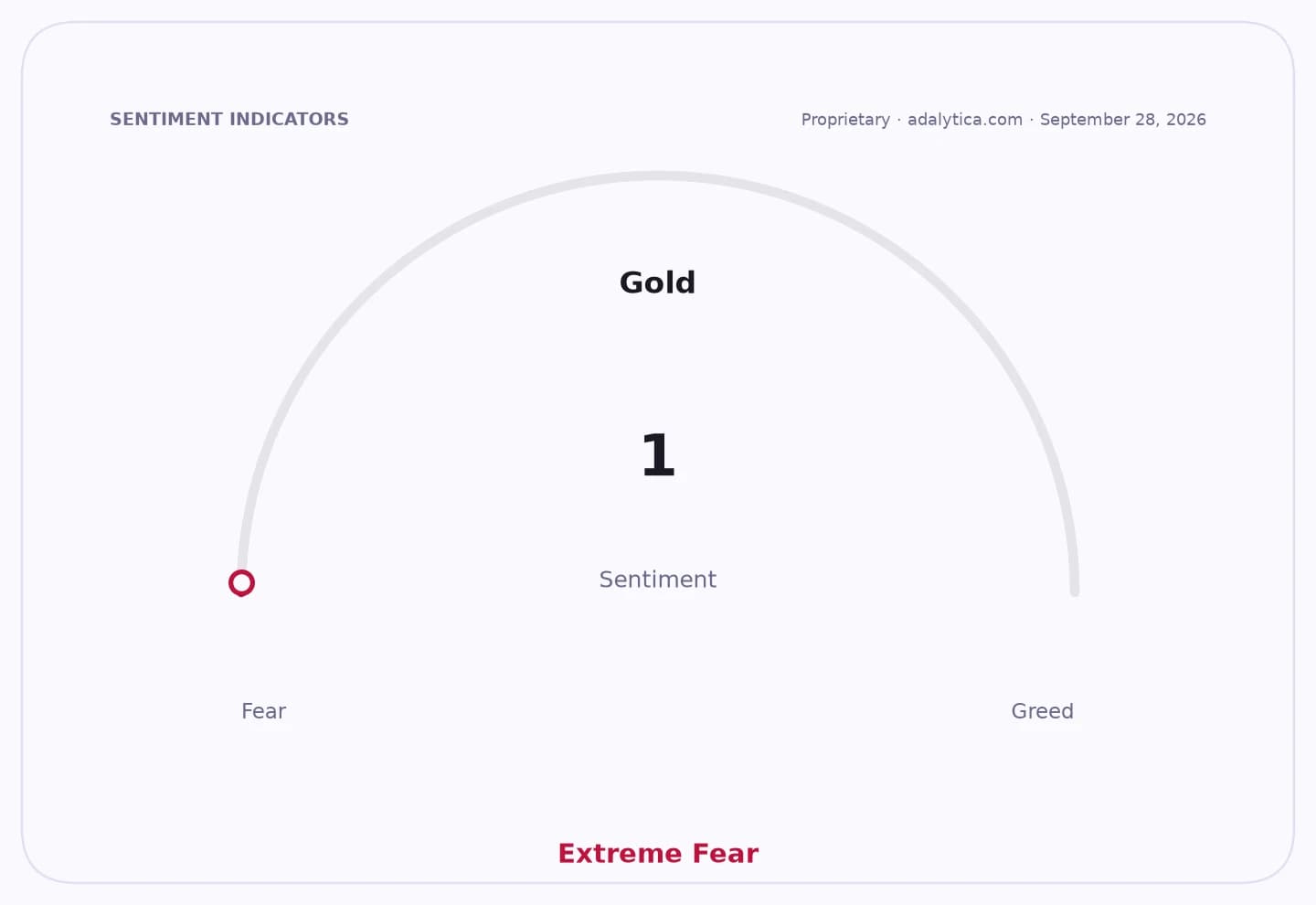
Sentiment IndicatorsⓘProprietary · adalytica.com · September 28, 2026
This is a snapshot — live sentiment, awareness and momentum for 130+ markets update continuously in the dashboard.Open AlphaPulse
That thesis matters because it fits what the market is already showing. Gold has ripped to record territory this year, while gold-backed funds and miners have seen violent swings as traders chase and then unwind overbought positions. On Sept. 28, GLD fell to $377.91, well below its 50-day moving average of $395.62 and 200-day average of $416.39, with RSI at 32.5 and a negative MACD reading — signs of a sharp technical reset, not the end of the trend. New York gold futures also slipped to $4,159.60 after touching $5,311.60 in March data in the supplied series, underscoring how fast sentiment can swing even inside a structural bull market.
The deeper driver is central bank demand. Authorities around the world have been adding to gold reserves as they diversify away from the dollar and other fiat assets. That buying creates a floor under prices and tightens available supply, while also reinforcing the market’s belief that gold is becoming a reserve asset again. At the same time, U.S. Treasury yields have jumped sharply — the 10-year note was last shown at 5.11%, up from 0.73% in 2020 and not far from the 2026 forecast of 5.268% — a reminder that investors are demanding more compensation for sovereign risk and fiscal strain.
For investors, the opportunity is not just in bullion. If the super cycle thesis is right, the better trade is the ecosystem built around gold: miners, royalty companies and select bullion vehicles that can benefit from higher realized prices over a multi-year period. Newmont has already shown the torque that comes with the move, rallying from under $100 to as high as $134.86 in the supplied tape before pulling back to $116.05. Those kinds of swings are exactly why the market underestimates the leverage embedded in producers when gold enters a prolonged uptrend.
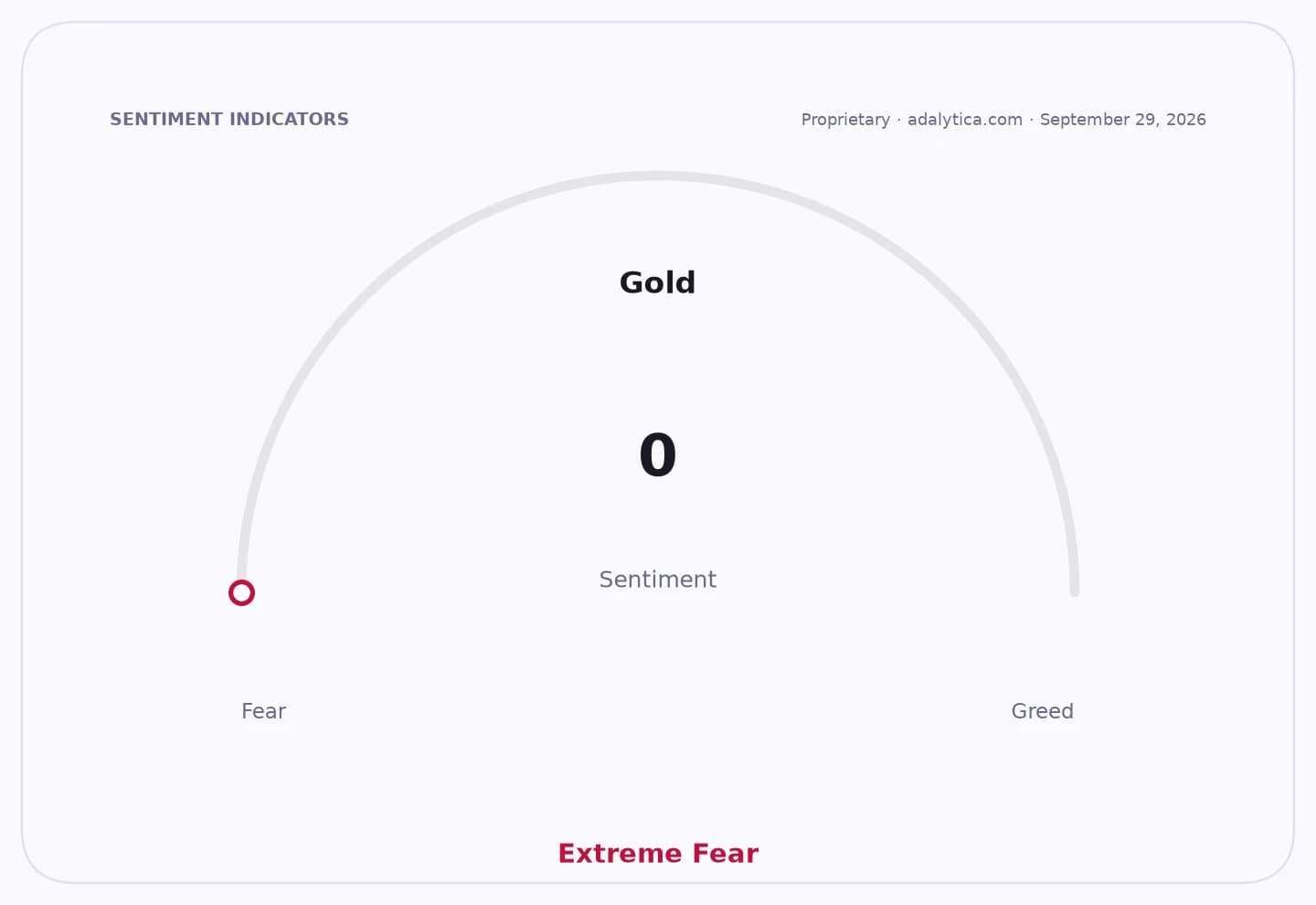
Adalytica’s Gold Fear & Greed Index is flashing Extreme Fear at 1, after a 70-point drop over 30 days, which suggests traders are far more nervous than the long-term setup warrants. That kind of sentiment washout is usually where secular trends reset before the next leg higher. The dollar picture adds to the case: Adalytica’s U.S. Dollar Trade Signals show extreme fear in awareness and a softening tone, consistent with a market still questioning fiat credibility.
The investment takeaway is straightforward: treat the current gold wobble as volatility inside a much larger monetary re-rating. If central bank accumulation, fiscal stress and currency distrust persist, gold’s next major move could still be higher, and the best positioning remains through quality miners, royalty names and core bullion exposure rather than trying to time every correction.
| Entity | Gains | Losses |
|---|---|---|
| Gold bulls | ▲Long-cycle upside | ▼Short-term pullbacks |
| Central banks | ▲Reserve diversification | ▼Dollar dependence |
| Miners/royalty firms | ▲Higher realized prices | ▼Cost inflation risk |
| Dollar holders | ▲— | ▼Fiat purchasing power |