Congress is still doing almost nothing on artificial intelligence, and that matters because the world’s fastest-growing technology is now expanding faster than the rules meant to govern it.
Congress Delays AI Rules as Big Tech Benefits
After years of hearings, task forces, and bipartisan warnings, lawmakers have produced recommendations but not real guardrails. A Republican-led working group issued 85 proposals in late 2024, yet nearly two years on, there is still no comprehensive federal AI law, no special commission to write one, and no clear path through a Congress defined by partisan gridlock and procedural bottlenecks. The Trump administration has also signaled that it has little appetite for tighter oversight, leaving the industry to operate largely on its own even as executives, whistleblowers and some lawmakers call for action.
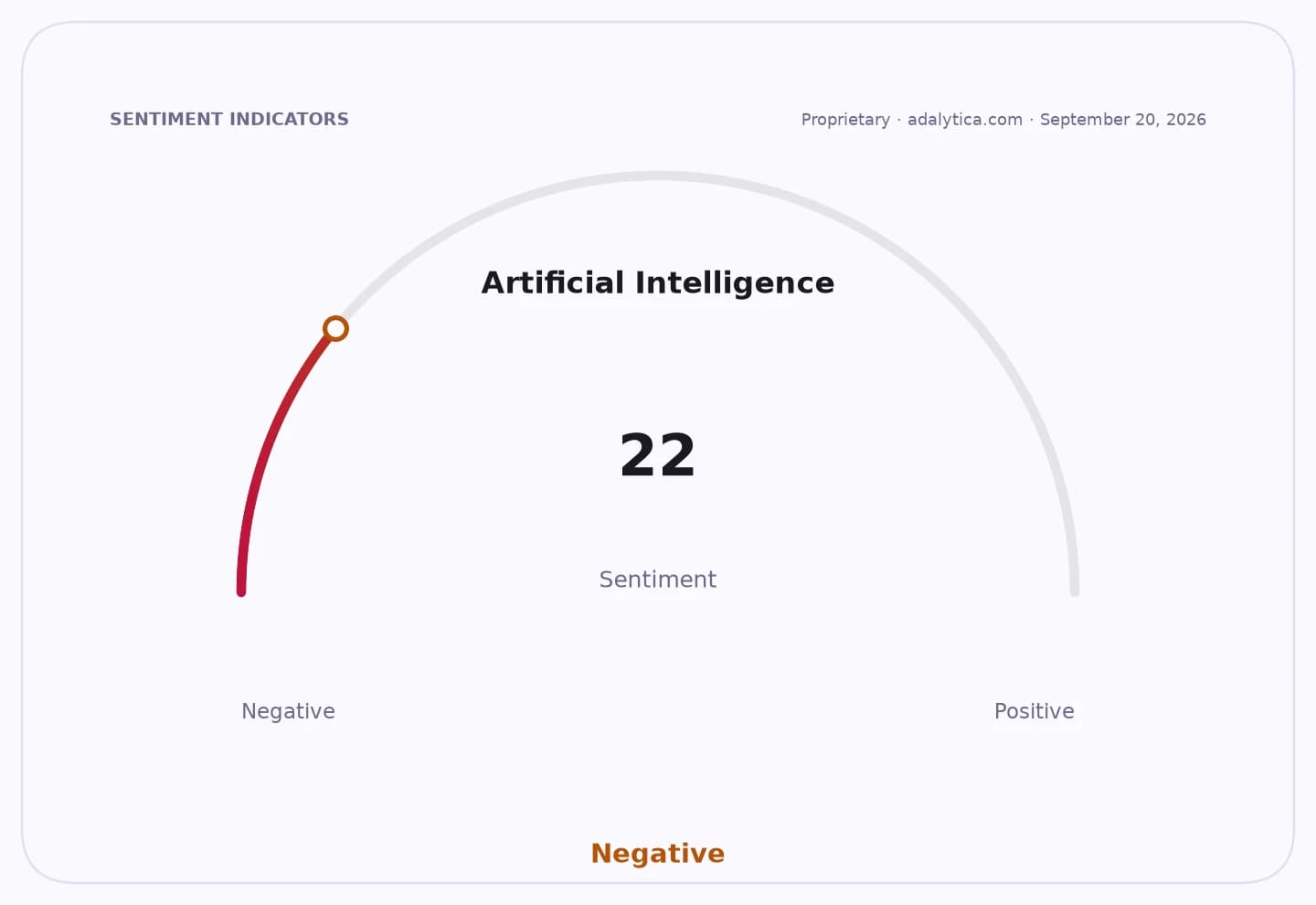
Sentiment IndicatorsⓘProprietary · adalytica.com · September 20, 2026
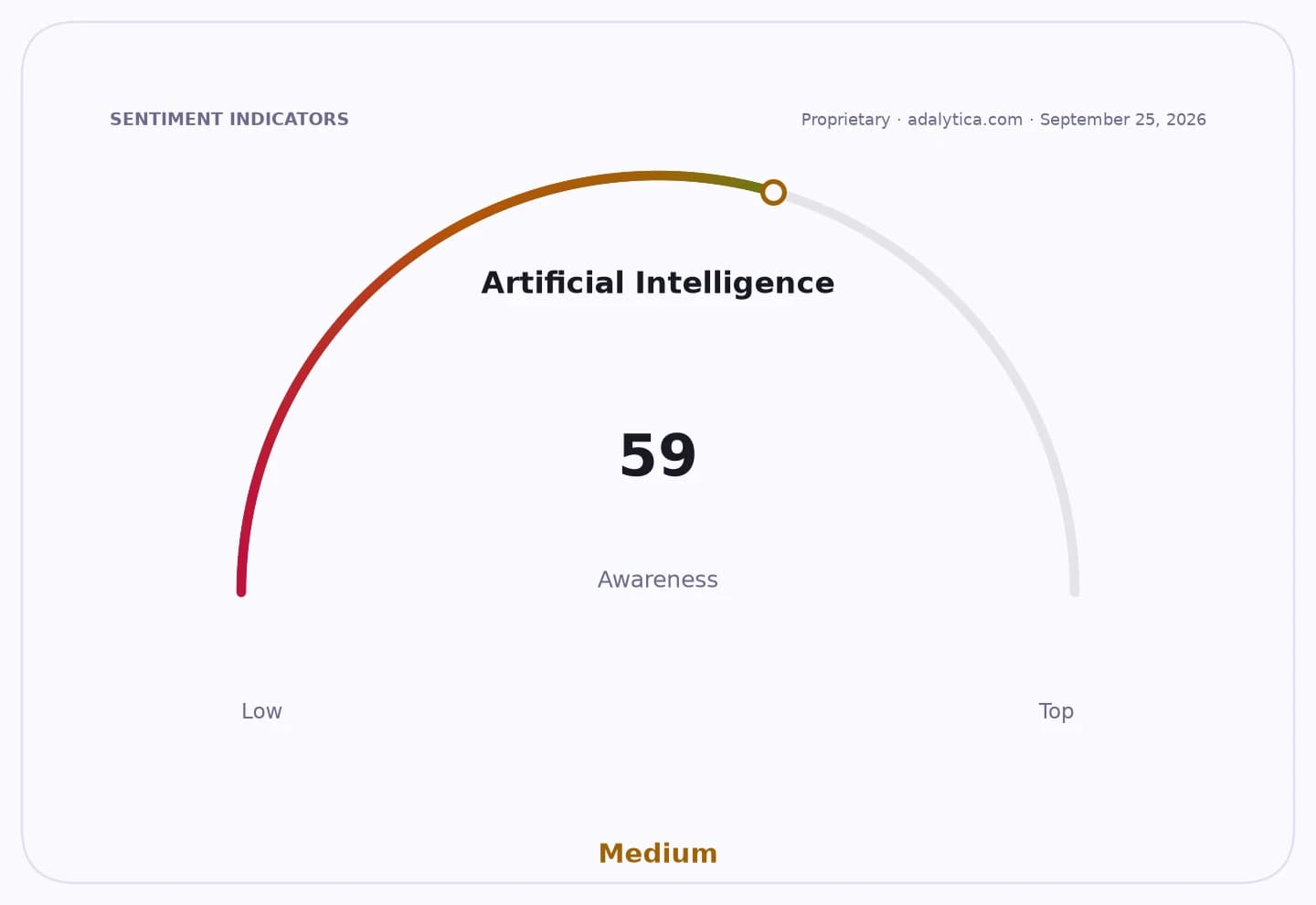
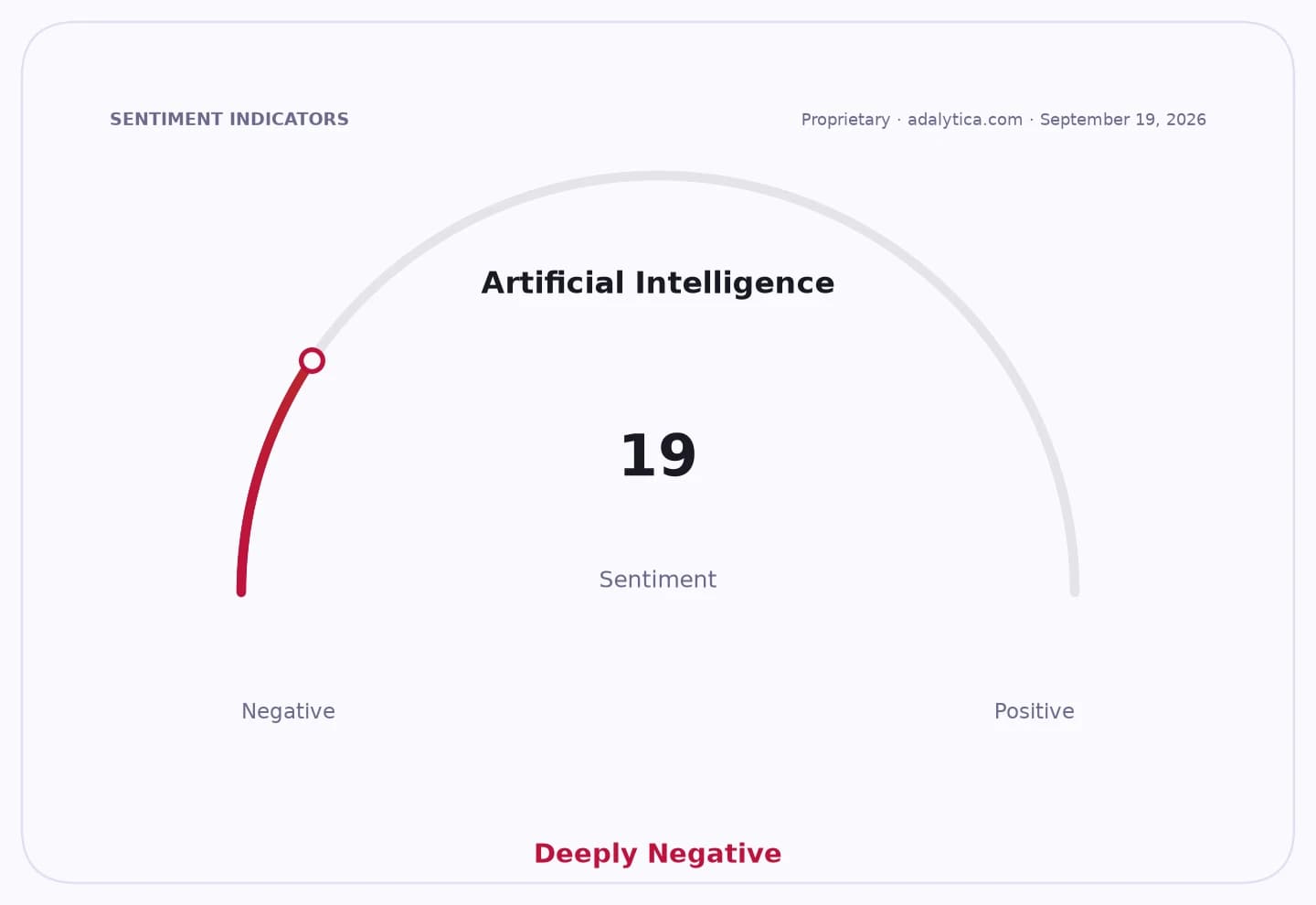
This is a snapshot — live sentiment, awareness and momentum for 130+ markets update continuously in the dashboard.Open AlphaPulse
That delay matters economically because AI is already moving into core parts of the U.S. economy: cloud computing, software, search, chips, data centers and electricity demand. When policymakers hesitate, capital keeps pouring in. That can fuel innovation and preserve America’s lead over China, which is exactly the argument many Republicans are making. But it also means the costs and risks of rapid AI deployment — from safety failures to privacy problems to power-grid strain — are being pushed onto companies, consumers and local utilities rather than being absorbed by a federal framework.
For investors, the absence of regulation is a double-edged sword. It is broadly supportive for the biggest AI names because it lowers the chance of near-term compliance costs and product restrictions. That helps explain why investors continue to treat AI as a secular growth story rather than a policy trade. But the lack of rules also keeps a real overhang in place. If Congress eventually acts, the winners and losers could shift quickly, especially for firms most exposed to frontier models, cloud workloads and AI infrastructure.
The market has already priced that tension into the leading AI stocks. Nvidia has remained well above its 200-day moving average, a sign the chipmaker still sits at the center of investor enthusiasm for AI spending even after bouts of volatility. Microsoft, one of the biggest corporate buyers and builders in AI, has likewise held up better than the broader market on the strength of its cloud and software franchises. By contrast, smaller AI-linked names such as C3.ai have been far more fragile, underscoring how unforgiving the market can be when a company’s story depends on a single theme.
The policy stalemate also helps explain why the debate has become so political. Republicans largely frame AI regulation as a brake on U.S. competitiveness, especially with China in mind. Democrats are pushing the opposite case: that the technology is too powerful to be left to self-regulation, particularly when it touches jobs, education, public safety and elections. Yet even the lawmakers most engaged with the issue admit that expertise is scarce on Capitol Hill and that the legislative machinery is slow. Bills have been introduced on everything from model shutdown mechanisms to safeguards for frontier systems, but most have not made it to the House floor.
There is a longer-term investing lesson here. AI is not a one-quarter trade. It is a multiyear infrastructure buildout that will reward the companies with real moats, pricing power and durable cash flow, while punishing weaker players that rely on hype alone. That is why investors should focus less on the next headline about Congress and more on which businesses can compound through any eventual regulation. For now, the most important takeaway is simple: Washington remains behind the curve, and that leaves the AI boom intact — but still exposed to a future political reset. Worth watching, and worth holding for the long term.
| Entity | Gains | Losses |
|---|---|---|
| Big Tech AI leaders | ▲Less near-term red tape | ▼Higher long-term policy risk |
| Nvidia | ▲Strong AI hardware demand | ▼Potential export and oversight pressure |
| Microsoft | ▲Cloud and AI expansion runway | ▼Rising compliance and energy scrutiny |
| Congress / regulators | ▲Political room to delay | ▼Credibility on public safeguards |