CoreWeave slid 4.1% on Wednesday after Nvidia’s strong quarterly results briefly lifted the stock, only for investors to refocus on the AI infrastructure company’s heavy borrowing needs and the cost of funding its rapid expansion.
CoreWeave Falls on Debt and Funding Concerns
The move underscores a shift in how Wall Street is valuing the AI buildout. Demand for computing power remains exceptionally strong, and CoreWeave’s latest results showed revenue rising 168% from a year earlier while management lifted its 2026 sales outlook to $13 billion to $13.3 billion. But investors are increasingly asking not whether AI spending will persist, but who will pay for the data centers, chips and power capacity needed to support it.
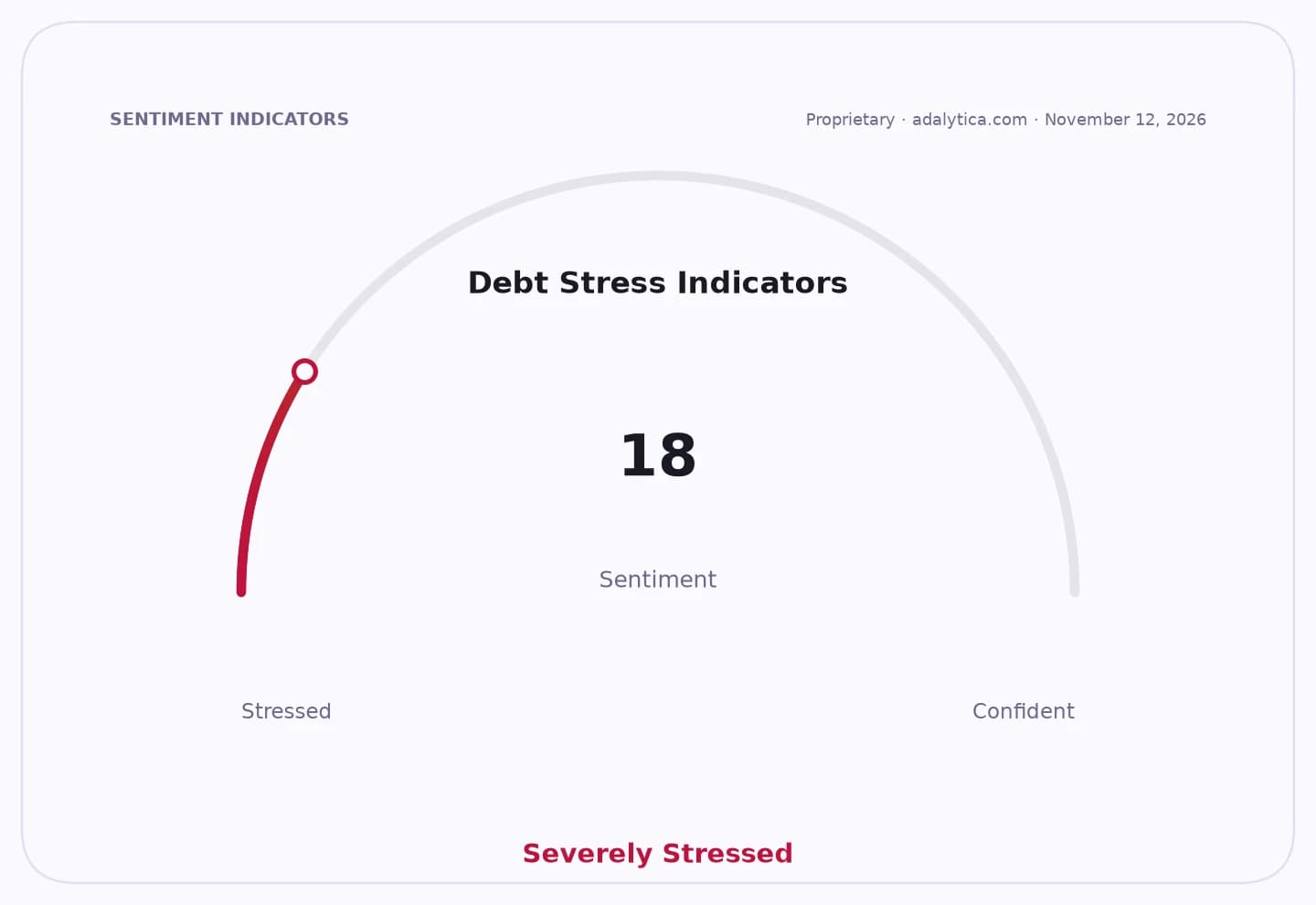
Sentiment Indicators
CoreWeave closed at $47.83, its weakest level in the session after opening higher in premarket trade. Volume reached 58.9 million shares, about 28% above its three-month average, indicating that the selloff drew active trading rather than a quiet drift lower. The stock is still up about 20% since its 2025 initial public offering, but it has lost momentum as financing concerns have taken center stage.
The pressure is not isolated. IREN also fell on the day, reflecting a broader reassessment of AI infrastructure names that depend on large-scale capital spending and borrowed money to scale quickly. With the 10-year Treasury yield above 5%, debt-funded growth is becoming harder to defend, particularly for companies that have yet to reach sustained profitability.
That is the crux of CoreWeave’s investment case. The company is targeting profitability in 2028, leaving several years in which it must keep raising capital to buy hardware and expand capacity while interest costs remain elevated. CoreWeave’s latest 10-Q showed operations have been financed primarily through equity proceeds and borrowings, and warned that insufficient cash flow could leave it unable to service debt obligations. The company said it generated $5.6 billion in operating cash flow over the first nine months of 2026, but that included $1.3 billion of interest payments net of capitalized amounts, highlighting how expensive the funding model has become.
For investors, the key question is whether contracted demand will translate into enough free cash flow before leverage becomes a drag on returns. Long-term customer contracts and prepayments offer some visibility, but they do not eliminate the timing mismatch between large upfront infrastructure spending and cash receipts that may arrive later.
Nvidia’s earnings were strong enough to reinforce the durability of AI demand, but they were not enough to change the market’s focus. The next test for CoreWeave is not whether customers want more AI capacity. It is whether the company can finance that growth without diluting shareholders or stretching its balance sheet further.
| Entity | Gains | Losses |
|---|---|---|
| CoreWeave longs | ▲Revenue growth, AI demand | ▼Debt burden, financing risk |
| CoreWeave bears | ▲Higher rates, leverage concerns | ▼AI demand resilience |
| Nvidia | ▲Validation of AI spending | ▼Spillover concern on ecosystem financing |
| AI infrastructure peers | ▲Sector demand support | ▼Higher capital costs |