Corn futures extended a sharp selloff on Euronext, with the benchmark contract falling as much as 5.8% as traders weighed weaker export demand against continued pressure from global grain supplies.
Corn futures fall on Euronext amid weak demand

The move matters because corn is not falling in isolation: it sits inside a broader grain downturn that is being shaped by ample inventories, subdued buying interest and renewed volatility in Black Sea flows. Wheat also got cheaper in Constanța, underscoring that the weakness is spreading across the region rather than reflecting a corn-specific shock. For farmers, merchants and end-users, the drop cuts into hedging values and tightens margins at a time when pricing power is already fragile.
Sentiment Indicators

The retreat comes even as drone attacks in the Black Sea continue to disrupt Russian grain exports, a development that should, in theory, support prices by complicating shipments from the world’s largest wheat exporter. But the market is focusing more on the near-term reality of plentiful supply and soft international prices than on potential logistical bottlenecks. Russia has also acknowledged weak domestic grain purchase prices as a problem, highlighting how export disruption has not yet translated into a durable floor for the market.
Corn’s technical setup has turned less constructive as well. The contract closed at 17.18 after touching 17.09, below its 50-day moving average of 18.60 and not far under its 200-day average of 18.18. The relative strength index was 36.2, approaching oversold territory, while MACD remained negative. That points to a market still under pressure, though one that could be vulnerable to a short-covering bounce if export risks intensify or buyers return.
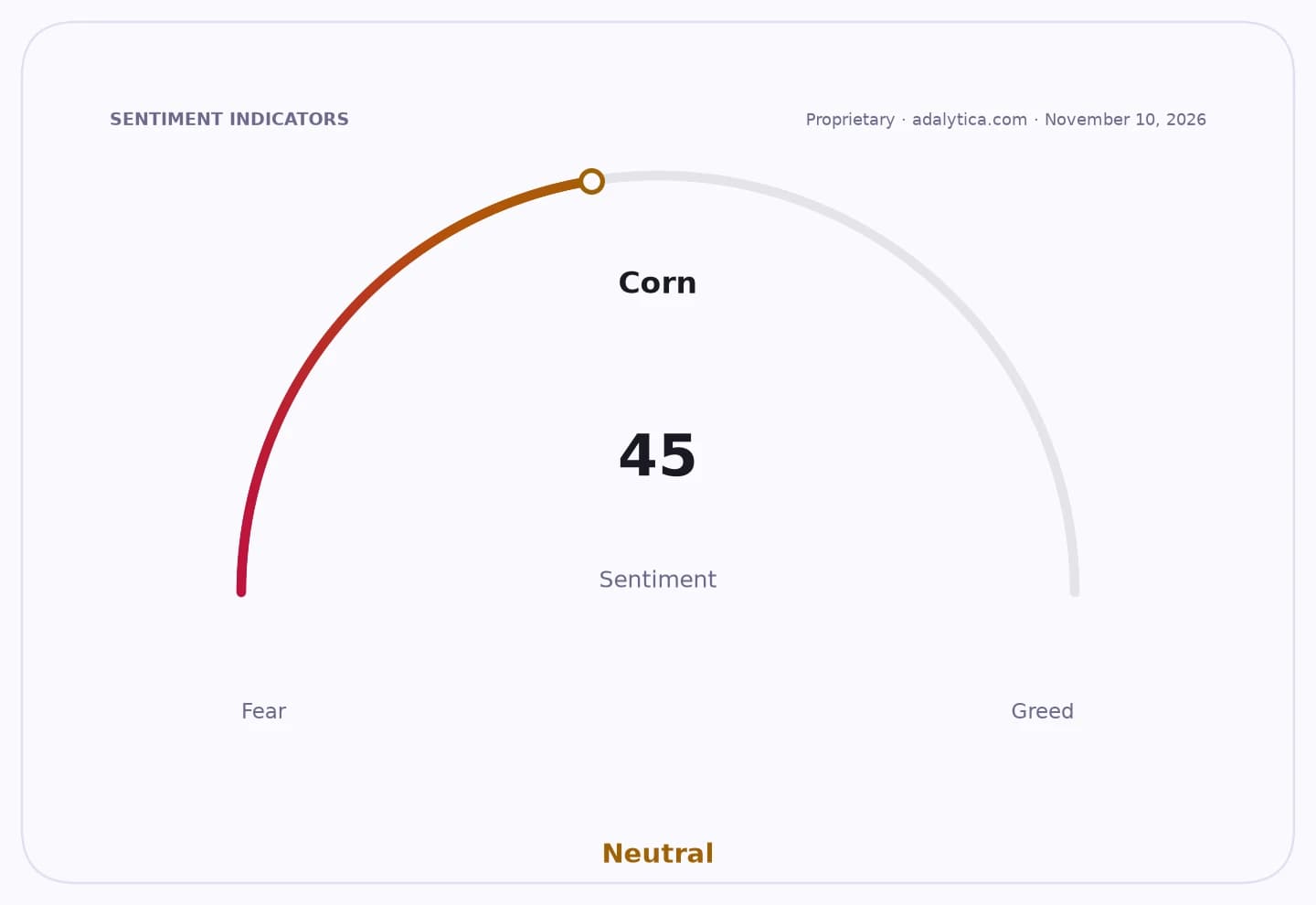
Broader commodity signals are mixed. The U.S. dollar remains firm enough to keep dollar-priced agricultural exports expensive for importers, even though proprietary Adalytica trade signals on the dollar have eased from recent highs. At the same time, Adalytica’s Corn Fear & Greed Index showed neutral sentiment, but awareness remained in “fear,” suggesting traders are alert to downside risks without yet showing panic. That combination usually favors volatility over a clean trend reversal.
For investors, the key question is whether this is a temporary liquidation in a well-supplied market or the start of a deeper repricing across grains. Grain merchants, exporters and processors benefit from lower feedstock costs, but growers and storage operators face worsening economics if the slide persists. The next catalyst will be whether Black Sea disruptions escalate enough to tighten actual supply chains, or whether abundant global availability keeps rallies capped.
| Entity | Gains | Losses |
|---|---|---|
| Feed users and livestock producers | ▲Lower input costs | ▼Corn growers |
| Grain merchants and processors | ▲Cheaper procurement | ▼Storage operators |
| Exporters facing weak supply chains | ▲Potential pricing leverage | ▼Importers seeking stable supply |
| Short sellers / bearish traders | ▲Momentum on downside | ▼Long-only holders |