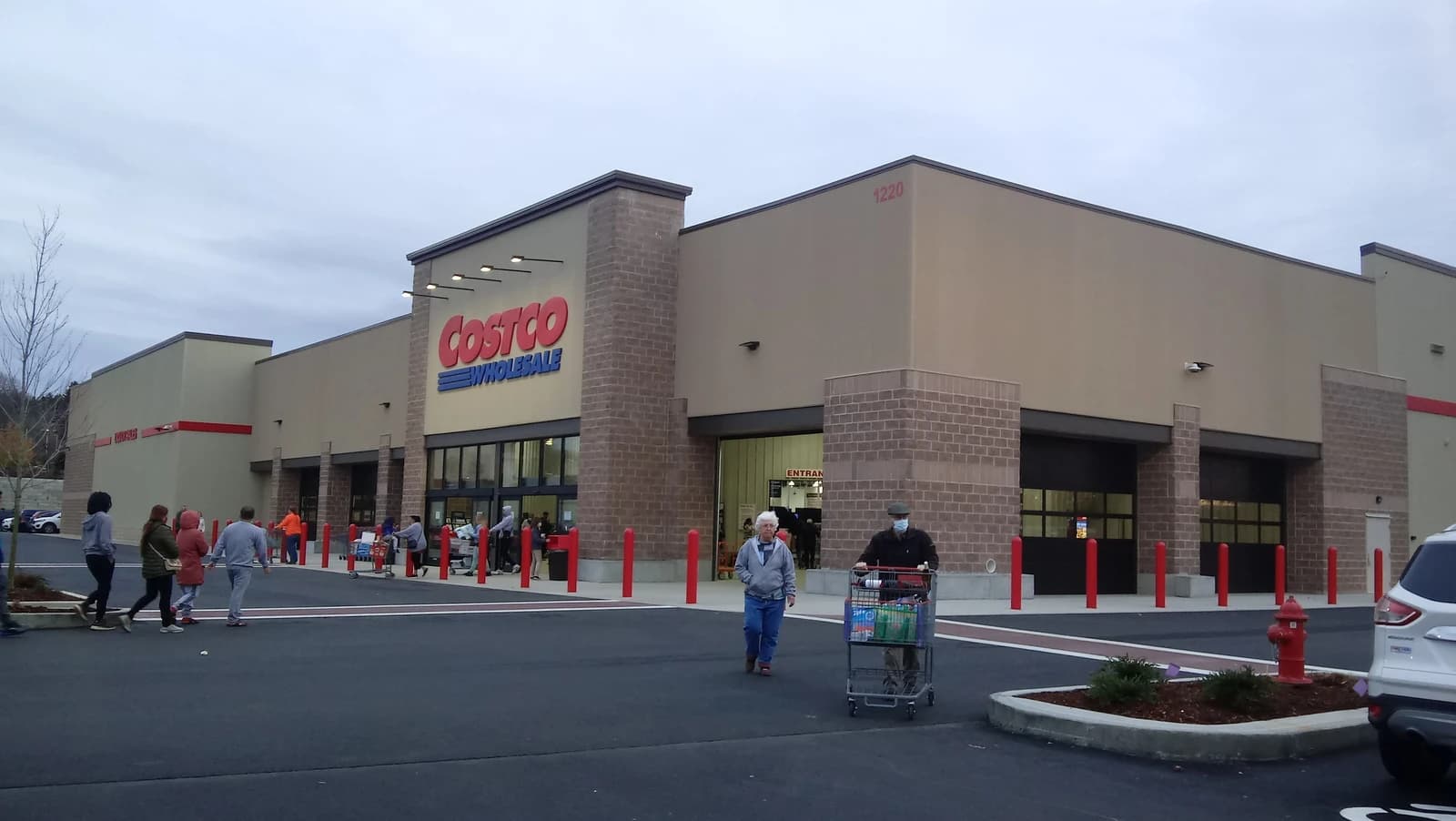
Costco Wholesale’s shares have moved above $1,000, but that milestone alone is unlikely to force a stock split because the retailer’s management has shown little appetite for making one of the market’s oldest optics moves.
Costco Holds Above $1,000 as Split Talk Fades
The bigger issue for investors is not whether Costco can keep trading at a four-digit price — it clearly can — but whether the stock’s valuation, liquidity and shareholder base still support demand without the help of a split. So far, the answer appears to be yes. Costco closed at $1,024.84 on Nov. 3 after briefly touching $1,040.55 a day earlier, extending a 2026 rally that has lifted the stock 17.3% from its year-start level of $861.14 and ahead of the S&P 500’s 10.7% gain over the same period.
Sentiment Indicators
That outperformance underscores why the company does not need to rush into a split. In markets where fractional trading is now routine, a higher nominal share price is less of a barrier than it once was. Investors can buy a slice of Costco through most online brokers without waiting for management to cut the share count, and the company avoids the legal and administrative costs that come with a split. More importantly, Costco’s board appears to view the matter as optional rather than urgent: its last split was in 2000, a long gap that suggests the company does not treat stock splits as a recurring tool.
For investors, the real attraction is the underlying business model, not the share price label. Costco still combines defensive characteristics with growth traits: membership renewals in North America were 92.3% in its latest fiscal fourth quarter, while worldwide renewals were just under 90%, evidence of a sticky customer base that tends to hold up in weaker economies. At the same time, the company is still expanding. It ended fiscal 2026 with 939 warehouses and plans to finish 2027 with 967, including 18 new U.S. locations, five in Canada and five elsewhere internationally.
Its digital business is also becoming more material. Costco said site and app traffic rose 30% in the fourth quarter, while digitally enabled comparable sales increased 19.5%, giving the stock a growth story that does not depend solely on physical store openings. That mix helps explain why Costco continues to draw buyers even after climbing above the psychologically important $1,000 threshold.
There is still a case for a split in 2027 if management wants to reset the optics or broaden the pool of retail investors further. But the evidence points the other way: a company that is already attracting demand, expanding steadily and rewarding shareholders through price gains, dividends and occasional special dividends has little economic need to engineer a lower sticker price. Costco may remain expensive in nominal terms, but that has not stopped investors from paying up for what they see as a durable, high-quality compounder.
| Entity | Gains | Losses |
|---|---|---|
| Costco shareholders | ▲Higher stock price | ▼Split hype disappointment |
| Long-term investors | ▲Business momentum, dividends | ▼Near-term optics premium risk |
| Retail investors | ▲Fractional-share access | ▼Less chance of split-driven boost |
| Costco management | ▲Flexibility, lower admin costs | ▼Pressure to act on $1,000+ price |