When a husband or wife dies, the remaining credit card balance is usually not inherited by the surviving spouse or children, but it does become a claim on the deceased person’s estate, a distinction that matters for households already under strain and for lenders managing consumer credit risk.
Credit Card Debt After a Spouse Dies
That legal and financial line is easy to miss in grief, yet it determines who is on the hook, which assets can be tapped and how quickly surviving family members can be pushed into cash-flow stress. In practice, card issuers generally seek repayment from the estate first; only if the surviving spouse was a co-borrower, joint account holder or in a community-property jurisdiction can liability extend beyond the estate.
Sentiment Indicators
The economics matter because unsecured consumer debt is one of the most fragile links in household balance sheets. Credit card borrowing is expensive, revolving and typically unsecured, which makes it far more vulnerable than mortgages or auto loans when a primary earner dies. That is why delinquency in credit cards tends to be the weakest segment of consumer lending, even when broader bank credit continues to expand.
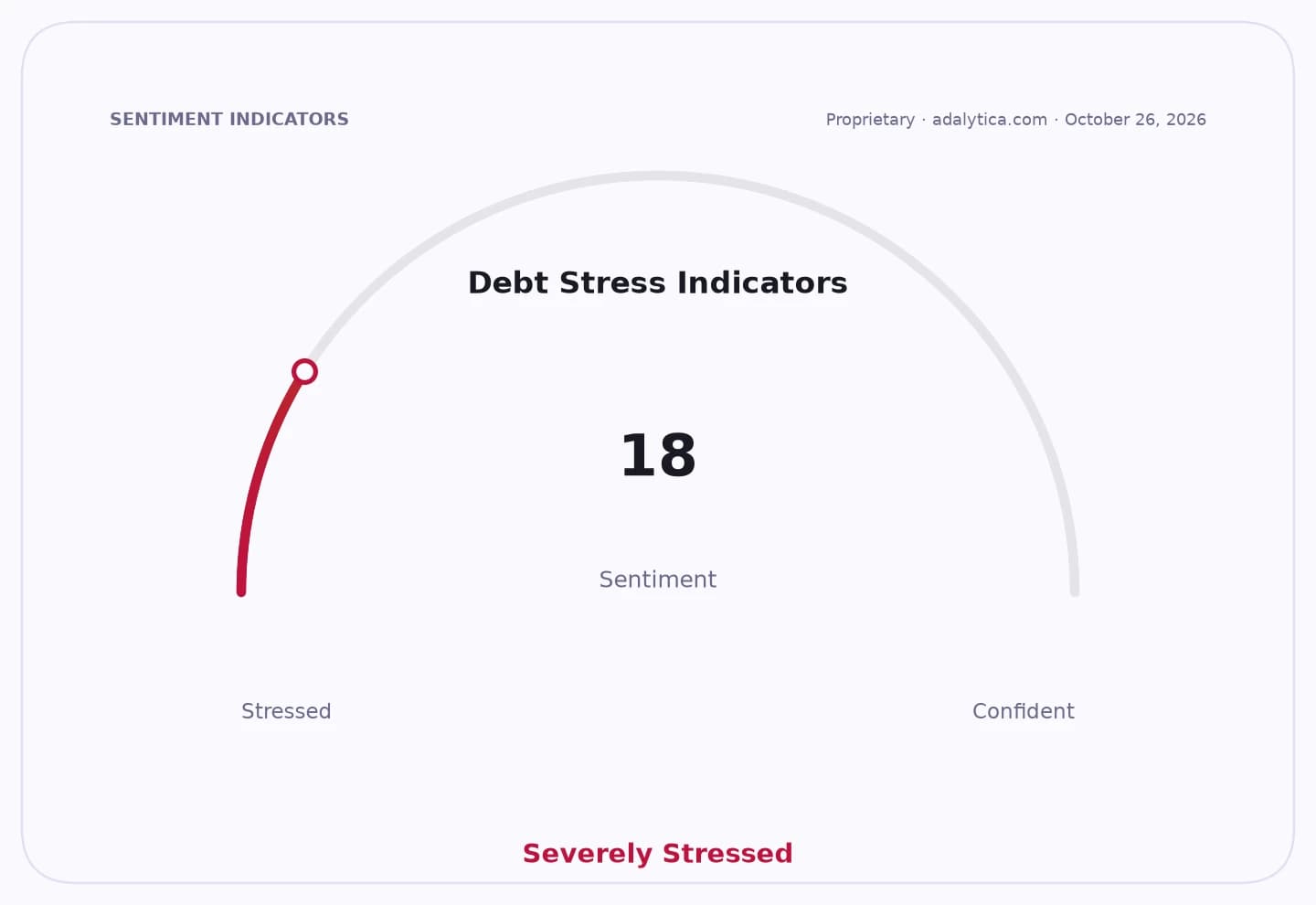
Recent data in the credit market underscore that point. In the broader banking system, lending is still growing, but credit card debt remains the most delinquent category, a warning sign that households are still leaning on plastic for day-to-day spending while financial buffers remain thin. That is a problem not just for families but for banks and card networks, because rising balances without corresponding repayment capacity can translate into higher charge-offs and tighter underwriting.
For investors, the issue touches the durability of consumer credit at American Express and Capital One, among other lenders with exposure to card spending. American Express’s latest filing says charge card members must pay the full amount billed each month unless they use products that allow repayment over time, a reminder that even premium card issuers rely on disciplined payment behavior. Capital One’s recent stock action reflects the market’s sensitivity to any sign that consumer credit quality is weakening, with the shares trading around $316.84 on Oct. 28 after a volatile year marked by swings in technical momentum, including a 50-day moving average near $317 and an RSI in the high 50s to low 60s.
American Express shares were also trading near $316.84, hovering around their 50-day average and still below the 200-day average, suggesting investors are weighing resilient spending against the risk that late-cycle consumer stress could hit future losses. For card lenders, the bull case is that employment remains stable and households keep paying; the bear case is that any shock to income, including a death in the family, can accelerate delinquencies and expose how little unsecured debt is protected.
The broader backdrop is not comforting. U.S. rates remain high enough to keep revolving credit expensive, with the 10-year Treasury yield near 5% and the federal funds rate around 3.75%, levels that keep borrowing costs elevated and make repayment harder for stressed households. That raises the cost of carrying balances, increases pressure on minimum payments and can leave estates scrambling to cover obligations before assets are distributed.
For families, the practical answer is that surviving relatives should not assume they must personally pay a deceased spouse’s card bill unless they shared the debt contractually or live in a state with special marital liability rules. For investors, the takeaway is that consumer credit risk is still concentrated where lending is least secured — on revolving card balances — and any deterioration there will show up first in higher charge-offs, tighter standards and more cautious guidance from lenders.
| Entity | Gains | Losses |
|---|---|---|
| Card issuers | ▲Estate claims on unpaid balances | ▼Higher delinquency risk |
| Surviving spouse | ▲Usually avoids personal liability | ▼Possible payment pressure |
| Heirs | ▲Asset protection if not liable | ▼Delays in inheritance settlement |
| Banks and card lenders | ▲Stronger legal recovery if estate has assets | ▼Charge-offs if estate is insufficient |