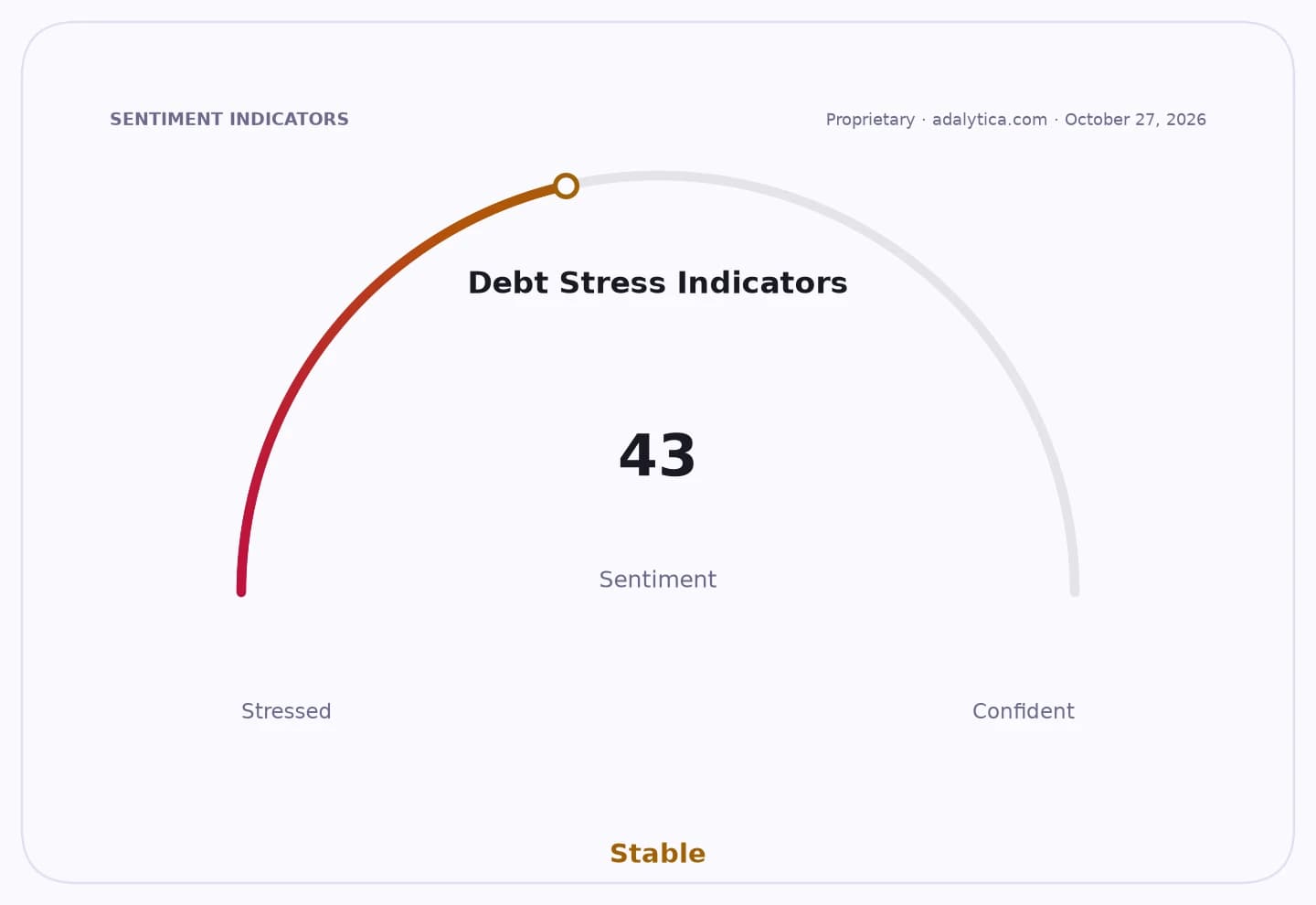
Households are still largely keeping up with their bills, but inflation and employment worries remain the dominant drag on consumer confidence, according to TransUnion’s latest quarterly survey.
TransUnion Survey Shows Consumers Still Paying Bills

The credit bureau’s October 21 report found that 72% of respondents expect to meet all of their current obligations in full, up 3 percentage points from the prior quarter. That suggests consumer balance sheets have not cracked even as households continue to face higher living costs and a softer labor backdrop.
Sentiment IndicatorsⓘProprietary · adalytica.com · October 26, 2026
This is a snapshot — live sentiment, awareness and momentum for 130+ markets update continuously in the dashboard.Open AlphaPulse
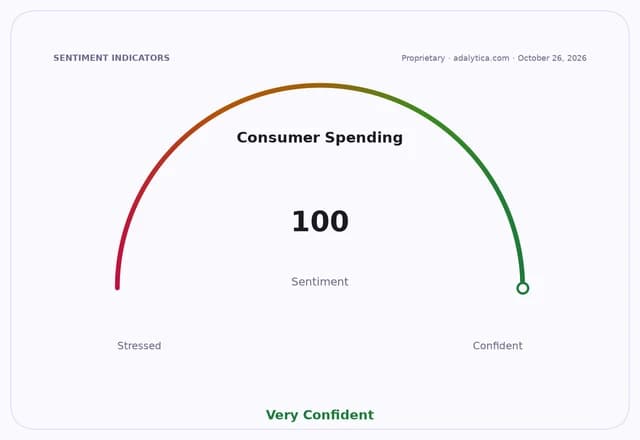
For lenders, that matters because payment performance is still holding up even as anxiety rises. TransUnion said inflation was the top concern for 68% of households, followed by employment at 59% and interest rates at 41%. Those are the kinds of pressures that can erode repayment capacity with a lag, especially if borrowing costs stay elevated or the jobs market weakens further.
The survey also points to a consumer that is cautiously managing through the strain rather than pulling back in a disorderly way. A majority of households said income was unchanged over the past three months, while expectations for next year still lean toward stability, with 69% projecting higher income and only 7% expecting a decline.
That backdrop helps explain why banks and card issuers have been willing to keep lending, even as they watch for signs of stress. Capital One and Synchrony Financial, two major consumer finance names, have both seen their shares trade around key technical levels in recent months, reflecting investor sensitivity to credit quality and funding conditions. Synchrony’s latest filing showed loan receivables rose 3.2% to $103.3 billion at Sept. 30, underscoring that credit growth is still present even as households juggle tighter budgets.
At the same time, fraud remains a meaningful pressure point for consumers and financial institutions. TransUnion said 61% of respondents had not been victims of fraud, but 8% had been both targeted and victimized, with vishing and smishing among the most common schemes. That keeps identity protection and account security near the top of banks’ consumer-risk agenda.
For investors, the takeaway is mixed but important: consumer credit is not flashing outright distress, yet the combination of persistent inflation concerns, employment anxiety and rate sensitivity argues against assuming a clean landing. The next catalysts will be whether payrolls stay resilient, whether inflation eases further, and whether delinquency trends begin to follow sentiment lower.
| Entity | Gains | Losses |
|---|---|---|
| Banks and card issuers | ▲Stable payment rates | ▼Rising credit-risk vigilance |
| Consumers with steady income | ▲Easier debt management | ▼Ongoing inflation squeeze |
| Consumer lenders short credit risk | ▲No immediate default spike | ▼Delayed deterioration risk |
| Fraud prevention providers | ▲Higher demand for security tools | ▼More account-protection costs |