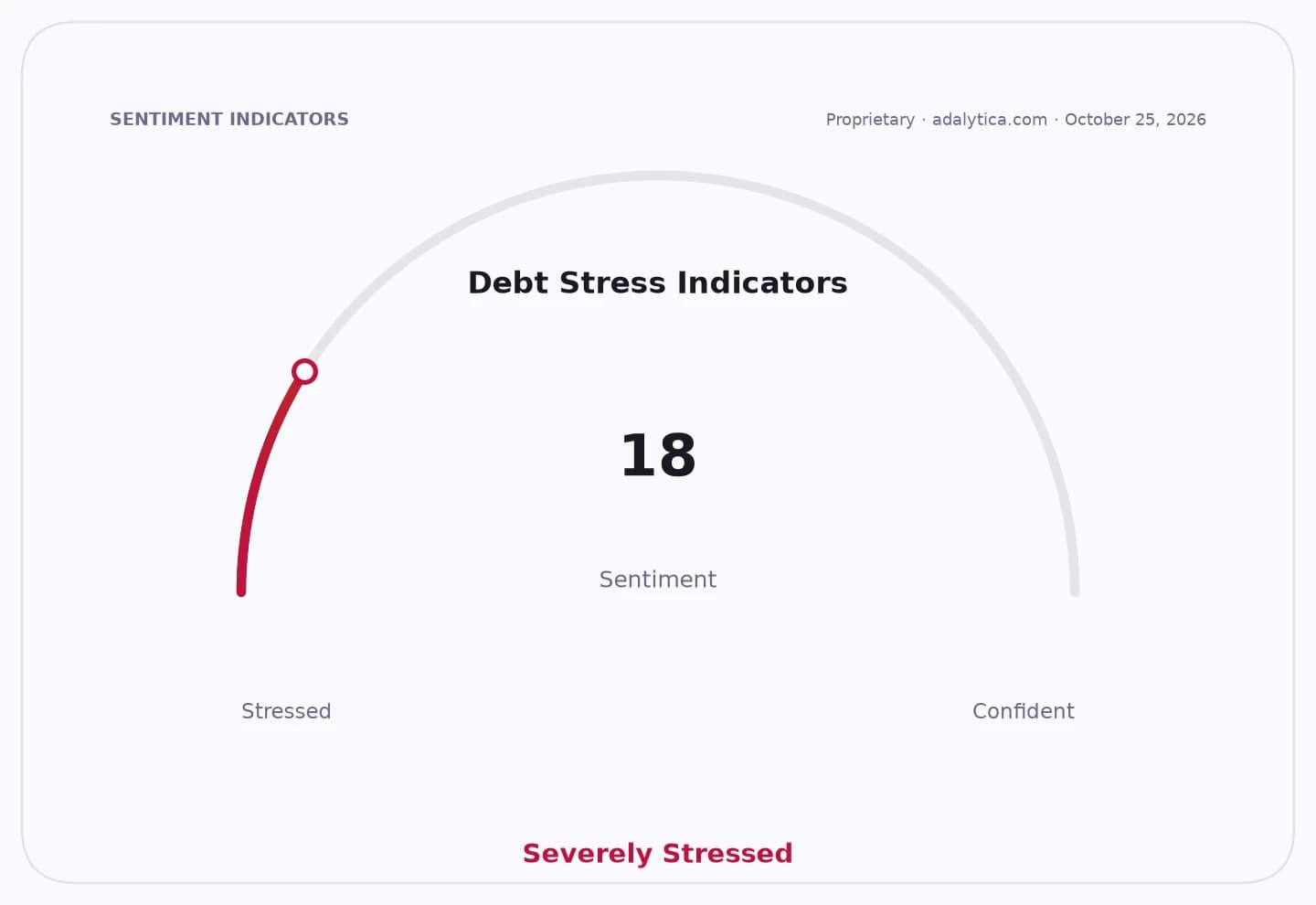
A worsening household debt burden in Santa Fe is moving from a social problem to a policy issue, with provincial lawmakers warning that easy online credit is pushing families into a spiral of borrowing to pay for food, utilities and other daily expenses.
Santa Fe Debates Consumer Credit Rules
The debate in the Chamber of Deputies in Santa Fe matters because it captures a broader shift in how consumer credit is being used in Argentina’s strained economy: not to finance durable goods or investment, but to bridge the gap between incomes and the cost of living. That change raises the risk of higher defaults, tighter lending conditions and weaker consumption, all of which feed back into local activity and employment.
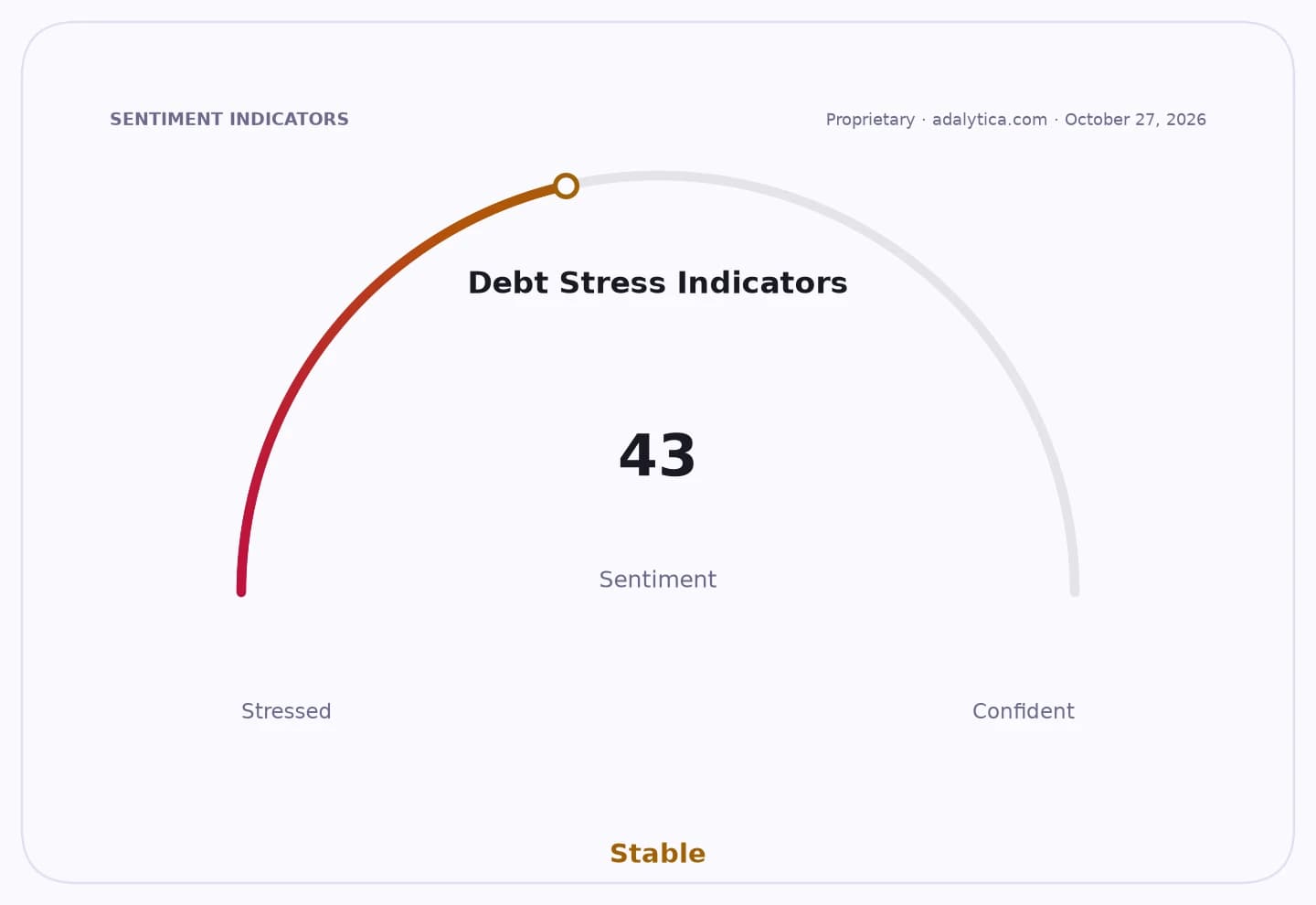
Sentiment IndicatorsⓘProprietary · adalytica.com · October 27, 2026
This is a snapshot — live sentiment, awareness and momentum for 130+ markets update continuously in the dashboard.Open AlphaPulse
At the center of the discussion was provincial lawmaker Gisel Mahmud, who is promoting a draft consumer protection code for Santa Fe. She said many households are choosing between buying food, servicing existing debts or taking on new obligations to pay credit cards. Her warning reflects a market reality that is increasingly visible in low-income and middle-income households across the country: debt is being used less as a planning tool than as a survival mechanism.
The most sensitive point in the debate was the role of fintech platforms and virtual wallets, which have widened access to quick loans. Mahmud argued that borrowers can receive credit in minutes without meaningful verification of income or repayment capacity. That speed, advocates said, is helping create a debt rollover cycle in which families take on fresh, often more expensive credit to settle previous obligations, deepening arrears across both formal lenders and informal providers.
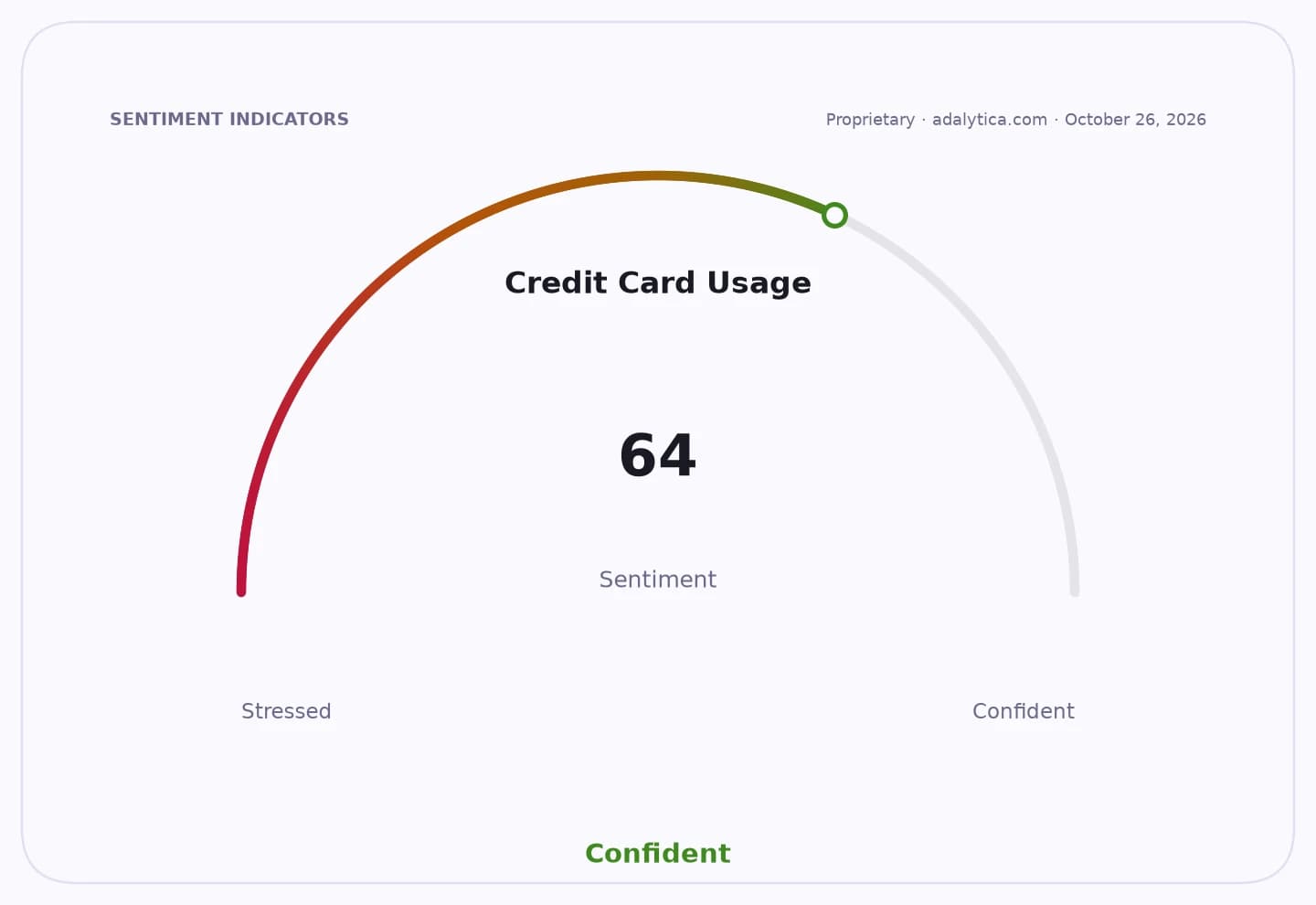
Credit Card Usage — 30-day sentimentadalytica.com
Explore this data interactively — full history, time series and cross-market comparisons.Open AlphaPulse
For lenders, that dynamic eventually shows up as higher delinquency, larger provisioning needs and more cautious underwriting. For consumers, it can mean a shrinking set of options and rising financing costs just as real wages remain under pressure. The broader economic effect is straightforward: when a larger share of household income is diverted to debt service, discretionary spending falls, and so does support for local commerce.
Economist Emiliano Libman of Fundar said persistent delinquency is not only a household problem but a macroeconomic one. In his view, elevated defaults tend to push up interest rates, reduce credit supply to productive sectors and weaken demand and job creation. That is especially relevant in a province where household borrowing for consumption is increasingly substituting for lost purchasing power rather than expanding it.
Consumer groups want the response to go beyond warnings. Paula Arias, president of APRECO, argued for a framework of “responsible credit” that would force lenders to disclose total financing costs more clearly, curb aggressive advertising aimed at vulnerable borrowers and create administrative and judicial routes for restructuring debts when families are in distress. Those proposals would not eliminate credit risk, but they could slow the pace at which indebtedness turns into systemic stress.
The policy debate in Santa Fe also has a wider political edge. As digital finance becomes more embedded in everyday transactions, regulators are being pushed to decide whether fast access to credit is a financial inclusion tool or a channel for overextension. Investors in lenders, consumer finance and fintech platforms should watch for a tougher regulatory stance, especially if delinquency trends continue to rise and public pressure builds for more disclosure, tighter affordability checks and debt-relief mechanisms.
The immediate market impact is local, but the lesson is broader: when household borrowing is being used to fund basic consumption, credit quality usually deteriorates before official data catches up. In that environment, the winners are borrowers who can refinance on reasonable terms and lenders with conservative underwriting; the losers are overextended families, high-cost credit providers and, eventually, the wider economy.
| Entity | Gains | Losses |
|---|---|---|
| Overleveraged households | ▲Short-term access to cash | ▼Higher debt burden |
| Conservative lenders | ▲Lower credit losses | ▼Slower loan growth |
| Fintech and virtual wallets | ▲More user volume | ▼Regulatory scrutiny |
| Santa Fe economy | ▲Potential policy reform | ▼Weaker consumption and employment |