More than half of Portuguese consumers have used credit cards or borrowed money to pay household bills, a sign that the country’s cost-of-living squeeze is still forcing families to bridge day-to-day expenses with debt even as confidence in personal finances improves.
Portugal Consumer Credit Use Rises in Intrum Report
That is the key takeaway from Intrum’s European Consumer Payment Report 2025, which found 53% of respondents in Portugal had resorted to borrowing or credit cards in the past six months to cover their bills. The figure jumps to 79% among lower-income households, underscoring how uneven the recovery remains and why consumer credit stress is still a live risk for lenders, retailers and policymakers.
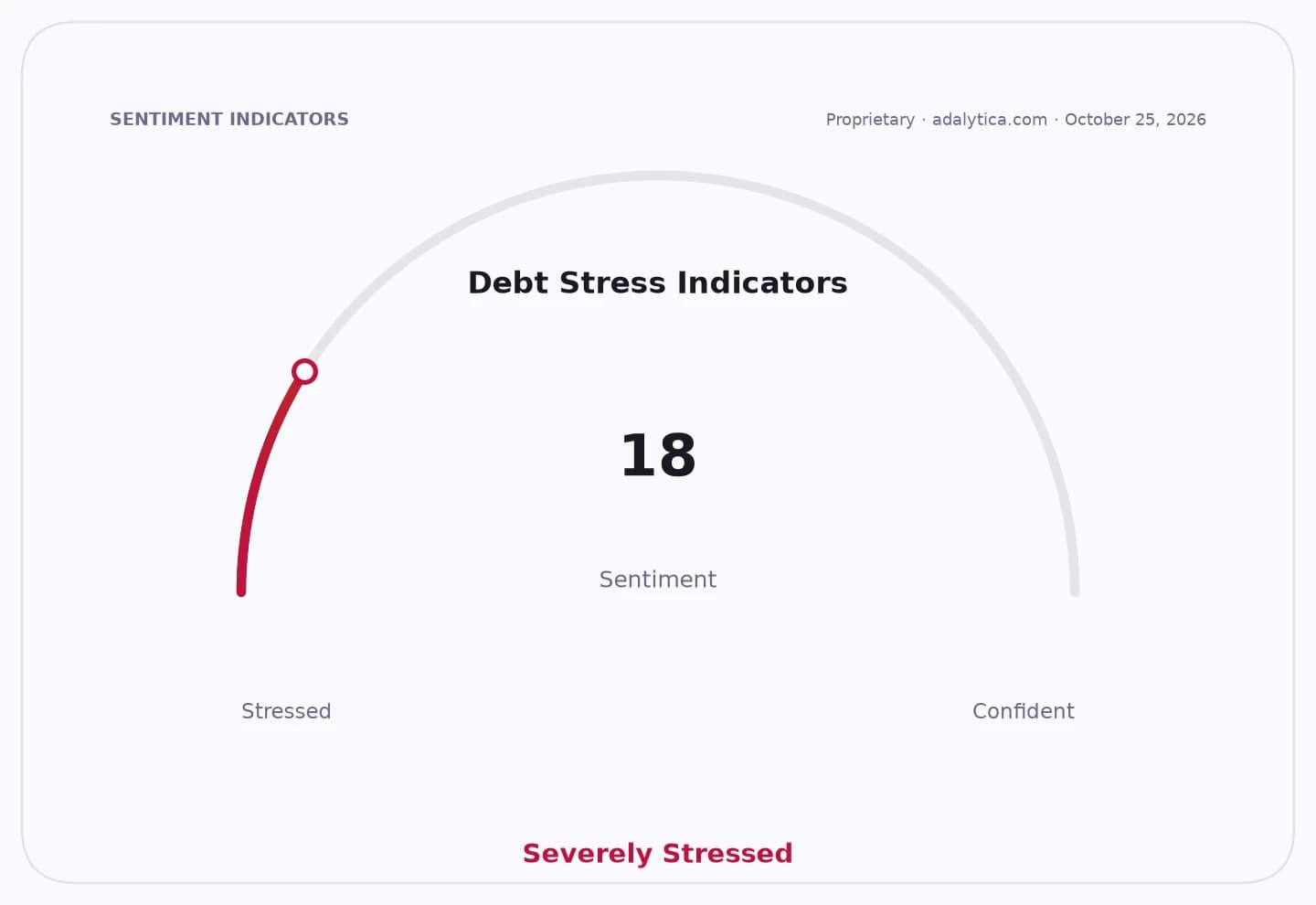
Sentiment IndicatorsⓘProprietary · adalytica.com · October 25, 2026
This is a snapshot — live sentiment, awareness and momentum for 130+ markets update continuously in the dashboard.Open AlphaPulse
The report suggests Portugal’s household balance sheet is becoming more complicated, not necessarily stronger. While 79% of those surveyed said they were confident they could pay monthly bills and 70% said they could handle an unexpected expense without borrowing, the share of consumers paying at least one bill late rose to 24% from 22% a year earlier. Those paying two to four bills late climbed to 17% from 10%, a clear warning that resilience is not evenly distributed.
For investors, that matters because household payment behavior is an early read on credit quality, consumer spending power and bank risk costs. Portuguese banks with retail exposure may still be benefiting from a functioning labor market and relatively contained default rates, but the data point to rising use of revolving credit and flexible payment products to paper over budget gaps. That can support spending in the short term, but it also increases the likelihood of future delinquencies if inflation, wages or employment turn less favorable.
The report also shows where the strain is most acute. Among those struggling to pay, 59% cited the rising cost of living, 46% pointed to unexpected expenses and 38% blamed stagnant salaries. Those are the kinds of pressures that tend to hit lower-income borrowers first, and they help explain why 73% of respondents with below-average incomes used buy-now, pay-later products. In total, 38% of Portuguese consumers used BNPL, a reminder that flexible financing has moved from niche to mainstream in household budgeting.
At the same time, the study points to a consumer base that is adapting rather than collapsing. The share of respondents classed as financially fragile fell to 17% from 26% last year, and the country’s financial management index improved to 82 points. More households also reported saving monthly for emergencies, suggesting consumers are trying to rebuild buffers even as many still rely on credit to get through the month.
There is also a technology angle investors should not miss. The share of people using artificial intelligence to manage personal finances surged to 33% from 8% a year earlier. That may sound like a curiosity, but it speaks to a broader shift toward automated budgeting, credit monitoring and payment planning — all areas where banks, fintechs and debt-collection firms can win business if they offer tools that reduce arrears and improve customer retention.
The bottom line is that Portugal’s consumer story is not one of broad distress, but of a fragile equilibrium. Households are still spending, still saving and still expressing confidence, yet a growing number are leaning on credit to keep the monthly bill cycle intact. For investors, that is a call to focus on lenders and payment businesses with disciplined underwriting, while treating highly exposed consumer credit names with caution until wage growth and affordability improve more convincingly.
| Entity | Gains | Losses |
|---|---|---|
| Portuguese banks | ▲Higher card and consumer lending volumes | ▼Rising credit risk |
| BNPL providers | ▲More mainstream adoption | ▼Regulatory scrutiny |
| Retailers/payment firms | ▲Supported consumer spending | ▼More late payments |
| Lower-income households | ▲Short-term bill flexibility | ▼Heavier debt burden |