More than half of U.S. consumers carrying short-term debt expect it will take longer than six months to pay off, underscoring how elevated living costs are turning credit cards, buy now, pay later balances and medical debt into a persistent drag on household finances.
Achieve survey shows U.S. consumers need longer to repay debt

The 2026 survey from Achieve found 56% of respondents said repayment of their unsecured short-term debt would take more than six months, a warning sign for consumption at a time when households are still absorbing the aftermath of years of inflation. With the Consumer Price Index up to 336.3 in September from 333.0 in August, price pressures have eased from their peak but remain high enough to keep essentials expensive, while the unemployment rate at 4.2% suggests labor markets are no longer offering the same cushion they did earlier in the recovery.
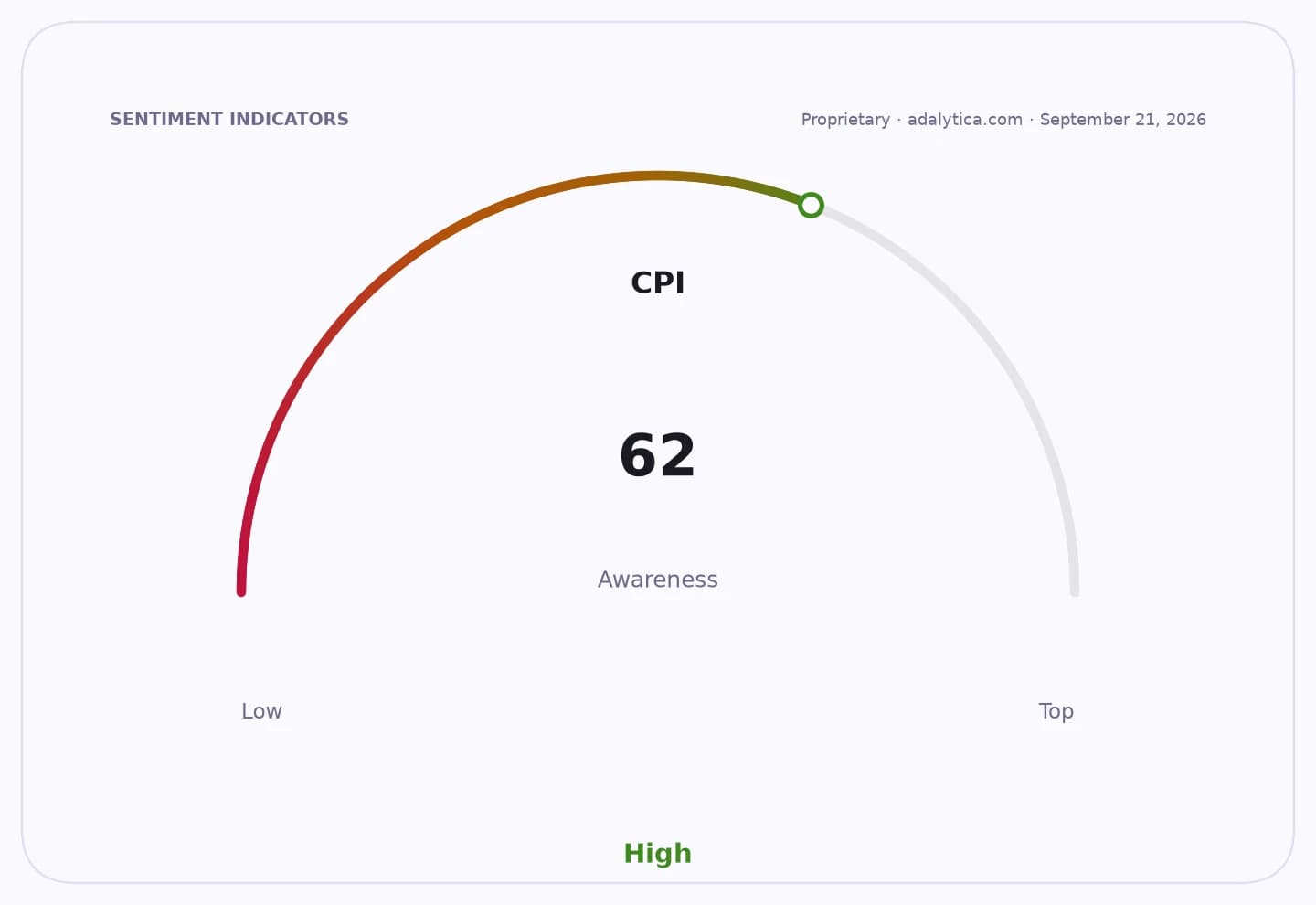
Sentiment IndicatorsⓘProprietary · adalytica.com · October 21, 2026
This is a snapshot — live sentiment, awareness and momentum for 130+ markets update continuously in the dashboard.Open AlphaPulse
What makes the data economically important is not just the size of the debt burden, but what it is financing. Achieve said 55% of respondents were using credit card balances to cover necessities such as groceries and other recurring expenses, up from 53% in the prior quarter. That means borrowing is no longer primarily funding discretionary spending or one-off purchases; it is filling a gap between income and the cost of everyday life. When debt is used to pay for basics, it becomes harder to wind down because the next month brings another round of the same expenses.
That dynamic matters for consumer spending, which remains the largest driver of the U.S. economy. Discretionary-focused funds such as the Consumer Discretionary Select Sector SPDR ETF, XLY, have been volatile, while defensive consumer staples exposure in XLP has held up better, reflecting the market’s preference for companies tied to necessities over wants. The pattern aligns with the survey’s findings: households under pressure tend to cut back on nonessential purchases first, then borrow more to preserve essentials. That is a negative mix for retailers, travel, dining and other discretionary categories, even if aggregate spending does not collapse immediately.
The survey also suggests the stress is partly hidden. Achieve found 88% of respondents said they had paid all or nearly all of their financial obligations on time over the previous three months, yet 34% said doing so was difficult or very difficult. In other words, many households are staying current only by stretching budgets, reducing savings or adding new borrowing. That helps keep delinquency rates from worsening as quickly as they might otherwise, but it does not solve the underlying problem. It merely delays it.
For lenders, that distinction is critical. Credit card issuers have benefited from resilient spending and interest income, but the quality of revolving balances matters more as more consumers carry debt for longer. American Express has recently disclosed delinquency and write-off statistics in SEC filings, reflecting the industry’s close watch on repayment trends. A consumer base that is still paying on time but increasingly strained can support near-term loan growth, yet it also raises the risk that charge-offs and delinquencies will normalize higher if labor conditions soften or if inflation stops easing.
The survey found 50% of financially strained respondents cut back on basic needs to keep up with obligations, 32% took on additional credit card debt and 25% tapped short-term savings. More alarming, 19% reported delaying or skipping medical treatment and 11% reduced or skipped prescribed medication doses. Those responses point to a broader social cost: when debt service crowds out essentials, households may preserve their credit scores at the expense of health and resilience. That makes the consumer balance sheet more fragile and increases the odds that any shock — a job loss, a medical bill, a rent increase — translates into a sharper deterioration in credit performance.
The macro picture is therefore one of a consumer sector still standing, but increasingly dependent on credit to bridge a gap between wages and the cost of living. Inflation has moderated, but not enough to restore affordability for many lower- and middle-income households, and the survey suggests that temporary borrowing is becoming structural. For investors, that is good for some lenders in the short run, but it is a warning that credit quality, discretionary demand and household resilience may all weaken if income growth does not catch up.
The next test will be whether cooling inflation and steady employment are enough to shorten repayment timelines, or whether consumers keep rolling balances forward into 2027. If the latter, the burden on spending — and eventually on lenders — will become harder to ignore.
| Entity | Gains | Losses |
|---|---|---|
| Credit card issuers | ▲Higher revolving balances | ▼Rising future credit risk |
| U.S. consumers | ▲Short-term liquidity | ▼Long-term household flexibility |
| Discretionary retailers | ▲Stable near-term spending | ▼Weaker demand over time |
| Consumer staples | ▲Defensive demand | ▼Less benefit from consumer recovery |