Putting everyday spending on a cash back credit card can now generate $800 to $1,300 a year for a typical household, a reminder that consumer rewards are still a meaningful lever even as borrowing costs stay elevated and shoppers remain disciplined.
Credit card rewards can add up for households
The economics are simple: the average American household spends about $78,535 a year, and roughly $52,800 of that can realistically be routed through a card, according to Motley Fool Money research cited in the source piece. At a 1% rewards rate, that spending returns about $528 a year; at 2%, the haul doubles to $1,056, with a 2.5% blended rate pushing the total near $1,320. Over a decade, the difference between a 1% and 2% card compounds to more than $5,000 — not enough to change a household balance sheet, but enough to matter in a period when consumers are looking for incremental savings.
Sentiment IndicatorsⓘProprietary · adalytica.com · October 21, 2026
This is a snapshot — live sentiment, awareness and momentum for 130+ markets update continuously in the dashboard.Open AlphaPulse

That makes card rewards more than a personal-finance perk. They are part of the competitive toolkit in consumer lending, where issuers use cash back, sign-up bonuses and introductory 0% APR offers to win transactions and keep balances inside their ecosystems. For banks and card networks, the model depends on volume, interchange economics and customer stickiness; for consumers, the upside only survives if balances are paid in full. The source’s warning matters: interest charges can erase a year of rewards in just a few months, which is why rewards cards tend to benefit transactors far more than revolvers.
The backdrop is a credit-card market that remains highly competitive even as financial conditions have tightened. JPMorgan Chase’s Freedom Unlimited and Bank of America’s Customized Cash Rewards are positioned as broad-use products with no annual fee, strong sign-up bonuses and category-based earning structures. Those features show where issuers are leaning: broadening share of wallet, encouraging card usage on gas, dining, drugstores and online shopping, and nudging customers into multi-card strategies that maximize spend capture. For issuers, that can support fee income and spending volumes; for consumers, it requires enough discipline to avoid annual-fee drag, foreign-transaction charges and interest costs.
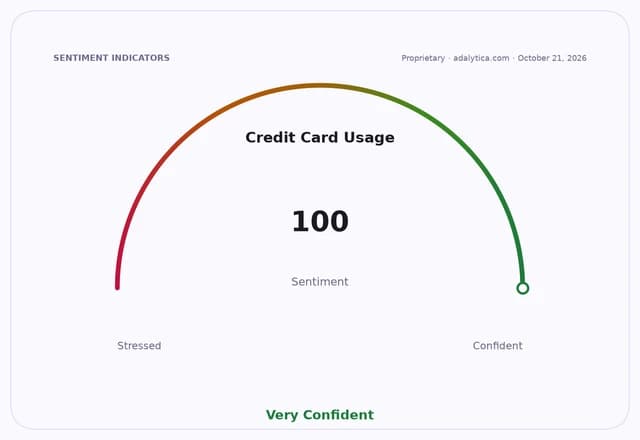
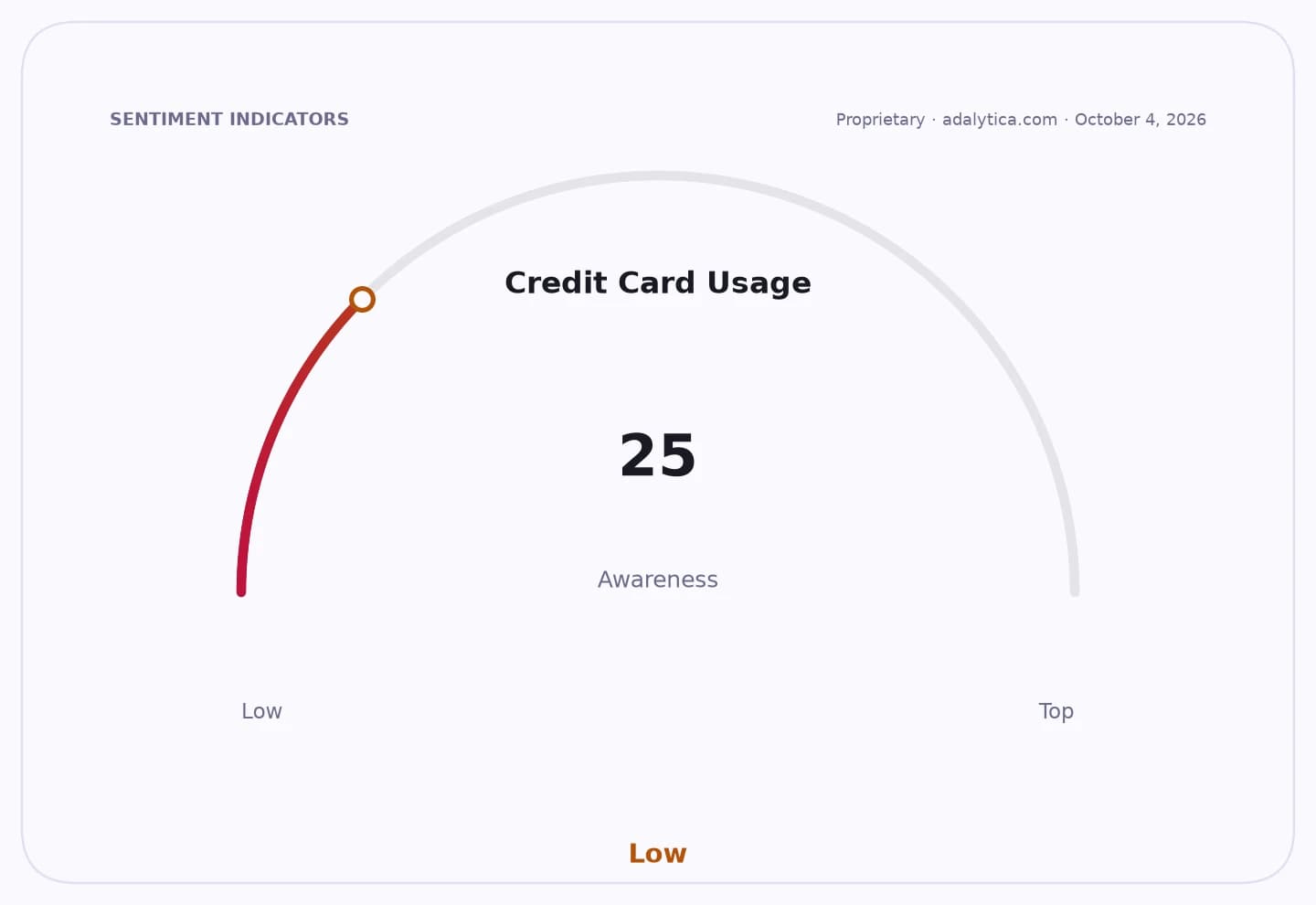
There is also a broader macro signal. Adalytica’s Credit Card Usage Sentiment is at 100, labeled “Extreme Greed,” while Consumer Spending Sentiment sits at 32, neutral, after a sharp one-day rebound but a steep 30-day decline. That combination suggests households are still using credit aggressively for purchases, but confidence around broader spending remains fragile. In that environment, rewards programs can cushion the blow of elevated prices and stubborn everyday costs, even if they do little to address the underlying pressure on real disposable income.
For investors, the takeaway is that card-rewards economics remain supportive for the largest issuers as long as spending holds up and credit quality does not deteriorate. The bull case is straightforward: sticky purchase volumes, strong customer engagement and continued rotation into premium reward products. The bear case is that intense competition forces richer incentives, while a softer consumer or rising delinquencies squeeze profitability. With Mastercard and other payment firms already trading on expectations of resilient transaction growth, the next catalyst will be whether consumer spend stays firm enough to justify the generosity of these rewards programs without worsening credit risk.
| Entity | Gains | Losses |
|---|---|---|
| Cardholders who pay in full | ▲Higher cash back | ▼Little if they carry balances |
| Credit-card issuers | ▲More purchase volume | ▼Higher rewards costs |
| Payment networks | ▲More transaction throughput | ▼Margin pressure if incentives rise |
| Revolving borrowers | ▲Immediate spending access | ▼Interest costs erase rewards |