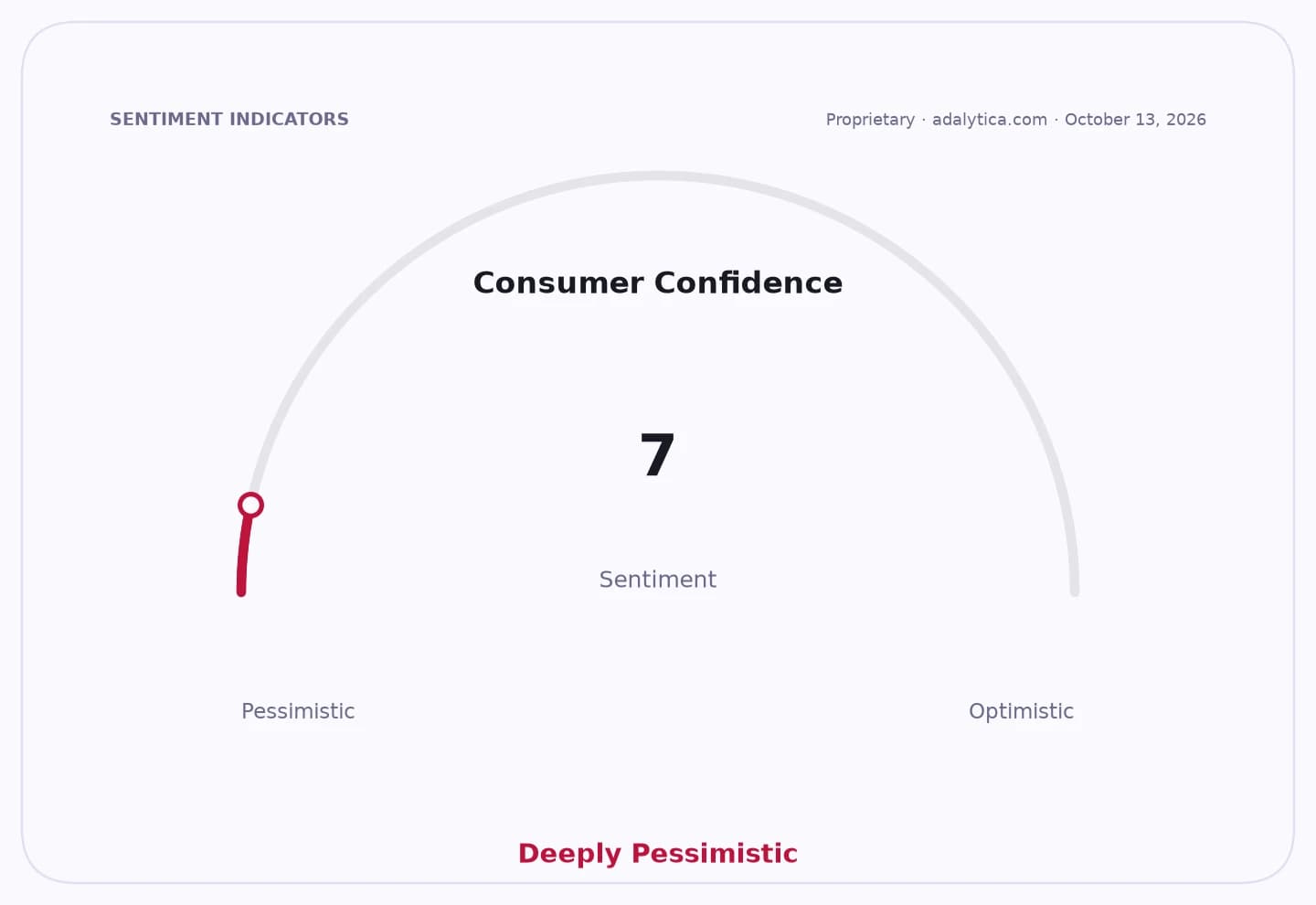
Consumer confidence in UK household finances rose to a seven-month high in September, but the improvement is being overshadowed by widespread anxiety over the Autumn Budget, with 68% of consumers worried about its hit to household finances.
UK Consumer Confidence Rises as Budget Fears Grow
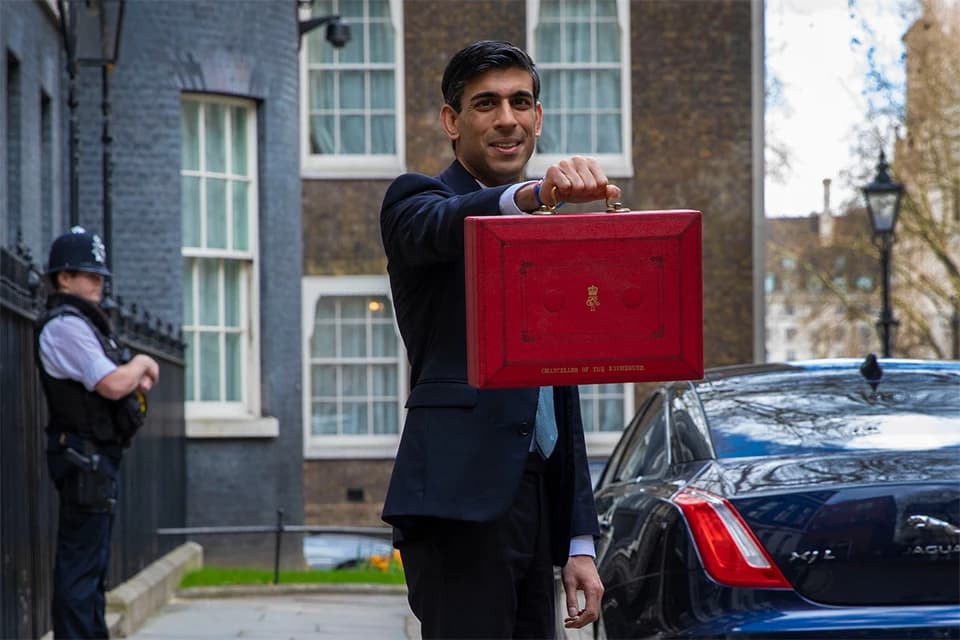
That combination matters because it suggests British households are not broadly retrenching despite inflation still running ahead of card spending growth, yet they are delaying big purchases and building savings buffers ahead of potential tax or spending changes. For the UK economy, that points to a consumer that is still spending selectively, but one that could turn more defensive if Budget measures hit disposable income.
Sentiment IndicatorsⓘProprietary · adalytica.com · October 13, 2026
This is a snapshot — live sentiment, awareness and momentum for 130+ markets update continuously in the dashboard.Open AlphaPulse
Barclays said card spending rose 2.0% year on year in September, just below August’s 2.1% and trailing CPIH inflation of 3.3%, implying volumes remain under pressure in real terms. Essential spending climbed 2.5%, outpacing non-essential spending growth of 1.8%, while fuel expenditure surged 17.3% as diesel prices hit record highs. Hospitality and leisure spending still advanced 2.7%, helped by warm weather and continued demand for eating and drinking out, but the split between necessities and discretionary items highlights how fragile household demand remains.
The confidence data offered a more positive signal, at least on balance-sheet sentiment. Confidence in household finances reached 67%, up from the prior month, while confidence in job security improved to 45% from 44% and confidence in living within means increased to 73% from 71%. Confidence in the strength of the UK economy was unchanged at 26%, showing that consumers may feel better about their own finances without becoming more optimistic about the macro outlook.
That distinction is important for investors because consumer-facing companies live and die on the gap between sentiment and actual spending. The Barclays data suggest that households are still willing to spend on dining out, subscriptions and some retail categories, but are also cutting back on non-essentials: 30% said they were reducing discretionary spending, 27% were postponing major purchases and financial decisions, and 25% were building precautionary savings. In other words, the market is not facing a clean rebound in demand; it is facing a cautious consumer whose behaviour could shift quickly if the Budget is perceived as a squeeze on take-home pay.
The Autumn Budget is now the main macro risk hanging over the consumer story. With 61% worried about possible tax changes and 38% saying they feel less certain than in previous years about what the announcements will mean, policymakers face a delicate balance between fiscal tightening and consumer confidence. Any measures that hit earnings, savings or spending incentives would likely filter through quickly to retail sales, leisure demand and credit growth.
For lenders and payment companies, the immediate picture is mixed. Higher card spending supports transaction volumes, but weak real growth and defensive household behaviour argue against a strong discretionary spending cycle. For retailers and hospitality groups, the near-term benefit of resilient demand may be outweighed by the risk that Budget uncertainty, higher fuel costs and inflation keep consumers focused on value.
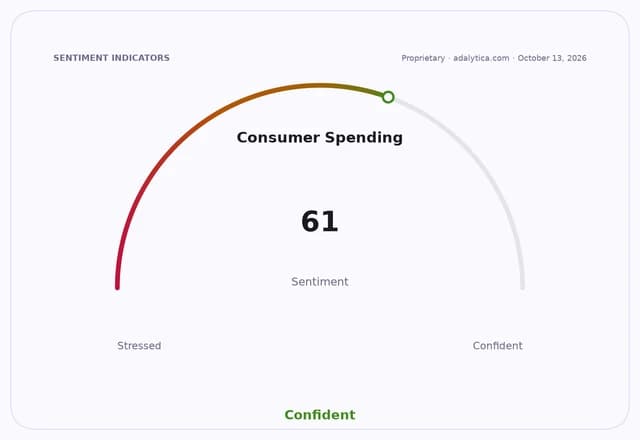
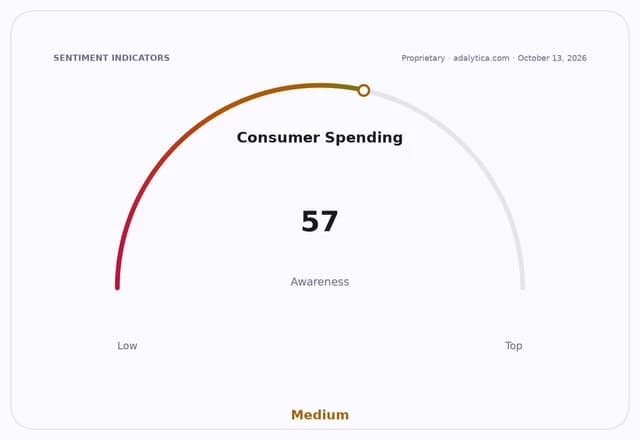
Adalytica’s Consumer Spending Sentiment snapshot also shows a neutral reading, underscoring that the mood is steady rather than exuberant. The key question now is whether the Budget removes some of the uncertainty and unlocks spending, or instead reinforces the precautionary mindset already visible in the data. The answer will help determine whether September’s confidence gains become a real consumer recovery or just another pause before households pull back again.
| Entity | Gains | Losses |
|---|---|---|
| UK households with stable finances | ▲Higher confidence | ▼Budget uncertainty |
| Barclays and card networks | ▲Higher transaction volumes | ▼Weak real spending growth |
| Hospitality and leisure retailers | ▲Warm-weather demand | ▼Value-conscious consumers |
| UK Treasury / Budget planners | ▲Scope to restore certainty | ▼Risk of dampening consumption |