Britain’s persistent cost-of-living squeeze is starting to bite into the one part of household budgets many consumers have treated as discretionary for years: foreign holidays.
UK holidays face weaker overseas spending
A report from the UK travel industry’s main trade body said nearly one in three Britons now expects to spend less on trips abroad over the next year, even as holiday-taking has returned to pre-pandemic levels. The warning matters because it points to a demand plateau in one of the most resilient parts of consumer spending and raises the risk that higher prices, rather than weak travel appetite, become the main brake on growth in the outbound market.
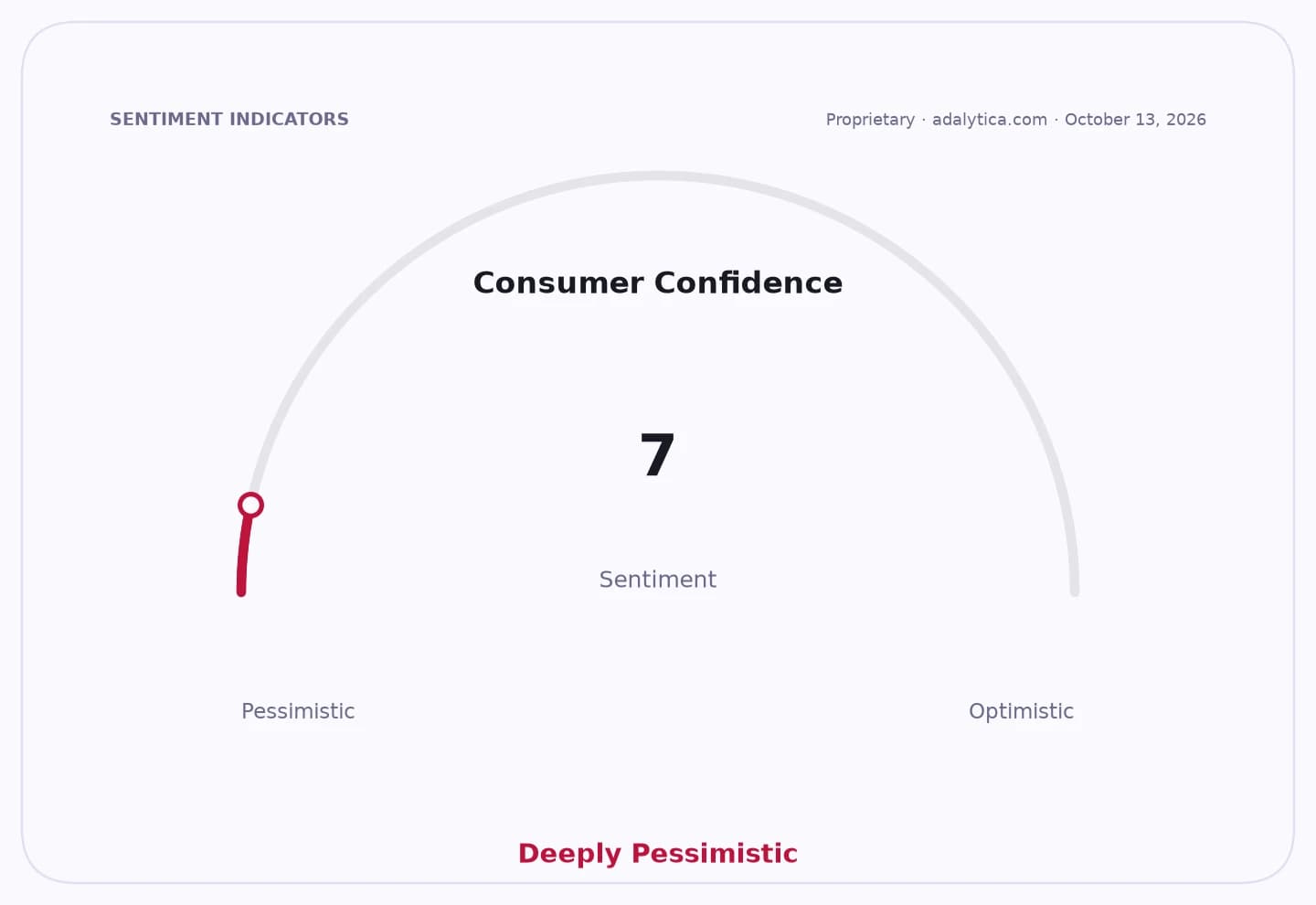
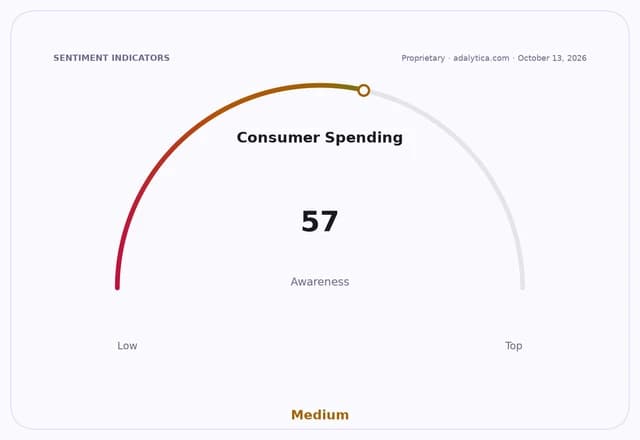
Sentiment IndicatorsⓘProprietary · adalytica.com · October 13, 2026
This is a snapshot — live sentiment, awareness and momentum for 130+ markets update continuously in the dashboard.Open AlphaPulse
The British travel association ABTA said 88% of people in the UK took a holiday this year, matching the 2019 pre-Covid peak, with 74% taking a break in the UK and 62% travelling overseas. That resilience has helped the sector recover from years of disruption, from the pandemic to geopolitical shocks, but ABTA’s survey suggests the next leg of growth may be harder to find if households keep trimming travel budgets.
The key economic significance is that foreign holidays are no longer being treated as untouchable spending. ABTA said more people are willing to cut back on vacations abroad than on phones or other consumer electronics, a telling sign for discretionary demand. In an environment where UK grocery inflation has edged up to 2.5% and Britain remains one of the G7’s higher-inflation economies, travel is increasingly exposed to the pressure created by rent, food and everyday bills.
That matters for airlines, tour operators and online travel agents that depend on continued volume growth, not just pricing. Demand has held up this year, but the composition is changing: late bookings and shorter city breaks are becoming more common, suggesting consumers are becoming more price-sensitive and less inclined to commit far in advance. For operators, that can mean tougher visibility on margins and a greater reliance on peak-season yield.
Investors in travel stocks should read the report as a warning that the post-pandemic recovery may be maturing. British leisure groups have benefited from pent-up demand, but if household budgets remain stretched into 2027, the industry may face slower growth in overseas departures and more trade-down behavior toward shorter trips or domestic alternatives. That is constructive for budget-focused carriers and packaged-tour operators only if they can keep attracting value-seeking customers without sacrificing profitability.
There are still bullish arguments. Travel confidence has improved as fears over aviation fuel shortages, flight disruption and EU border processing changes eased. ABTA also said its travel confidence index remains in positive territory at 50 points, indicating more people feel reassured than worried about going abroad. But that resilience may only delay rather than prevent a spending slowdown if real incomes remain under pressure.
The broader narrative is that Britain’s holiday market has recovered in headcount terms, but not necessarily in spending power terms. If living costs keep absorbing more of the household budget, 2027 could be the year when the foreign holiday stops being a fixture and becomes a luxury for a growing slice of the population.
| Entity | Gains | Losses |
|---|---|---|
| Budget carriers and city-break operators | ▲Price-sensitive demand | ▼Long-haul premium bookings |
| UK domestic tourism | ▲More staycation spending | ▼Outbound travel volumes |
| Airline and tour operator margins | ▲Higher-yield pricing on remaining demand | ▼Volume growth and forward visibility |
| UK households | ▲Shorter, cheaper trips | ▼Foreign holiday budgets |