UK lenders are preparing for a fresh rise in bad debt charges as household savings fall to the lowest level in three years and borrowers lean harder on credit cards, overdrafts and personal loans to keep up with living costs.
UK banks face higher bad debt charges

The warning matters because the hit is increasingly showing up in the part of the banking system most exposed to consumer stress: unsecured lending. Analysts at Bloomberg Intelligence expect the top UK banks to book about £4bn of loan-loss provisions in 2027, but say that may prove too low if household buffers continue to erode and job losses more quickly translate into missed payments.
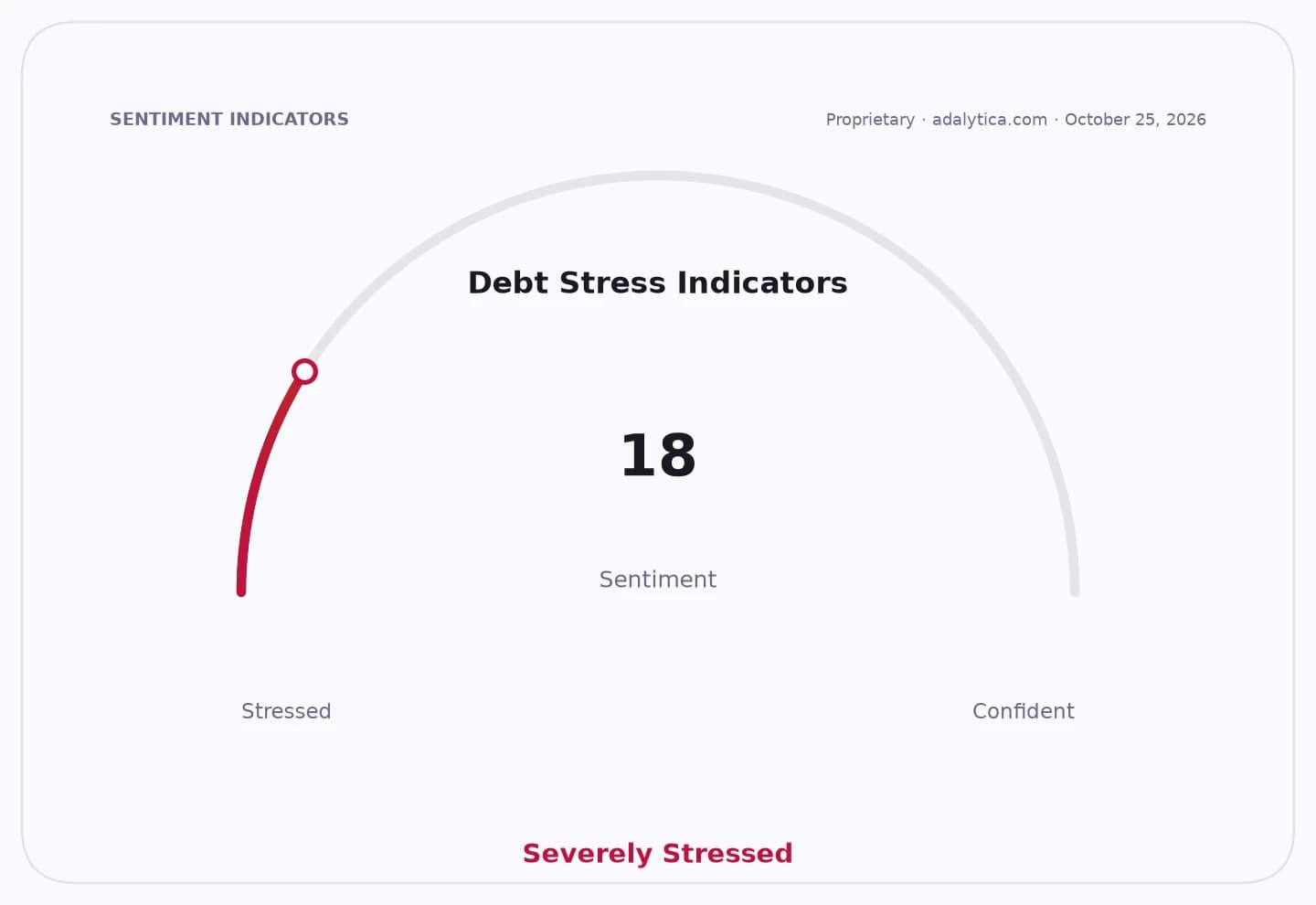
Sentiment IndicatorsⓘProprietary · adalytica.com · October 27, 2026
This is a snapshot — live sentiment, awareness and momentum for 130+ markets update continuously in the dashboard.Open AlphaPulse

The pressure is rooted in a shrinking safety net. Bloomberg Intelligence estimates that 55% of households can now last no more than three months after losing a job, a three-year high, while energy bills are due to jump by £276 in January, according to Cornwall Insight. That combination leaves consumers more reliant on borrowing to absorb day-to-day costs, shortening the path from financial strain to delinquency.
For banks, the economic significance is straightforward: when households run down savings, provisions rise, margins get squeezed and credit growth becomes more fragile. Lenders make provisions each quarter to cover expected future losses, and the current backdrop suggests more of those losses will come from unsecured products rather than mortgages. Lento Tanq, senior analyst at Bloomberg Intelligence, said “thinner household buffers could lift unsecured credit losses” and warned that households are already using credit and savings to absorb living-cost pressure, creating a “more immediate warning” for lenders.
Barclays is seen as the most exposed among the major UK banks because of its heavy presence in credit cards and personal loans. The bank expanded its UK credit card balance to £17.5bn in the first half of the year from £17.2bn at the end of 2025, while UK personal loans rose to £8.9bn from £8.5bn. That matters because these books tend to reprice quickly but also deteriorate faster than secured lending when consumers come under pressure. Barclays has already flagged the risk in its own accounts, setting aside £823m for potential loan losses in the first quarter after the US-Iran war broke out.
The broader sector is already shifting in the same direction. HSBC lifted its 2026 loan-loss forecast to 45 basis points, citing “ongoing uncertainty in the outlook”, a sign that management teams are becoming more cautious about credit quality even before defaults rise sharply. In contrast, lenders with more mortgage-heavy books should be relatively insulated. Tanq said the trend should be more supportive for Lloyds, which has the largest overall mortgage book in the UK, and Santander UK, whose portfolio is tilted toward residential mortgages after its takeover of TSB.
Investors will read the story as a test of how much earnings resilience UK banks really have after several years of benefit from higher rates. A jump in provisions would not necessarily threaten solvency, but it would curb capital returns, pressure sentiment on banks with large consumer finance franchises and expose the limits of relying on net interest income alone. That helps explain why shares can diverge sharply even within the same sector: lenders with heavier unsecured exposure look more vulnerable, while mortgage-focused banks may prove comparatively defensive if household stress deepens through winter.
The next catalyst is whether early signs of strain in consumer credit begin to spread from worried households into higher arrears and charge-offs. If they do, the current £4bn provision consensus could look conservative rather than cautious.
| Entity | Gains | Losses |
|---|---|---|
| Barclays | ▲Higher rates on unsecured lending | ▼Rising credit-card and personal-loan losses |
| Lloyds | ▲Mortgage-heavy book, lower unsecured risk | ▼Limited upside from credit growth |
| Santander UK | ▲Residential-mortgage mix, steadier credit quality | ▼Less benefit from unsecured lending spreads |
| UK households | ▲Short-term access to credit | ▼Thinner savings, higher debt stress |