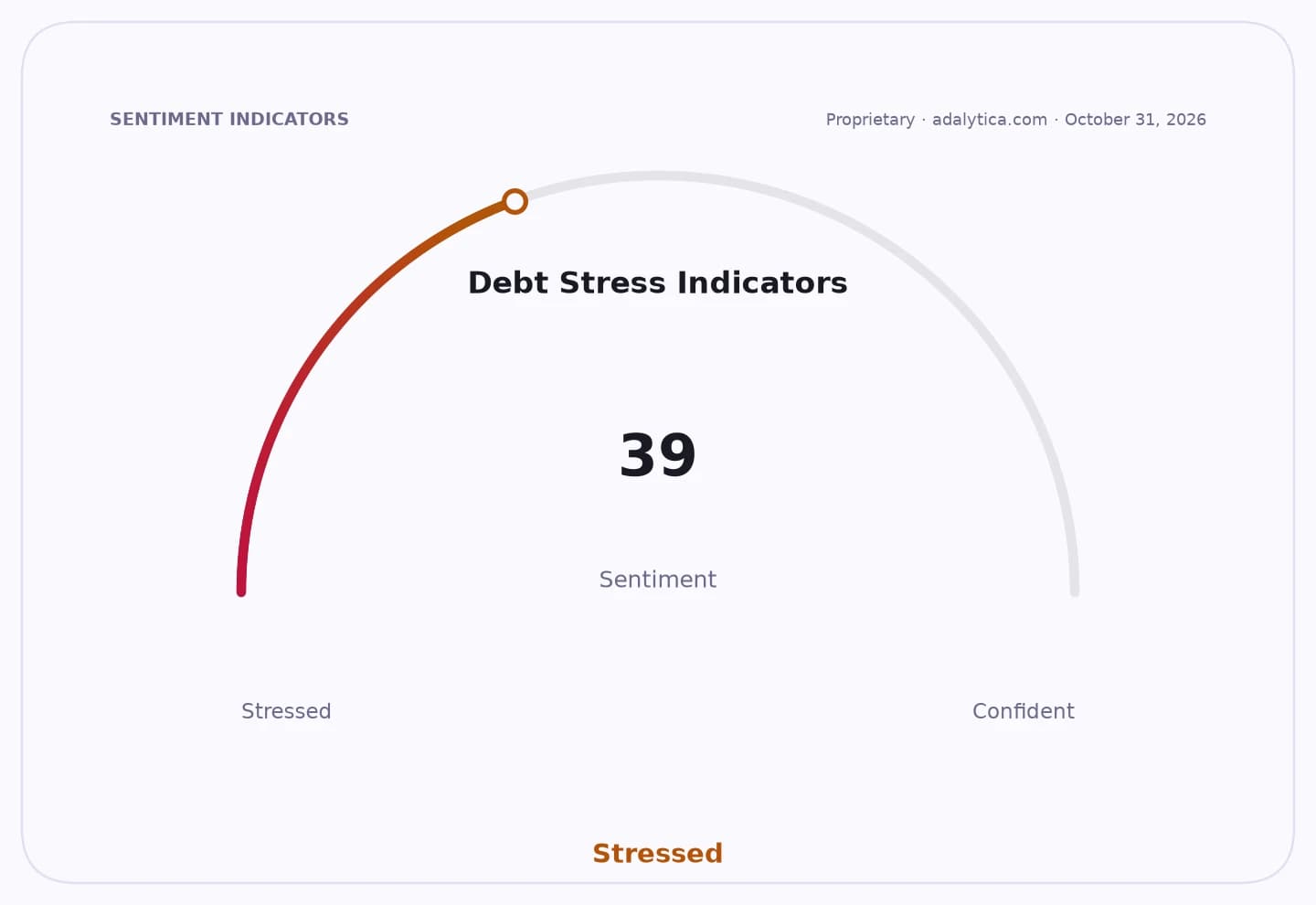
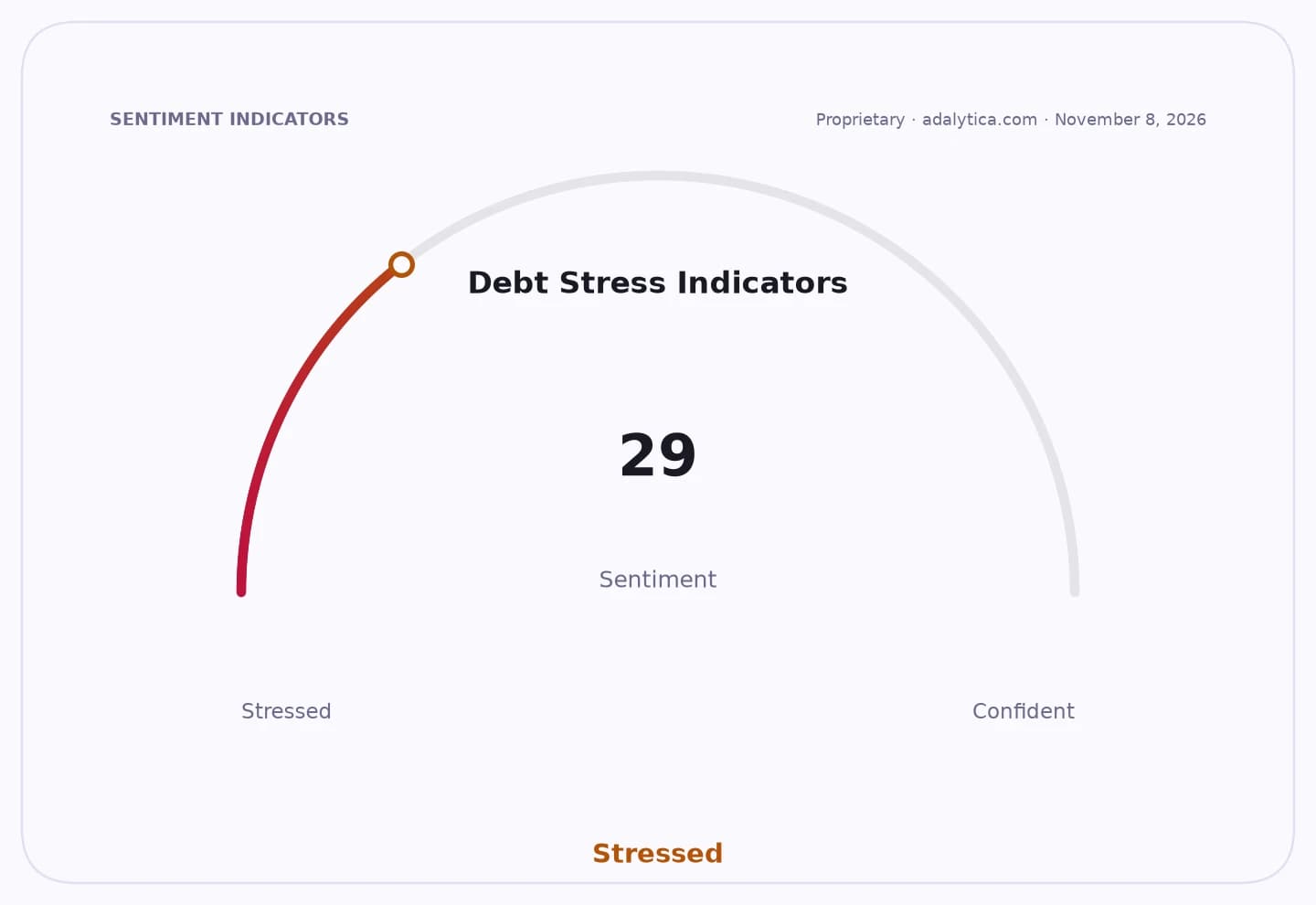
American households are falling behind on credit card payments in every state, a sign that consumer balance sheets remain under strain even as the labor market has held up better than many feared.
Credit card delinquencies rise in every state
That matters because revolving debt is one of the clearest early warning lights for household stress. Credit card delinquencies tend to move before broader loan losses, and the latest state-by-state data suggest the pressure is no longer confined to a few lower-income regions or states with weaker job markets.
Sentiment Indicators
Debt Stress Indicators
WalletHub said delinquencies increased in every state when it compared first- and second-quarter 2026 rates, with Mississippi posting the highest overall delinquency rate at 51.61%. Vermont recorded the biggest percentage jump, even though it still ranks among states with relatively low overall delinquency levels. The firm also said Vermont ranks 10th among states adding the most new debt, underscoring that rising borrowing, not just weakening repayment, is part of the problem.
For lenders, that points to a broadening credit risk rather than an isolated regional flare-up. Large credit-card issuers including Capital One and Synchrony Financial have already warned in recent filings about delinquency and charge-off pressure, while industry disclosures show net charge-off rates remain elevated enough to keep underwriting tight and reserves under scrutiny. As more borrowers stretch to keep up with minimum payments, banks may face higher losses, slower loan growth and more pressure on net interest margins if they respond by tightening credit.
The backdrop is still a labor market that, while cooling, is not in outright distress. The unemployment rate is running near 4.1%, which helps explain why this is more a consumer stress story than a full-blown recession alarm. But the rise in delinquencies across all states suggests the burden of still-high prices, expensive borrowing and lingering post-pandemic debt accumulation is filtering through household finances.
That mix is why the story matters to investors. Card issuers can benefit in the near term from higher interest income on revolving balances, but the trade-off is rising charge-offs and more pressure on provisions. The market has already been sensitive to those dynamics, with shares of Capital One and Synchrony showing volatility around credit quality trends. If delinquencies keep climbing into year-end, investors may need to reassess how much credit cost normalization was already priced in.
For consumers, the practical risk is that missing payments quickly damages credit scores and can trigger charge-offs after several months. The Federal Trade Commission advises borrowers to contact creditors directly, seek a lower rate or payment plan, and keep any agreement in writing. That advice is becoming more relevant as the states with the fastest deterioration in credit card performance may also be the ones where household debt is compounding fastest.
| Entity | Gains | Losses |
|---|---|---|
| Credit card issuers | ▲Higher interest income | ▼Rising charge-offs |
| Borrowers making minimums | ▲Short-term breathing room | ▼Growing debt balances |
| Consumers in high-delinquency states | ▲Access to hardship plans | ▼Credit-score damage |
| Bank investors | ▲Potentially higher yields | ▼Credit-cost volatility |