Credit card issuers make their richest money not from shoppers who pay on time, but from the growing army of Americans who revolve balances month after month — and the burden falls hardest on borrowers with weak credit scores.
Credit card issuers profit from revolving balances

That matters because credit-card debt is still sitting near record levels, and the economics of the business are built to reward persistence, not payoff. Americans owed $1.26 trillion on their cards in the second quarter of 2026, just shy of the $1.28 trillion peak set late last year, according to the New York Fed. With the average card APR close to 20% and subprime borrowers often facing rates above 30%, issuers have a lucrative, high-margin revenue stream even when consumers are under pressure.
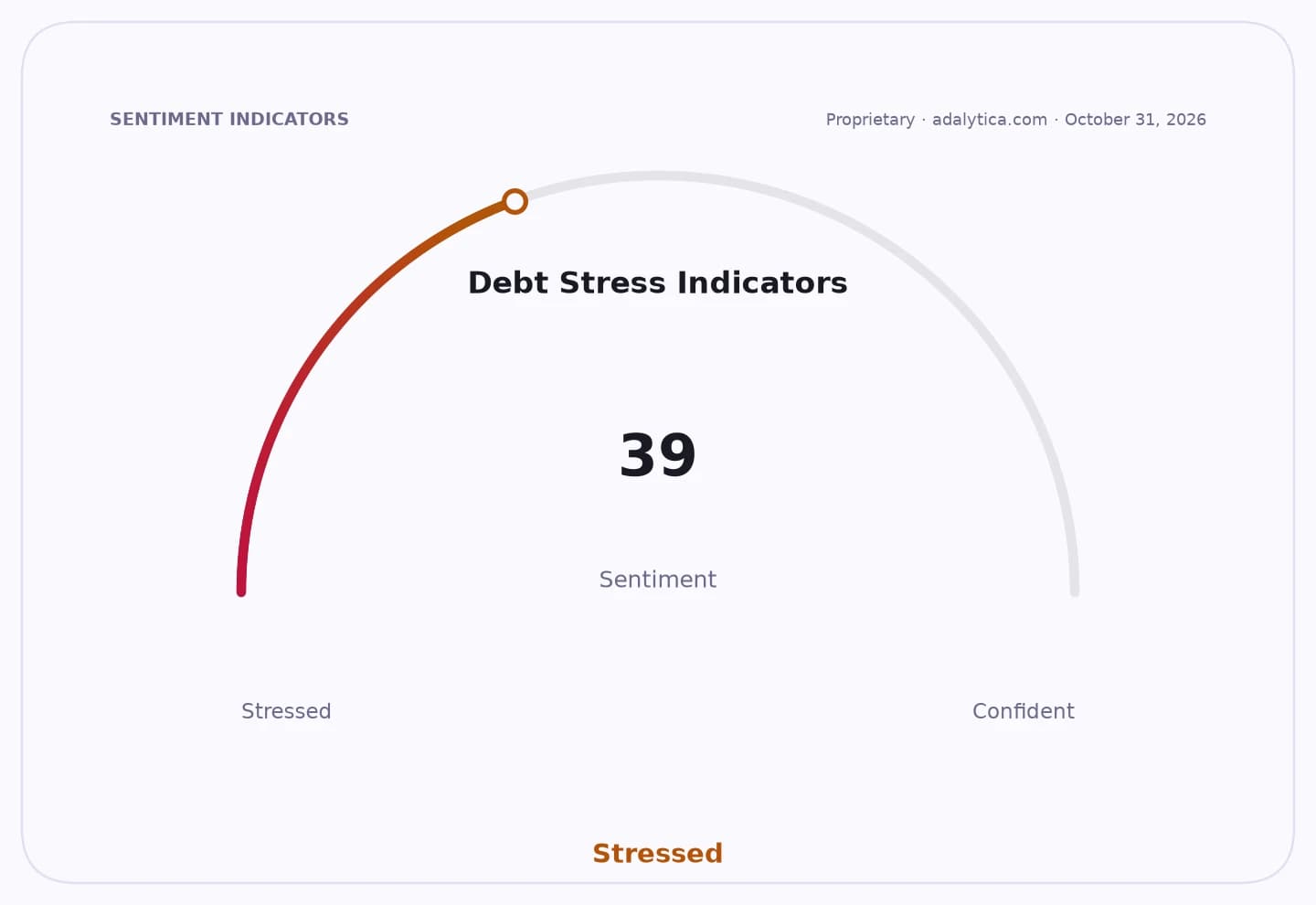
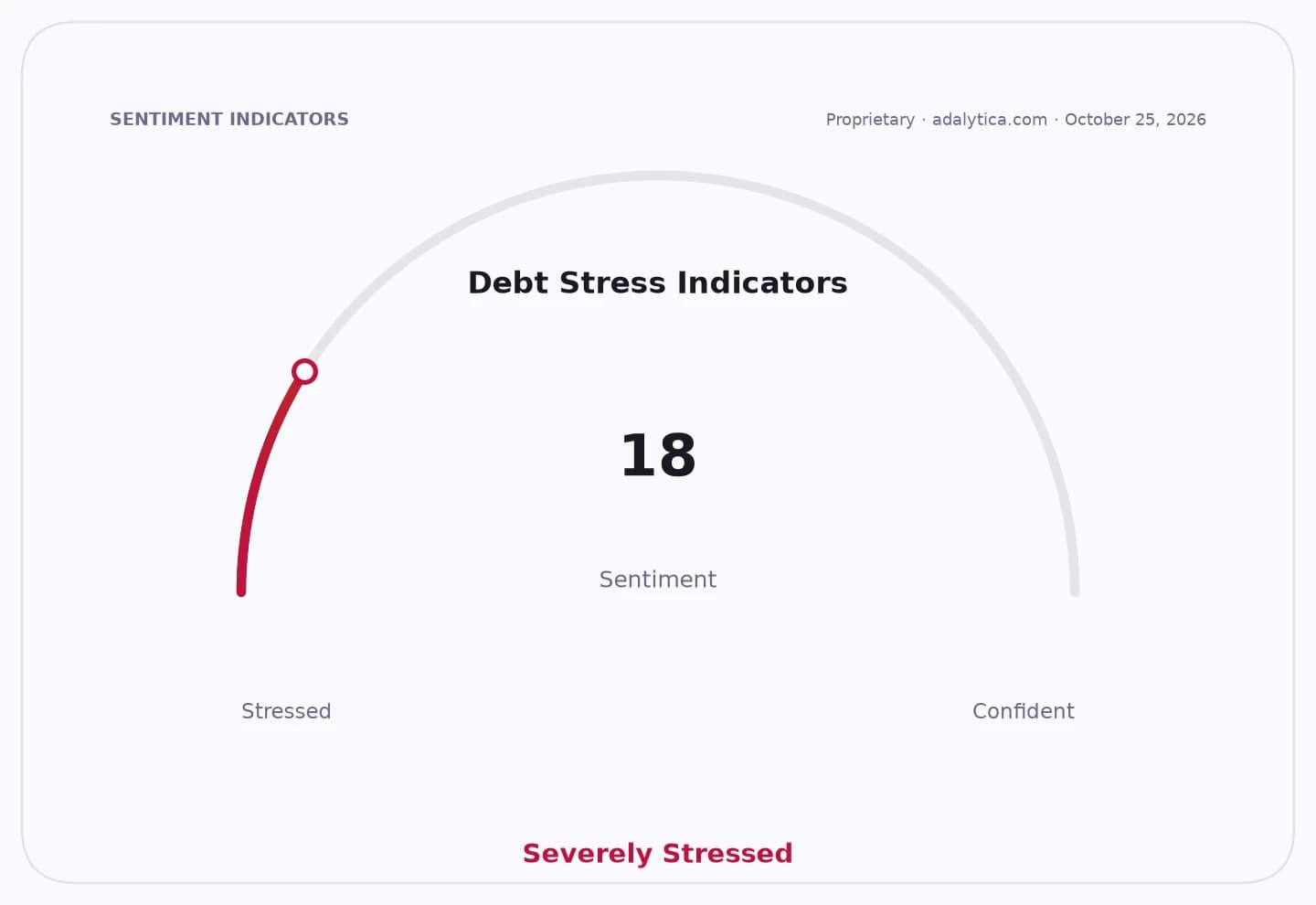
Sentiment Indicators
Debt Stress Indicators
For investors, that dynamic explains why card lenders can stay profitable in a tougher credit environment. Interest makes up about 80% of credit card profitability, according to Federal Reserve research, and consumers paid $160 billion in interest charges in 2024, up sharply from $105 billion in 2022, per the CFPB. In other words, when borrowing costs stay elevated and household finances remain stretched, banks and finance companies with large card books can keep earning attractive returns — as long as losses don’t rise faster than pricing can offset them.
The story is especially important for lower-credit borrowers because the industry does not just tolerate revolvers; it actively seeks them out. Roughly 83% of subprime cardholders and 88% of deep-subprime cardholders carried a balance in 2024, according to the CFPB, compared with a much lower share of prime borrowers. And those borrowers pay two to four times more in interest and fees than superprime customers. Federal Reserve Bank of New York research found that subprime revolvers can produce return on assets of around 11%, versus about 5% for prime borrowers above a 750 FICO score.
That is the core tension in the credit-card business and the reason it remains such an enduring profit engine. The healthiest customers are the least profitable, while the least healthy borrowers can become the most valuable to the issuer. A cardholder with a $1,000 balance at 21% interest who pays only the minimum can end up spending almost 10 years eliminating the debt and pay more than the original balance again in interest. Scale that across a trillion-dollar market, and the revenue stream becomes enormous.
It is also why lenders are careful about who they extend credit to. Capital One Financial and Synchrony Financial, two major players in the consumer-credit market, operate in a space where risk-adjusted pricing is central to the model. Synchrony’s latest filing showed a credit-card net charge-off rate of 4.77% in the third quarter, a reminder that profitability in this segment depends on balancing high yields against rising defaults. Investors in card lenders need to watch that spread closely: the business works best when funding costs, charge-offs and consumer stress stay manageable.
Macro conditions are not helping borrowers. The federal funds rate sits around 3.75%, and the unemployment rate has edged up to 4.2%, leaving many households with less room to absorb shocks. Adalytica’s Household Debt Stress gauge is showing neutral sentiment but extreme-fear awareness, underscoring how fragile the consumer backdrop remains even as the labor market looks orderly on the surface.
For long-term investors, the lesson is simple: credit-card companies are powerful cash generators when they can keep customers revolving at high APRs, but that model depends on disciplined underwriting and resilient employment. If you own the lenders, this is a business to watch for pricing power, charge-off trends and credit quality. If you are a borrower, the best financial move is still the least profitable one for the issuer: pay in full, avoid minimum payments and stop financing the margin.
| Entity | Gains | Losses |
|---|---|---|
| Card issuers | ▲Interest income and fee revenue | ▼Higher charge-offs if defaults rise |
| Revolvers | ▲Access to credit when cash is tight | ▼Years of interest and fee drag |
| Prime/transactor customers | ▲Lower borrowing costs | ▼Fewer rewards-funded cross-subsidies |
| Investors in card lenders | ▲High margins if credit holds | ▼Valuation pressure from credit stress |