Paying off $4,500 of credit-card debt in two months is possible only if the borrower can throw roughly $2,250 a month at the balance, and the cost of carrying that debt remains punishing even as market borrowing gauges ease modestly.
Credit-card debt payoff and household strain
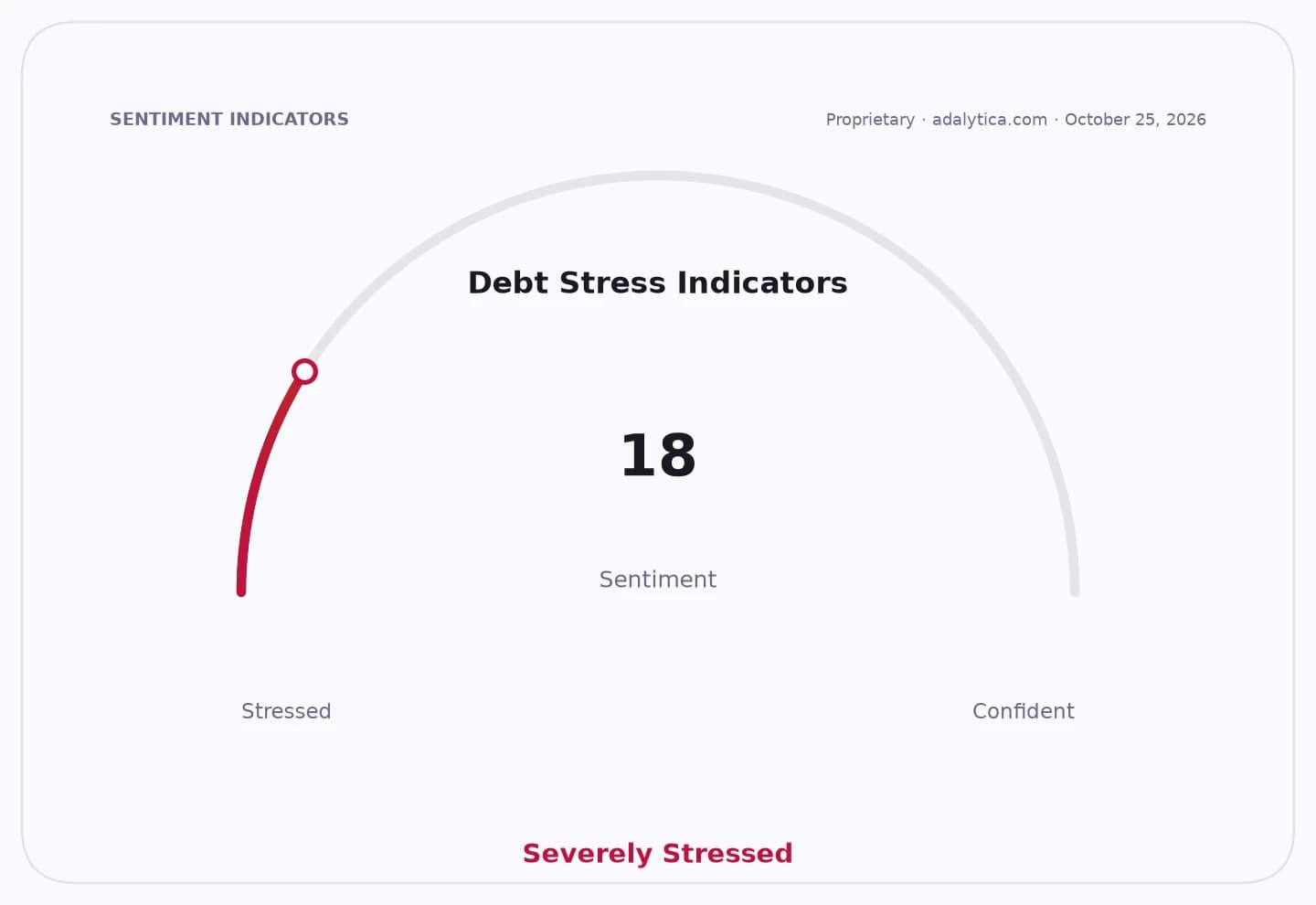
Debt Stress Indicators
That is the economic reality behind a question that is personal on the surface but rooted in a broader tightening of household finances. High-rate debt is still expensive to service even after some easing in credit conditions, and consumers with revolving balances face a race against interest charges that can quickly erase small monthly payments. In practice, the shorter the payoff window, the more the borrower must prioritize principal reduction over new spending.
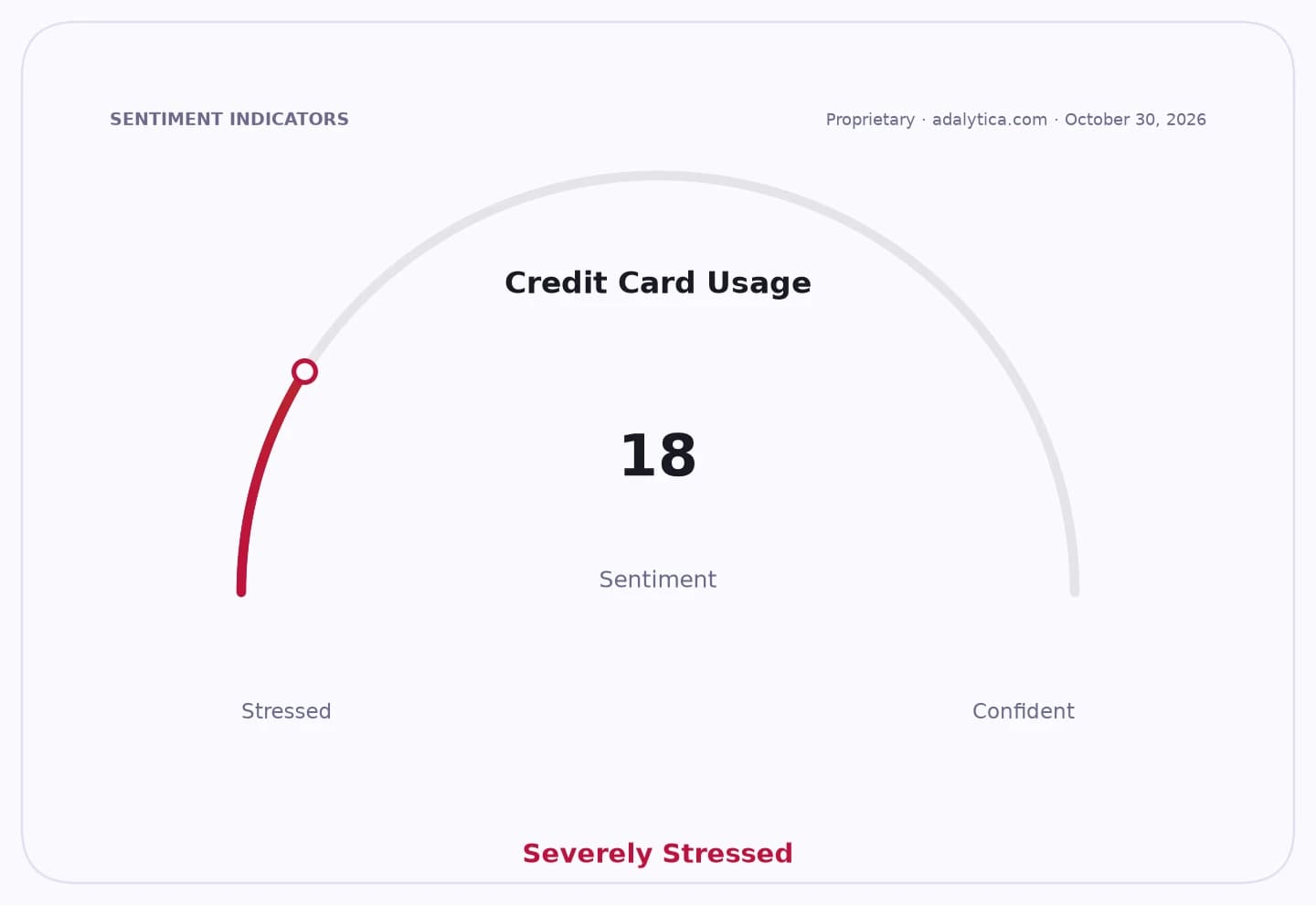
Sentiment Indicators
The macro backdrop is mixed. U.S. high-yield credit spreads, as measured by the BAML index, have come down from peaks seen during periods of stress and are near 3.13 percentage points in the latest forecast, while the federal funds rate is projected around 3.726% next month. But those shifts do not translate into relief for credit-card borrowers overnight. Card APRs typically stay elevated relative to policy rates, and lenders have little incentive to reprice revolving consumer credit quickly when losses remain meaningful.
That risk is visible in bank and finance-company filings. American Express and Synchrony both flagged charge-off and provision trends in their latest 10-Qs, underscoring that the industry is still pricing for consumer strain. For lenders, the mix matters: persistent revolving balances support interest income, but they also raise the risk of delinquency and write-offs if households overextend.
Debt Stress Indicators — 30-day sentimentadalytica.com
Explore this data interactively — full history, time series and cross-market comparisons.
For investors, the story spans more than one borrower’s budget. Financial stocks have been resilient, with the XLF bank ETF trading above both its 50-day and 200-day moving averages, while KBE has also held above those longer-term trend lines. JNK, a high-yield bond proxy, is hovering near its 50-day and 200-day averages, suggesting credit markets are not flashing broad distress. Still, conventional indicators such as RSI and MACD show that the bank sector has been oscillating rather than trending cleanly higher, which is consistent with a market balancing lower rate expectations against credit-quality concerns.
The consumer side is more fragile. Adalytica’s Household Debt Stress Sentiment has improved from extreme fear, but it remains only neutral, while its Household Savings Rate Sentiment points to still-strong saving behavior. That combination suggests households may have some capacity to accelerate repayment, but not all borrowers will have the cash flow to do it quickly.
The practical answer is that paying off $4,500 in two months is achievable only with aggressive budgeting, no new card spending and, ideally, a lower-cost transfer or personal loan. The broader market message is less optimistic: even if credit conditions ease at the margin, revolving debt remains an expensive liability, and borrowers with limited income flexibility are still vulnerable to rate and payment shocks.
| Entity | Gains | Losses |
|---|---|---|
| Borrower with $4,500 balance | ▲Lower debt faster | ▼Tight monthly budget |
| Credit-card issuers | ▲Interest income | ▼Higher charge-off risk |
| Banks/consumer lenders | ▲Stronger spread income | ▼Softer credit quality |
| Cardholder seeking payoff | ▲Less long-term interest | ▼Less discretionary spending |