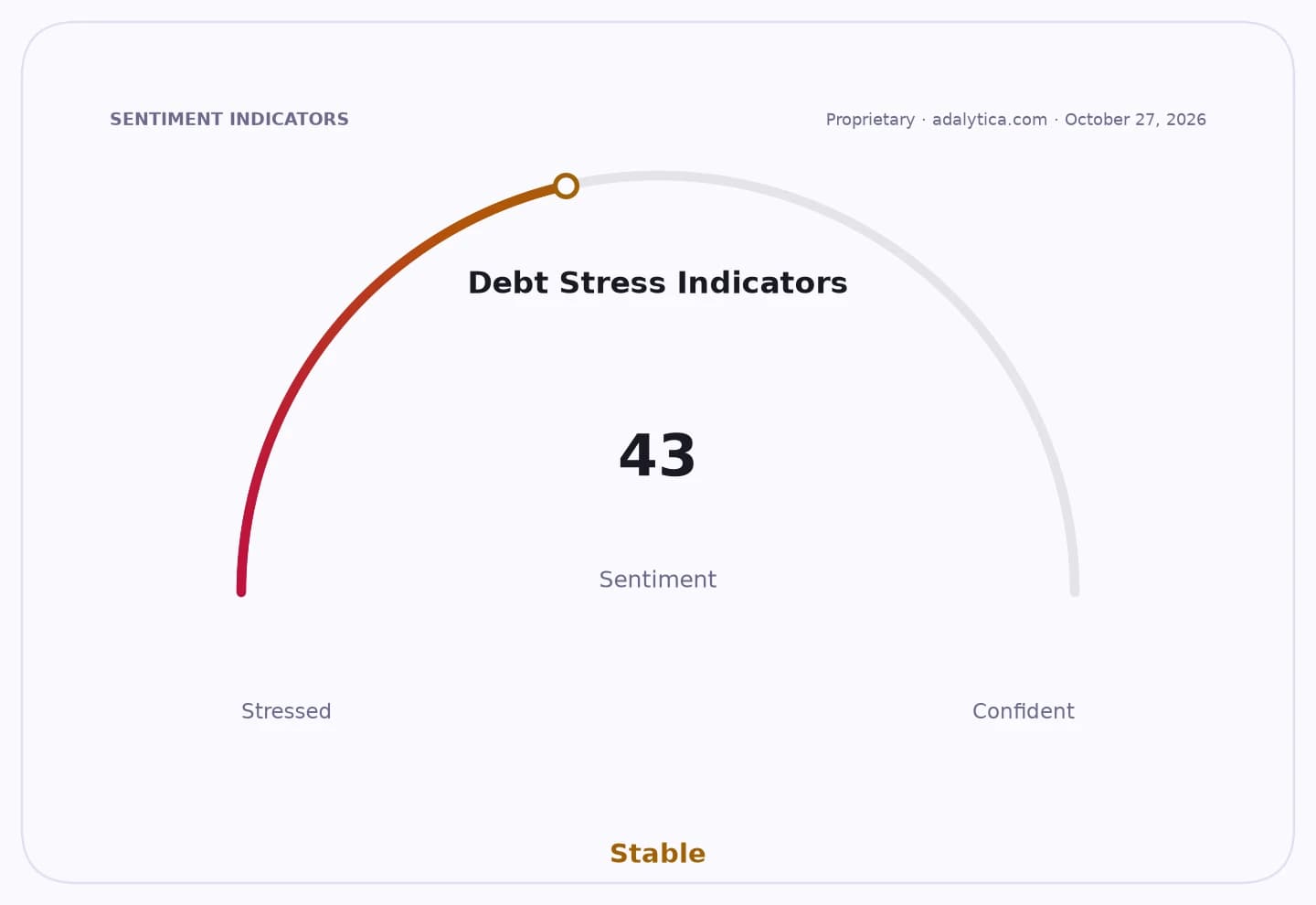
A wave of easy consumer credit is powering Uzbekistan’s retail sales today, but it is also trapping households in debt that is rising far faster than incomes — a combination that matters because it can weaken consumption, strain banks and leave investors exposed to a slower, more fragile economy.
Uzbekistan consumer credit rises as household debt grows

The most important change is not that people are borrowing. It is that they are borrowing into a structure that often does not build wealth. Uzbekistan’s banking sector had 239.8 trillion soum, or about $20 billion, in loans to individuals as of Aug. 1, up 18.8% from a year earlier and six times larger than at the start of 2020. Microloans and microcredits account for more than 40% of that portfolio, while auto loans make up another 17%. In other words, a large share of household debt is being used for consumption, not for assets that reliably appreciate in value.
Sentiment Indicators
That is why the story from a borrower in Navoiy region lands so hard. After taking out a 117 million soum auto loan over 84 months to buy a used Nexia-3, he says he paid for 3.5 years, lost the car and still owes money after a price drop in the secondhand market. His case is extreme, but it illustrates the broader problem: when high interest rates meet depreciating assets, borrowers can end up servicing debt without ever getting ahead.
For investors, that mix should matter. Consumer lending can look healthy on the surface because it lifts spending on phones, appliances and cars, and for a while it supports bank loan growth. But if debt service rises faster than wages, demand eventually gets pulled forward and then fades. Uzbekistan’s central bank says the share of borrowers with multiple obligations is rising, with 53% of people who took bank loans in 2025 also carrying several debts from banks and non-bank lenders. The total number of people with bank loans reached 5.2 million last year, up 11% year on year, while debt-service burden climbed to 37% of income.
That is a warning sign for household finances and for lenders alike. Microcredit rates average 29.7%, auto loans 21.9% and mortgages 21.8%, according to central bank data cited in the report. Those are expensive loans in a market where the policy rate has stayed at 14% since March 2025 and inflation, while easing, still leaves lenders cautious. Banks fund loans mainly through deposits, and they also face funding costs tied to the country’s limited access to cheaper foreign capital. Add weak credit data and elevated default risk, and the result is a system where borrowing is easy, but repayment can be punishing.
The risk is bigger than one borrower’s story. When households use credit to cover weddings, appliances, cars or even one loan to repay another, they are not creating durable wealth. They are using future income to support present consumption. That may keep the economy busy in the short run, but it also makes growth more vulnerable later if wages do not keep up.
For long-term investors, the lesson is straightforward: consumer credit can be a powerful growth engine, but only when income growth and asset quality keep pace. In Uzbekistan, the evidence says debt is still outrunning paychecks. That makes the lending boom worth watching, but also worth treating with caution.
| Entity | Gains | Losses |
|---|---|---|
| Uzbek banks | ▲Loan growth | ▼Credit risk |
| Households | ▲Immediate spending power | ▼Long-term debt burden |
| Retailers and car sellers | ▲Higher sales today | ▼Demand slowdown later |
| Long-term investors | ▲Lending opportunities | ▼Asset-quality pressure |