Borrowers in South Korea who would need to devote all of their income to debt service — and still come up short — rose in the second quarter for the first time in 3½ years, a sign household balance-sheet stress is starting to build again after a long period of gradual repair.
South Korea Household DSR Rises in Second Quarter
The share of borrowers with a total debt service ratio, or DSR, of 100% or more climbed to 7.1% at end-June, up 0.1 percentage point from the first quarter, according to data submitted by the Bank of Korea to lawmaker Park Sung-hoon. It was the first quarterly increase since late 2022. The outstanding loans held by this group also rose to 23.6% of total household debt, the highest in 14 quarters.
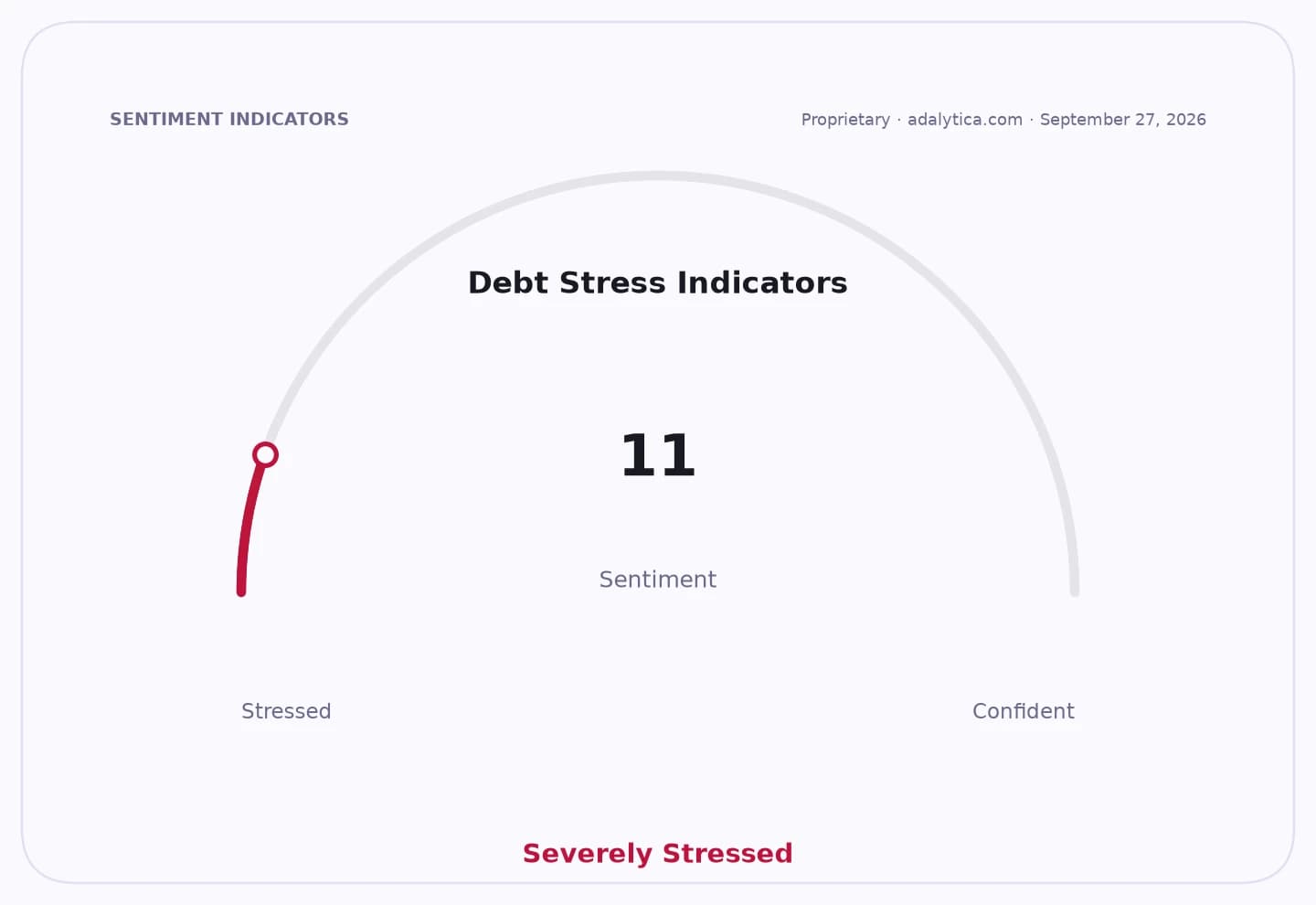
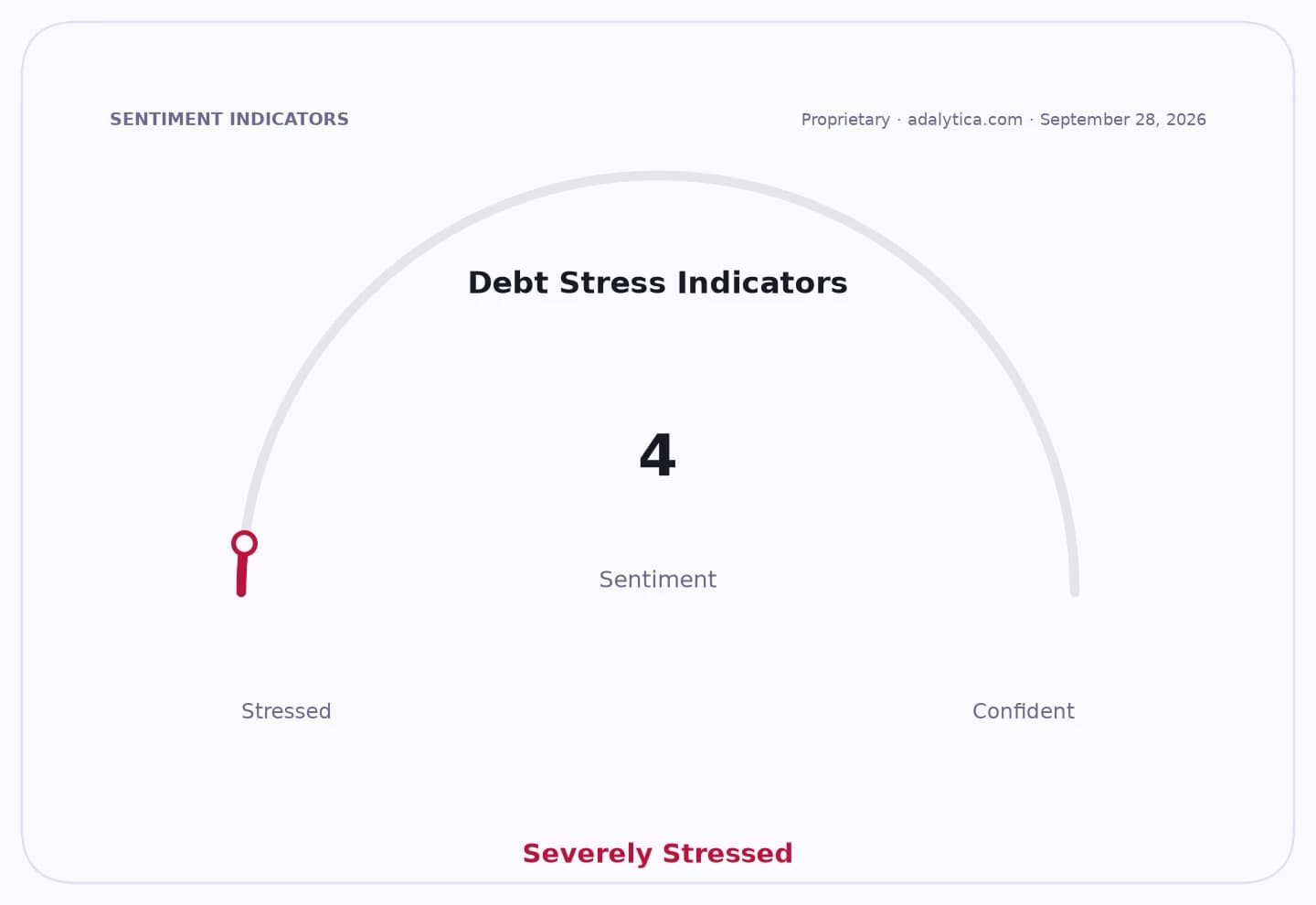
Sentiment IndicatorsⓘProprietary · adalytica.com · September 30, 2026
This is a snapshot — live sentiment, awareness and momentum for 130+ markets update continuously in the dashboard.Open AlphaPulse
That matters because DSR captures the share of annual income needed to repay principal and interest. Once the ratio gets to 100%, households are effectively at the limit: every won earned is already spoken for by debt obligations. A rise in that population suggests the benefits of prior deleveraging may be fading, even before considering higher borrowing costs, softer real incomes and a still-sensitive housing and consumer-credit backdrop.
The turn is important economically because Korea’s household debt burden remains one of the region’s most closely watched vulnerabilities. The share of borrowers with DSRs above 100% had been falling steadily from 9.1% at end-2022 to 7.3% at the end of last year, before stabilizing in early 2026 and then ticking higher in the second quarter. Average DSR also moved up to 36.0% from 35.8% in the first quarter, a small shift that nonetheless marks the first quarterly rise in nine quarters.
For lenders, the data points to a borrower base that is not broadly deteriorating, but is becoming more polarized. About 71.1% of borrowers still had DSRs below 40%, yet they accounted for just 39.8% of loan balances. That concentration means a relatively small group of highly leveraged households carries a disproportionate share of the system’s risk — the same cohort most exposed if rates stay elevated, refinancing gets harder or labor income weakens.
Investors will read the figures as a warning rather than a crisis. South Korean banks and consumer lenders have so far avoided a sharp credit event, and the broader household sector is still far healthier than during past stress episodes. But the inflection in DSR trends raises the chance that delinquency and charge-off pressure could gradually pick up, especially in unsecured consumer credit, and it reinforces the case for cautious underwriting and higher loss reserves.
The market implication is most direct for lenders with large retail books and for policymakers trying to balance financial stability against support for domestic demand. If debt-service strain spreads, households will have less room to spend, which can weigh on consumption and keep pressure on credit performance. If authorities respond with tighter lending standards, the drag on housing and consumption could deepen.
For now, the message is not that Korean households are in immediate distress, but that the repair cycle has stopped improving. After three and a half years of easing, the second-quarter reversal suggests that higher rates and weak affordability are again outrunning income gains — a combination that could keep household credit quality under scrutiny into the second half of the year.
| Entity | Gains | Losses |
|---|---|---|
| Korean banks | ▲tighter credit discipline | ▼higher credit risk |
| Highly leveraged households | ▲none | ▼repayment strain |
| Low-DSR borrowers | ▲relative resilience | ▼little direct impact |
| Policymakers | ▲clearer risk signals | ▼less room to ease credit conditions |