Poland’s space industry is losing ground to bigger European rivals just as governments from Berlin to Madrid accelerate satellite plans and turn orbit into a strategic asset for defense, telecoms and economic leverage.
Creotech Says Poland Is Losing Ground in Space
That is the message from Creotech Instruments chief executive Grzegorz Brona, who says Poland has slipped “to the end of the peloton” after briefly appearing to be among the EU’s fastest-moving space players. He argues the gap is widening because other countries are committing far larger, multi-year budgets instead of relying on short-term programs that end before the next phase is planned.
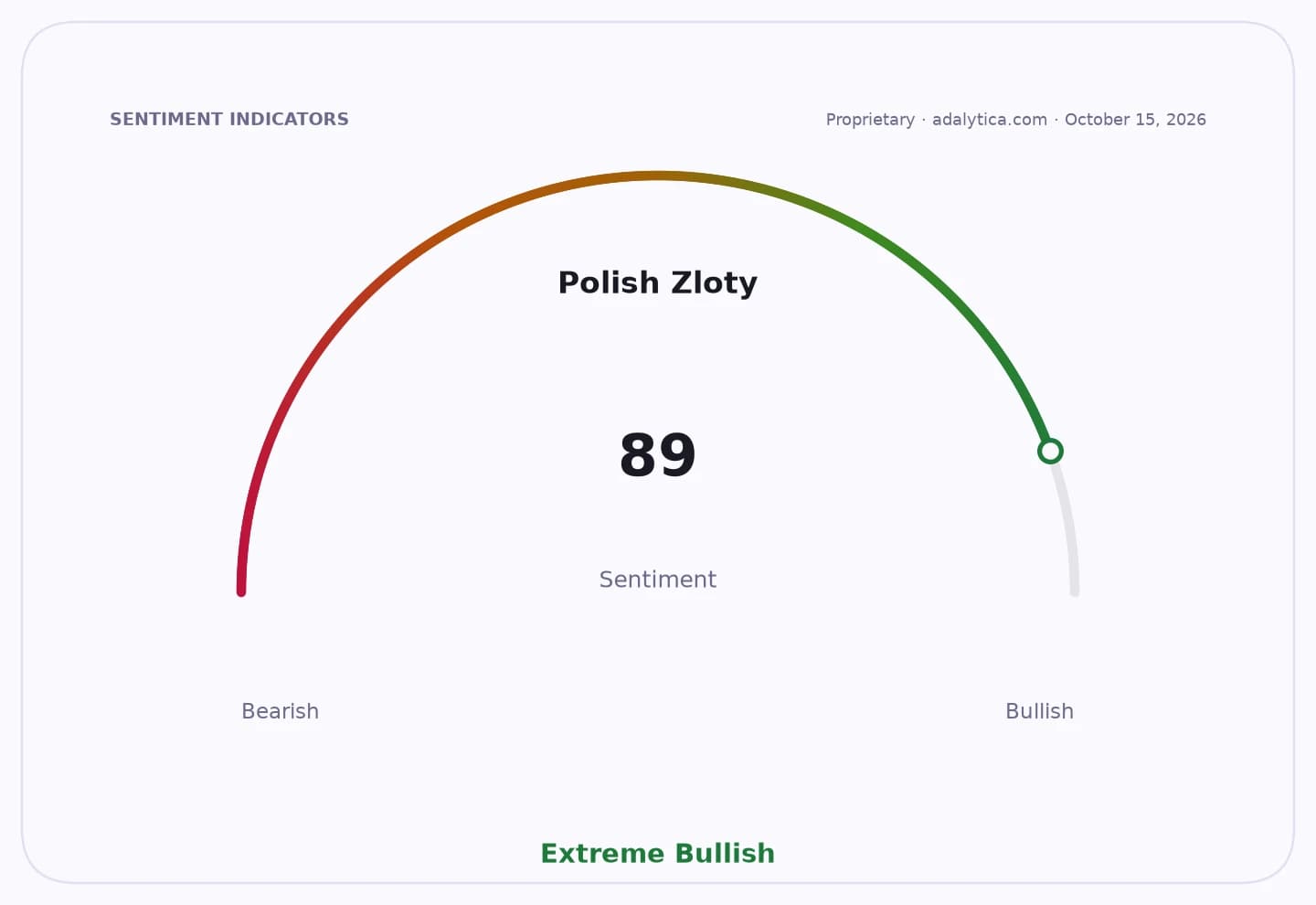
Sentiment Indicators
The economic stakes are larger than prestige. Satellite constellations are becoming core infrastructure for surveillance, crisis management, communications and military autonomy, and the countries that build them will be better placed to capture public contracts, industrial jobs and downstream technology spend.
Brona said Germany and France have announced their own constellations, Italy is working on a civil network of more than 70 satellites and Spain has unveiled plans for a telecom constellation. By contrast, Poland’s current programs add up to only a handful of spacecraft, even after purchases from Airbus and Finland’s ICEYE.
Creotech, one of the country’s most visible space firms, is trying to position itself at the center of that push. The company is building the Mikroglob defense satellite program and the CAMILA civilian constellation with the European Space Agency, while targeting a new plant near Piaseczno by 2029 and seeking the role of prime contractor for a European lunar mission.
For investors, the story cuts two ways. The company is tapping larger public spending, but Brona warned that Poland’s reliance on grants rather than procurement leaves local firms vulnerable unless the government sets a longer investment horizon, ideally out to 2040, and shifts toward multi-year orders for finished systems rather than technology subsidies.
That matters because space hardware is a slow-moving, milestone-based business, with payments tied to delivery stages rather than a smooth revenue stream. Creotech is betting that a stronger European push — and renewed concern over U.S. control of launch and satellite infrastructure — will keep demand rising, even as Poland risks missing the first wave of scale-up.
The next catalyst is whether Warsaw turns this rhetoric into a durable procurement pipeline, and whether Creotech can convert its defense and lunar ambitions into repeat contracts at home and in Europe.
| Entity | Gains | Losses |
|---|---|---|
| Creotech Instruments | ▲Larger public contracts | ▼Short-term grant dependence |
| Polish space suppliers | ▲More local orders | ▼Risk of marginalization |
| Germany, France, Italy, Spain | ▲Strategic autonomy | ▼Lower relative influence for Poland |
| Poland’s government | ▲Defense and industrial upside | ▼Pressure to fund long-term plans |