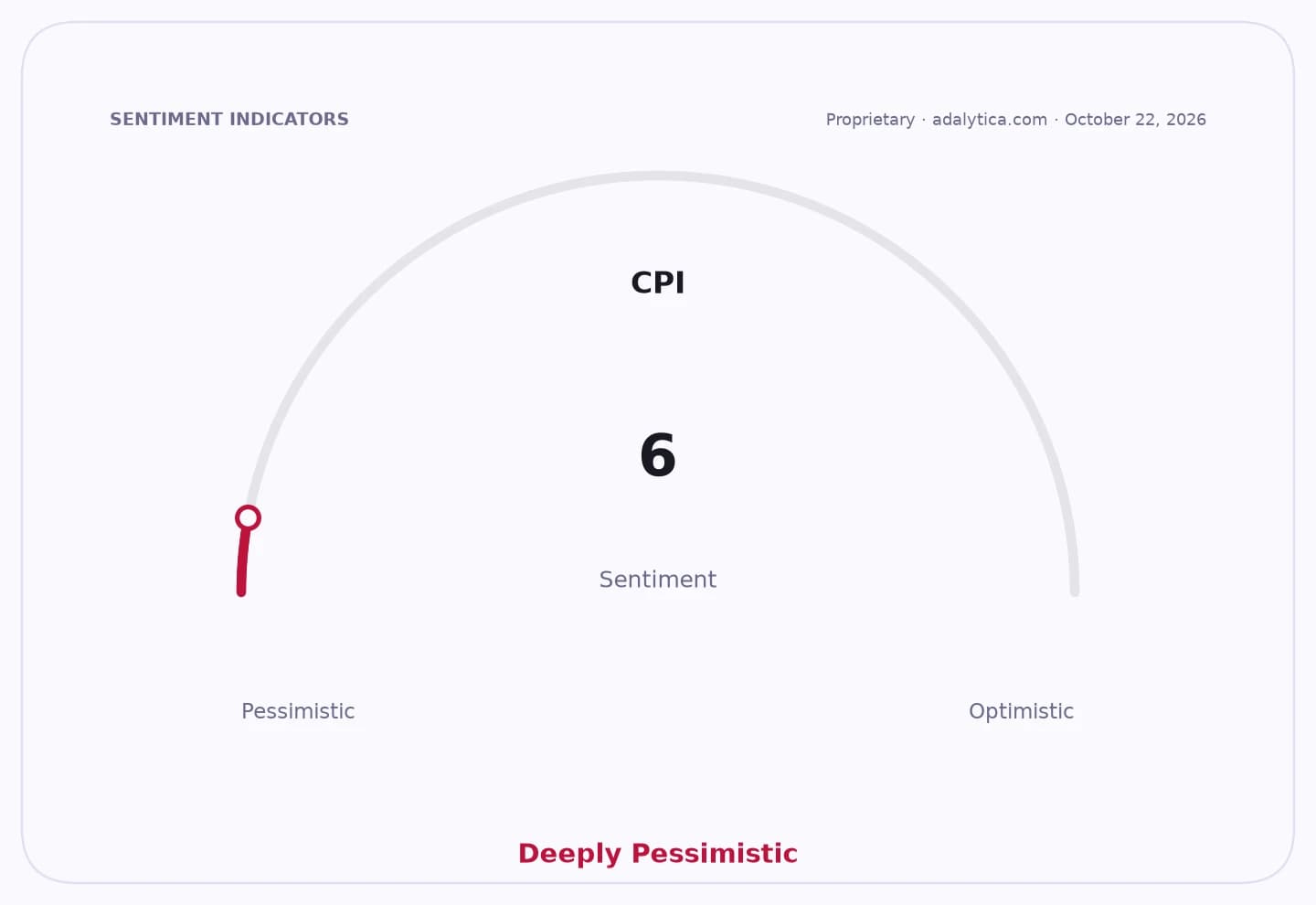
Annual inflation in Crimea slowed to 13.3% in September, a sign that some of the most intense price pressure in the annexed peninsula is moderating even as the broader economy remains shaped by sanctions, supply constraints and wartime disruption.
Crimea inflation slows to 13.3% in September
The easing matters because inflation is one of the clearest gauges of how deeply the war economy is still straining households and businesses. A slower pace of price growth can give consumers a little breathing room and reduce pressure on local authorities to keep lifting wages and support payments, but it does not mean prices are stable or that the region has normalized. At 13.3%, inflation is still far above levels that would be considered comfortable in most major economies.
For investors and policymakers, the number is best read as evidence that Crimea’s economy remains heavily distorted by geopolitical isolation. Food, fuel and imported goods are the kind of categories most likely to swing when logistics are disrupted and trade routes are constrained, so a slowdown in annual inflation may reflect base effects as much as any durable improvement in supply. That distinction matters: if the deceleration proves temporary, the region could still face another inflationary squeeze if transport costs, energy prices or administrative controls shift.
The broader market message is that inflation in conflict-adjacent economies can cool without fully healing. In a region where sanctions and military logistics dominate pricing power, lower inflation does not necessarily mean stronger real purchasing power or healthier demand. It may simply mean the most violent phase of price acceleration has passed.
The key question now is whether this slowdown can hold. If it does, it would point to some stabilization in the local price environment. If it does not, Crimea’s inflation trend will remain a reminder that geopolitical risk still travels directly into consumer prices, with implications for household spending, public finances and the durability of economic activity across the occupied peninsula.
| Entity | Gains | Losses |
|---|---|---|
| Crimea households | ▲Slight relief from price growth | ▼Still paying elevated prices |
| Local authorities | ▲Less urgent inflation pressure | ▼Limited control over supply shocks |
| Consumers of imported goods | ▲Slower pass-through on some items | ▼Exposure to sanctions-driven costs |
| War-economy suppliers | ▲Relative pricing stability | ▼Demand remains distorted |