Next year’s Czech budget is reviving a familiar policy mistake: borrowing heavily in an economy that is already running close to capacity, a mix that risks keeping inflation sticky and forcing interest rates higher for longer.
Czech budget deficit widens to 416 billion koruna
The 2027 state budget sent to parliament foresees a deficit of 386 billion koruna, 76 billion more than this year’s plan, and that figure does not yet include about 30 billion koruna for the new Dukovany nuclear project that the government wants to keep off-budget. Using the same accounting method as the 2026 draft, the gap would widen to 416 billion koruna. The National Budget Council sees the broader general-government deficit at 3.7% of GDP, up from 2% in 2024, and says the scale of the expansion is normally seen only during crisis periods. This time, there is no crisis to justify it.
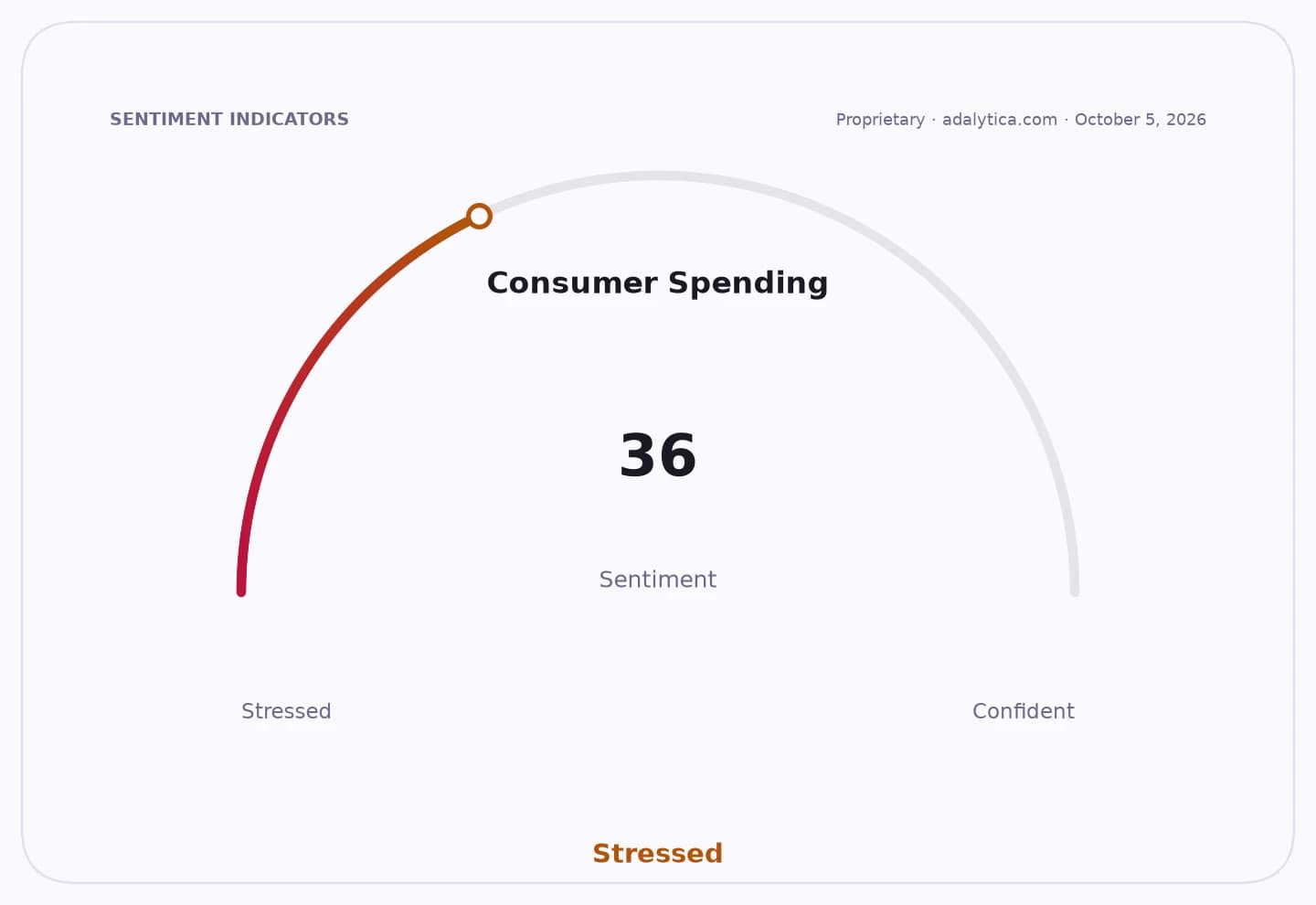
Sentiment IndicatorsⓘProprietary · adalytica.com · October 8, 2026
This is a snapshot — live sentiment, awareness and momentum for 130+ markets update continuously in the dashboard.Open AlphaPulse
That timing is what makes the budget economically consequential. Finance Ministry projections suggest the output gap will be essentially closed in 2027, meaning the economy is already at full tilt. Unemployment is around 3%, among the lowest in the European Union, while wages are still rising fast, up 7.8% this year and projected to increase another 6.2% next year. In that environment, extra fiscal stimulus does not fill spare capacity; it adds demand to an economy already short of labor and goods. The Czech National Bank underscored that risk in June when it raised its key rate to 3.75%, worried that inflation could accelerate again.
For investors, that combination matters because it raises the odds of persistent price pressure, tighter monetary policy and more expensive sovereign financing. Higher borrowing needs can feed directly into debt-service costs at a time when rates are already elevated, worsening the fiscal arithmetic rather than improving it. Bondholders are likely to focus on whether the government can shift spending away from cyclical support and toward capital formation without adding to inflation, while equity investors will watch for the effect of higher rates on valuations, credit conditions and domestic demand-sensitive sectors.
The political logic is clear: with elections and spending pressures looming, deficit financing is an easier path than restraint. The economic logic is less forgiving. If the state adds stimulus when wages are already climbing and the labor market is tight, it risks prolonging the inflation problem it is supposed to solve. That leaves the central bank with fewer options and the bond market with more supply to absorb.
| Entity | Gains | Losses |
|---|---|---|
| Government ministries | ▲More room to spend | ▼Higher debt burden |
| Domestic demand sectors | ▲Short-term fiscal support | ▼Higher rates, sticky inflation |
| Czech bondholders | ▲Higher yields on new issuance | ▼Capital losses if yields rise |
| Czech National Bank | ▲Stronger case for caution | ▼Greater pressure to keep rates high |