Consumer prices in the Czech Republic accelerated sharply in September, underscoring how quickly imported energy costs can undo months of disinflation and complicate the central bank’s next move.
Czech Inflation Rises to 2.5% on Higher Energy Costs
Preliminary inflation data from the Czech Statistical Office showed annual consumer-price growth rose to 2.5% from 1.9% in August, returning to this year’s high reached in April. Prices were unchanged month on month, but the annual rate picked up as energy costs — including fuels — climbed 5.9% from a 2.3% increase in August. Economists had already flagged fuel as the main driver of the jump.
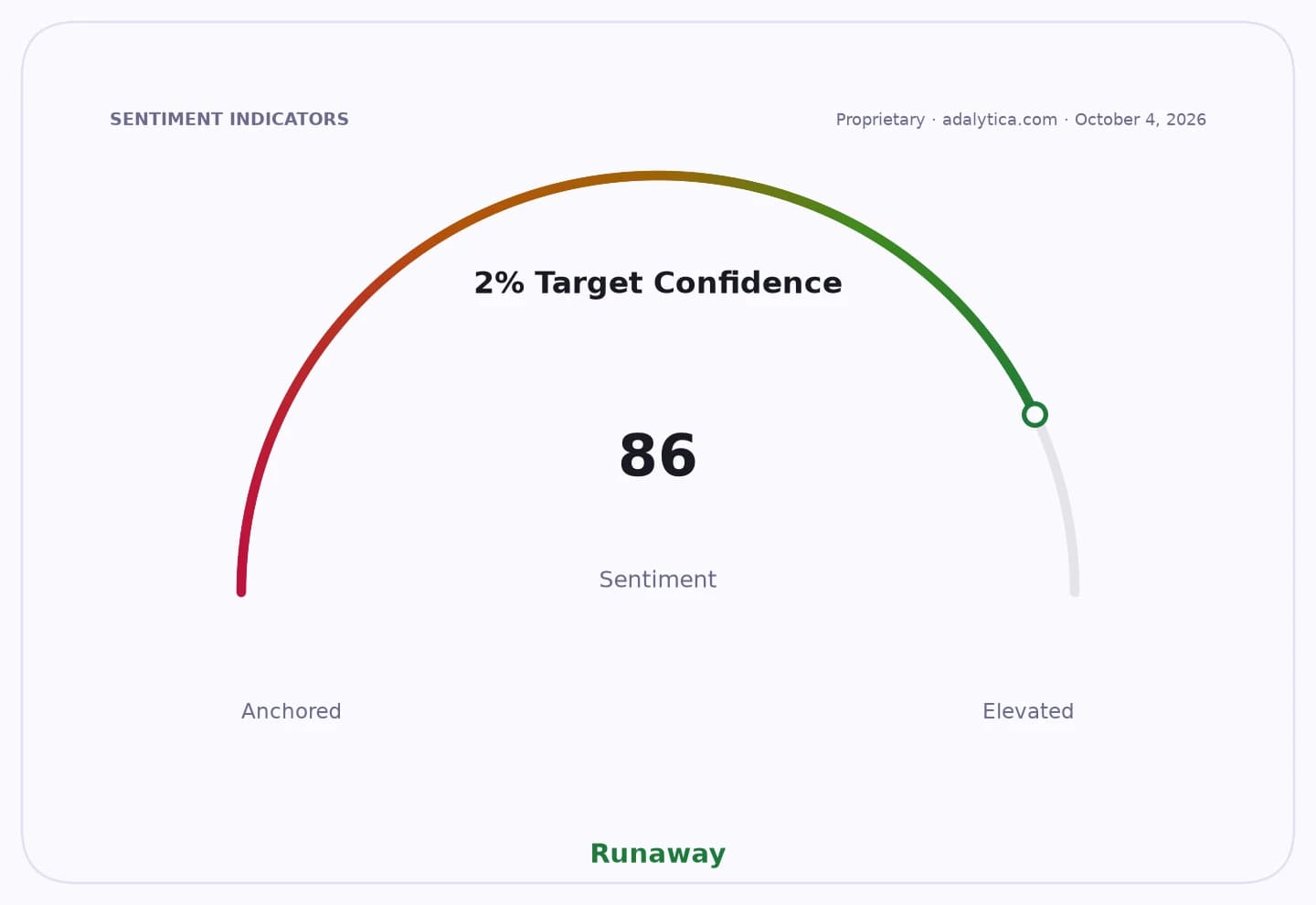
Sentiment IndicatorsⓘProprietary · adalytica.com · October 7, 2026
This is a snapshot — live sentiment, awareness and momentum for 130+ markets update continuously in the dashboard.Open AlphaPulse
The reading matters because it takes inflation back above the Czech National Bank’s 2% target after a period in which prices had cooled enough to sit below target in the first quarter. That earlier slowdown was helped by a transfer of renewable-energy payments from households to the state, a policy change that temporarily masked underlying pressure. September’s move suggests that relief was fragile and that the price path remains highly sensitive to energy markets.
The composition of the print is as important as the headline number. Alcohol and tobacco prices rose 4.6% year on year, while services also climbed 4.6%, showing that price pressure is not confined to one volatile category. Food and non-alcoholic beverages, by contrast, fell 3.5%, which helped soften the inflation impulse and indicates consumers are still getting some offset from cheaper groceries. But the decisive move came from fuel and broader energy, the categories most directly exposed to global commodity swings.
That links Czech inflation to the broader European energy backdrop rather than to purely domestic demand. Crude oil has remained elevated enough to keep transport fuel expensive, and that tends to feed through quickly in a small open economy like the Czech Republic. For policymakers, the concern is not just the September print itself but the possibility that higher fuel costs will keep headline inflation sticky into the final quarter and limit room for further easing.
Markets will read the data through the lens of rates and growth. A rebound in inflation reduces the odds of aggressive interest-rate cuts and supports the koruna if traders conclude the Czech National Bank must stay cautious. At the same time, higher fuel and power bills act like a tax on households, eroding real incomes and potentially slowing consumption just as the recovery is trying to stabilize.
The tension is familiar across central Europe: when energy turns up, inflation follows quickly, but growth tends to weaken with a lag. The immediate implication for investors is that rate-sensitive assets may face less policy support than expected, while energy-linked sectors and companies with pricing power are better insulated than consumer-facing businesses. The final September figure, due on Oct. 13, will determine whether this is a one-month flare-up or the start of another inflationary phase.
| Entity | Gains | Losses |
|---|---|---|
| Czech energy suppliers | ▲Higher retail prices | ▼Political scrutiny |
| Czech households | ▲Cheaper food offset | ▼Higher fuel bills |
| Czech National Bank | ▲Tighter policy room | ▼Easier rate cuts |
| Rate-sensitive borrowers | ▲Lower inflation hopes | ▼Higher financing costs |