Rising Czech inflation is making the case for dividend investing all over again, and a comparison of popular local funds shows that active management has recently done a better job than low-cost ETFs at preserving both income and purchasing power.
Czech dividend funds beat ETFs on inflation-adjusted returns

With consumer prices up 2.5% in September and the Czech National Bank warning inflation could climb back above 3% early next year, the key issue for households drawing a regular portfolio withdrawal is not just yield, but whether the portfolio can keep paying while the real value of that income holds up. That is where the latest comparison matters: six of seven actively managed dividend funds beat two low-fee dividend ETFs over 2021-2025 when dividends were reinvested, according to the review, with Amundi delivering the strongest result at about 89% in crowns.
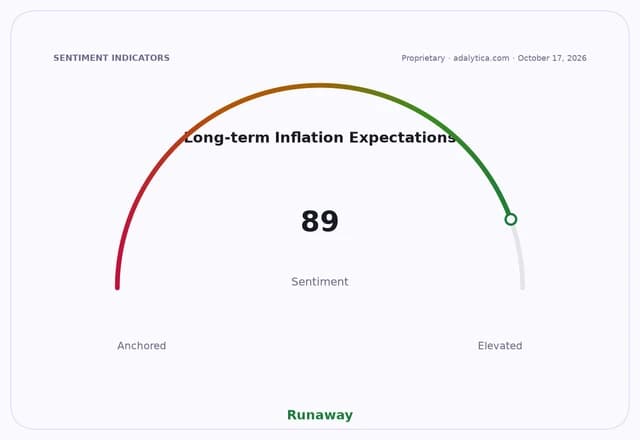
Sentiment IndicatorsⓘProprietary · adalytica.com · October 17, 2026
This is a snapshot — live sentiment, awareness and momentum for 130+ markets update continuously in the dashboard.Open AlphaPulse
For investors, that is a reminder that the cheapest product is not always the best tool for an income strategy. Dividend ETFs offer scale, liquidity and lower fees, but in an environment of shifting rates and stubborn inflation, the drag from a weak portfolio mix or a too-narrow yield screen can overwhelm the fee advantage. Active funds can outperform if managers tilt toward dividend sustainability, balance sheet quality and sector rotation rather than simply chasing the highest headline payout.
The timing also matters because the income problem is becoming more acute. The inflation backdrop is still well above the Czech central bank’s target, and expectations for price pressure remain elevated. In that setting, a fixed withdrawal plan from a lump sum — the report tested a 1 million crown annuity — becomes a test of sequencing risk as much as market return. If withdrawals begin earlier or inflation accelerates, the real income path deteriorates quickly even when nominal payouts look stable.
The broader lesson for investors is that “dividend” is not the same as “cash in hand.” Yield can be flattered by price falls, one-off distributions or concentrated exposure to slow-growing sectors. What matters is the combination of total return, payout reliability and the ability to outpace inflation after fees. The fact that an active fund such as Amundi led the field suggests there is still room for stock selection and portfolio construction to add value, even in a market where passive investing dominates much of the conversation.
For Czech savers planning retirement income, the next test will be whether inflation re-accelerates as expected and whether dividend portfolios can keep up without forcing investors to sell principal. If prices rise faster than payouts, income strategies will need either more equity risk, more active management or a lower withdrawal rate to remain sustainable.
| Entity | Gains | Losses |
|---|---|---|
| Active Czech dividend funds | ▲Higher returns; better inflation defense | ▼Higher fees, manager risk |
| Low-cost dividend ETFs | ▲Fee advantage; liquidity | ▼Weaker recent performance |
| Retirees drawing income | ▲Potentially steadier real withdrawals | ▼Inflation erosion of buying power |
| Czech households | ▲Income strategies get renewed attention | ▼Cost of living pressure |