Czech employers are freezing hiring and leaving workers stranded in the wrong places and the wrong roles, as a weak market for seasonal jobs, AI-driven restructuring and low mobility keep unemployment stuck at 5% even after the usual autumn slowdown.
Czech employers freeze hiring as unemployment stays 5%

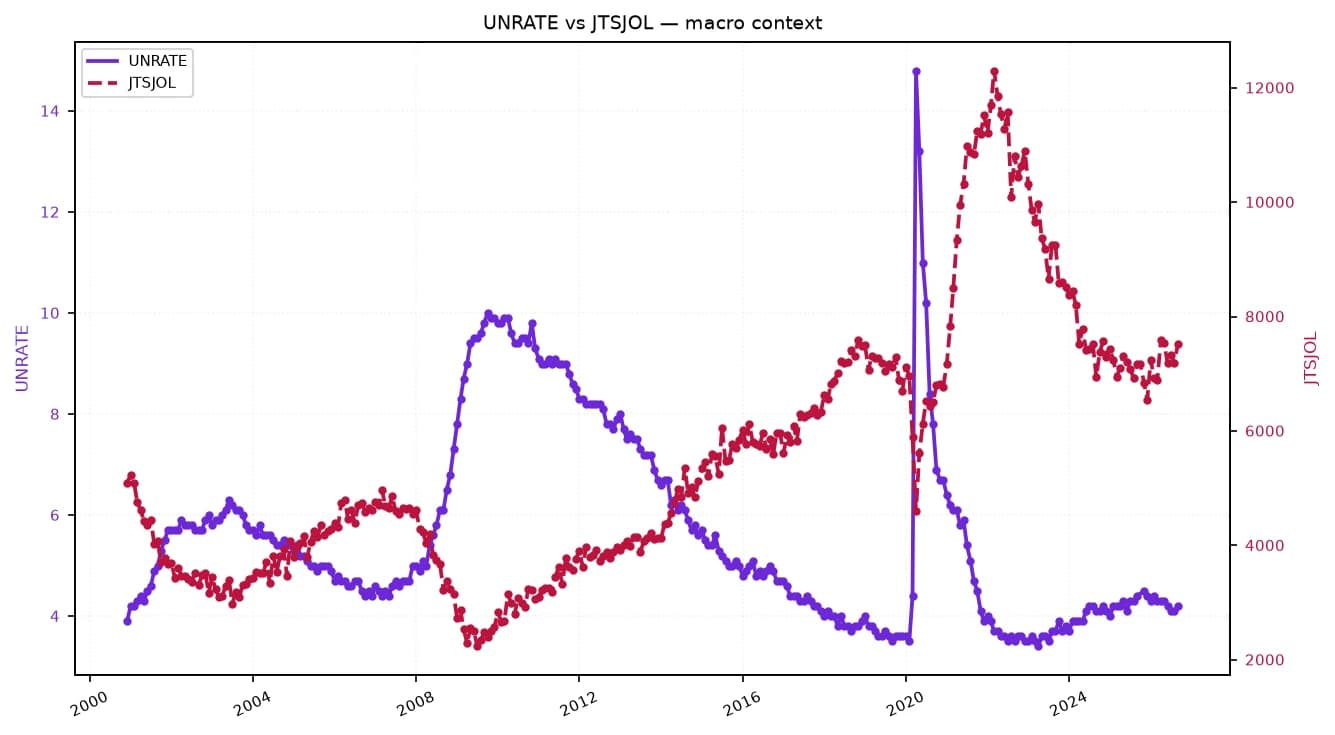
The warning from the vice-president of the Chamber of Commerce fits a broader labor-market disconnect: 370,000 people are out of work while employers still report 106,000 vacancies, yet the two do not match because qualifications, geography and pay expectations are out of sync. The result is a labor market that is not tightening in the normal October-November pattern, when seasonal work in retail, logistics and transport usually pulls unemployment lower.
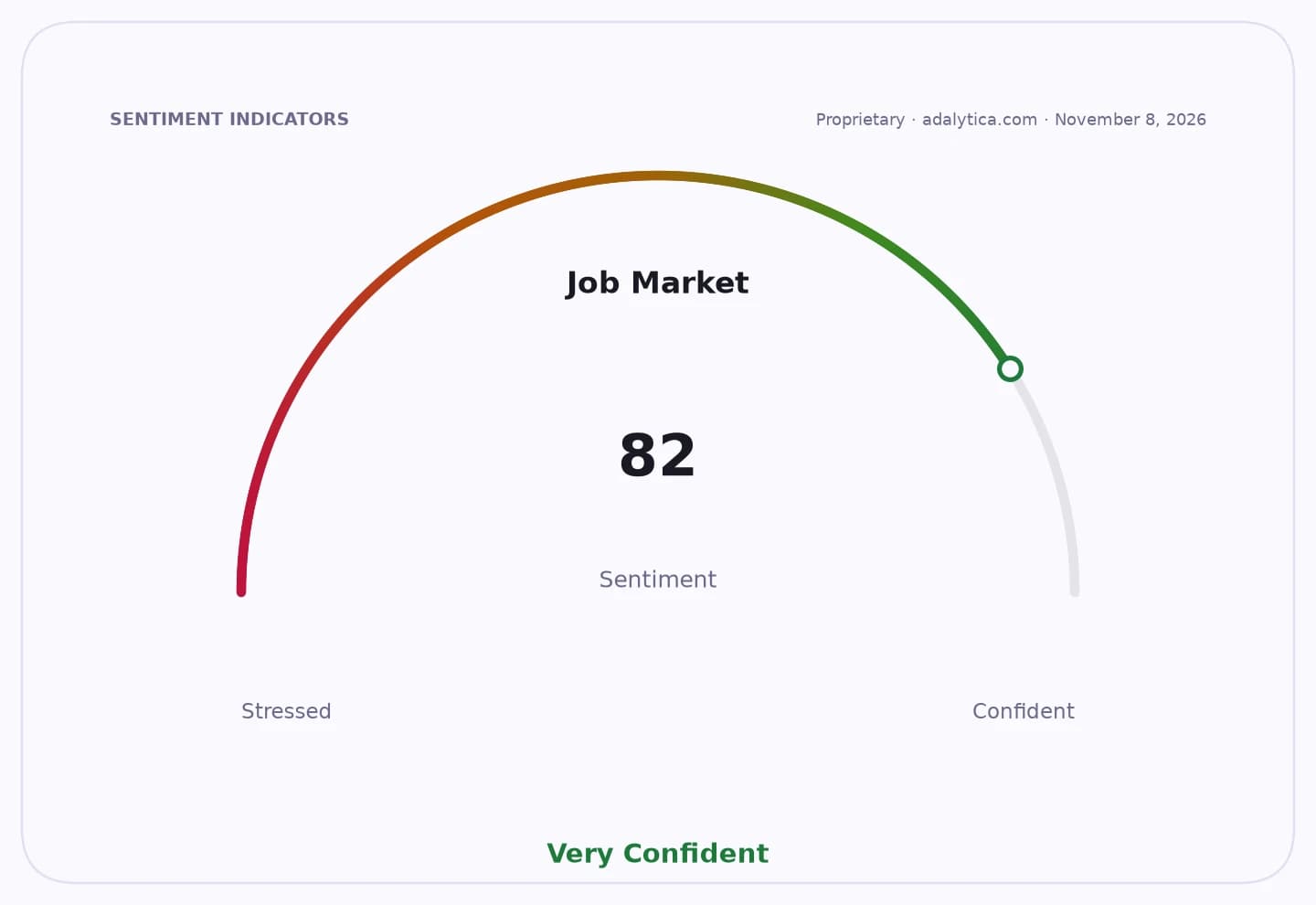
Sentiment Indicators
That mismatch matters for the real economy because firms are acting more cautiously on orders and costs, choosing to absorb peaks with existing staff rather than add workers. ManpowerGroup says seasonal job offers are running at roughly one-third of prior years, underscoring how muted year-end hiring has become.
It also matters because the labor slack is increasingly structural rather than temporary. Over the past year and a half, more people have been pushed out of work, while vacancies remain concentrated in roles that demand digital skills, flexibility and sometimes relocation — something Czech workers are reluctant to do in a country with the lowest labor mobility in Europe and expensive housing in many regions.
The pressure is being amplified by AI-led job cuts in technology and finance. Banks, the chamber official said, are effectively tech companies now, with customer-facing work shifting to chatbots and voicebots and only higher-level support roles remaining for humans. That is leaving thousands of candidates in the market who may eventually be rehired, but not necessarily in the same occupations.
For investors, the story points to slower consumption, tighter wage growth and more uneven demand across sectors tied to hiring, commuting and household confidence. It also helps explain why labor-market sentiment remains under strain even as headline unemployment stays far below crisis levels.
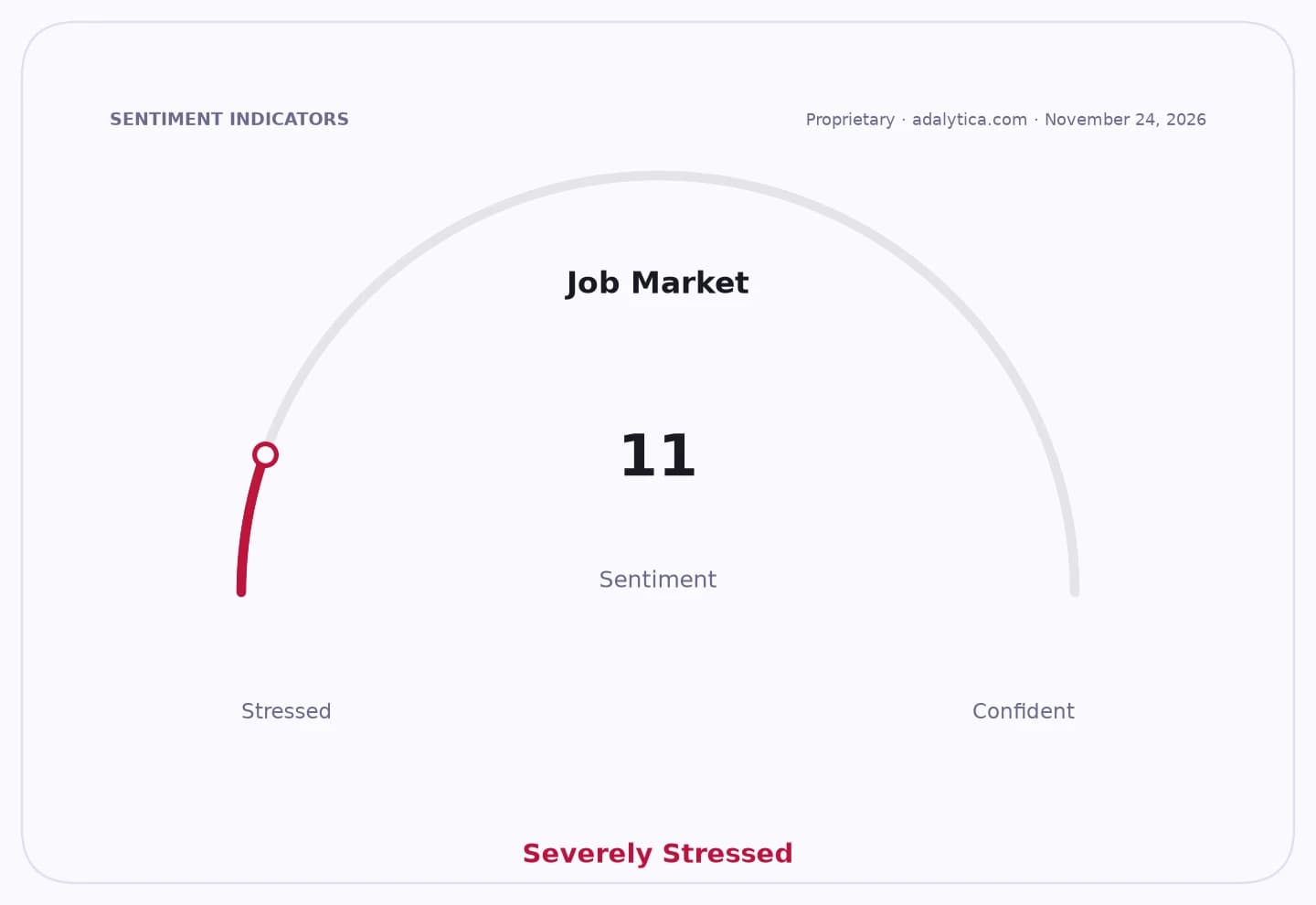
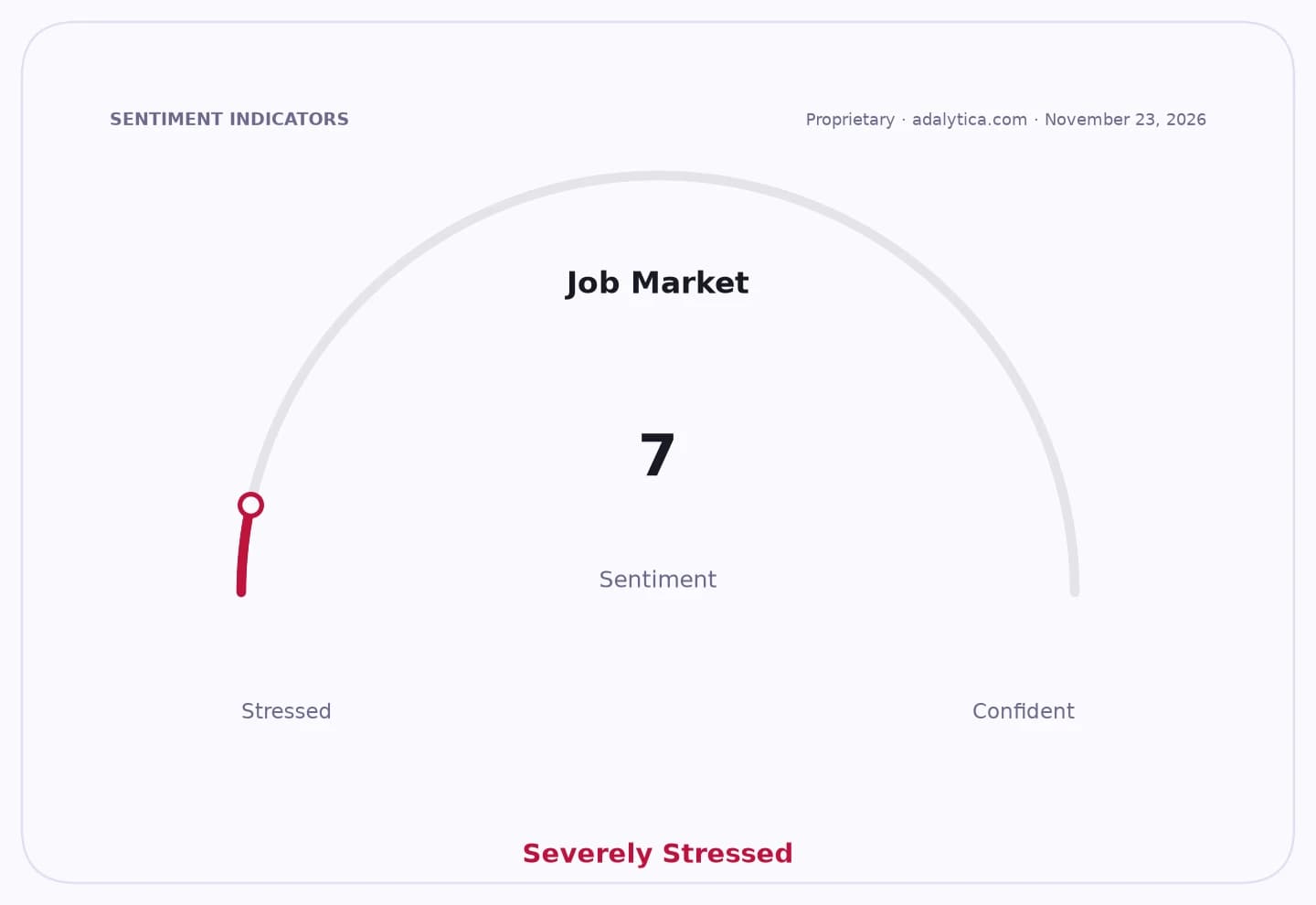
Adalytica’s Job Market Sentiment gauge is in “Extreme Fear” at 11, while its Consumer Confidence Recession Sentiment reads 18, suggesting households and job seekers are still deeply uneasy. The next read on whether the freeze is temporary or becoming entrenched will come with upcoming labor data and more evidence on year-end seasonal hiring.
| Entity | Gains | Losses |
|---|---|---|
| Employers | ▲Lower hiring costs | ▼Harder to fill specialist roles |
| Unemployed workers | ▲Possible eventual rehiring | ▼Longer job searches |
| Retail, logistics, transport | ▲Seasonal labor supply if demand returns | ▼Weak holiday staffing expansion |
| AI-enabled firms | ▲Lower front-line staffing needs | ▼More displaced workers and restructuring friction |