Czech gas storage is 70% full, outpacing the European Union average of just under 65% as a late-summer scramble for supplies pushes benchmark prices to a more than three-year high and raises the odds of a costly winter for households and industry.
Czech gas storage tops EU average before winter

The gap matters because Europe entered the refill season with weaker inventories than in recent years, leaving utilities and traders more exposed to supply shocks just as geopolitical tensions and thinner LNG flows tighten the market. Front-month European gas climbed above 75 euros per megawatt hour in Wednesday trading, the highest in more than three years, while analysts say winter prices could rise above 100 euros if stocks remain sluggish.
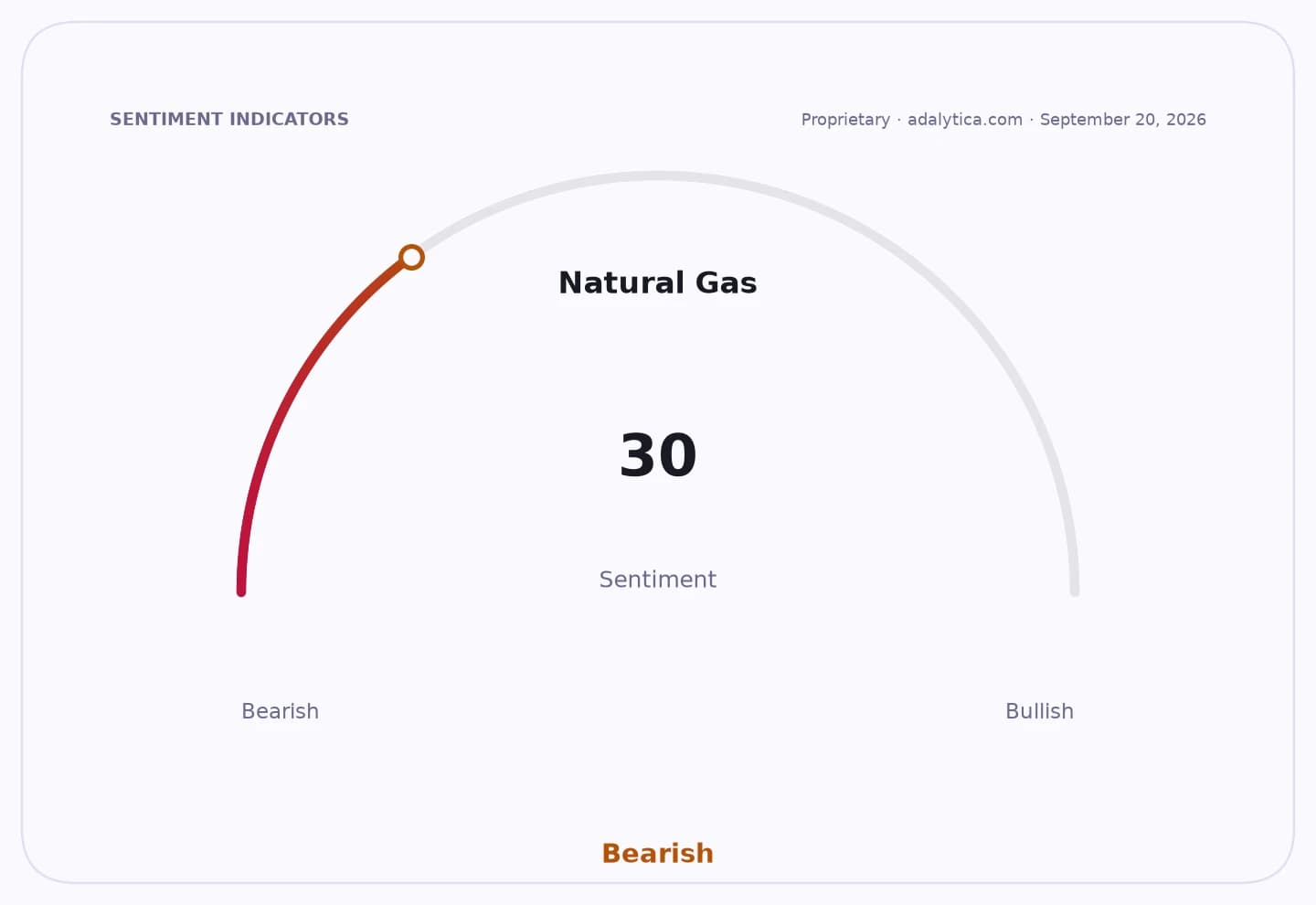
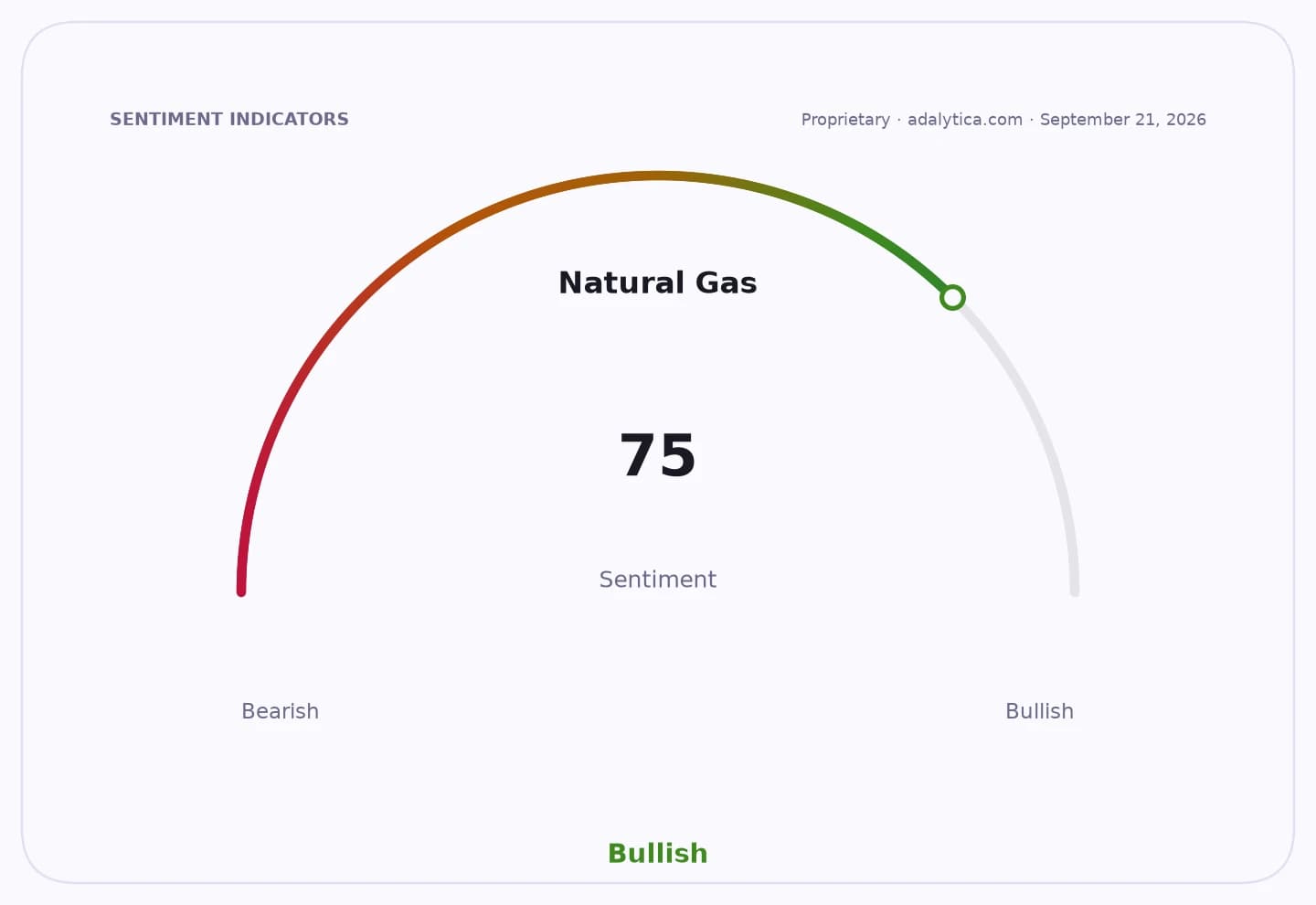
Sentiment IndicatorsⓘProprietary · adalytica.com · September 4, 2026
This is a snapshot — live sentiment, awareness and momentum for 130+ markets update continuously in the dashboard.Open AlphaPulse
Czech officials say the country has met the EU’s indicative 60% storage milestone for Sept. 1 and see no sign of shortages before winter, but filling has been slower than last year. The ministry says traders are relying on a mix of storage, long-term and forward contracts and ongoing purchases to secure supply, while domestic inventories still sit slightly above the EU average.
The broader picture is less comfortable. EU storage is about 65% full, leaving member states more than 100 terawatt hours short of the minimum target in value terms, according to Bloomberg’s calculations cited in the report. Italy is around 83% full, but Germany — Europe’s biggest storage market — is only a little more than half full, with the Netherlands and Belgium also lagging.
Higher gas prices are already feeding through to forward purchasing decisions and new fixed-price offers for households, where the quickest impact will be felt. If elevated prices persist, room for cheaper contracts narrows, potentially delaying relief for consumers and keeping pressure on inflation-sensitive economies.
For investors, the setup favors energy producers and LNG sellers while squeezing utilities, gas-intensive manufacturers and import-dependent countries. With winter still ahead and geopolitics driving volatility, the key catalyst is whether Europe can refill fast enough before cold weather forces a tighter contest for cargoes.
| Entity | Gains | Losses |
|---|---|---|
| LNG exporters | ▲Higher spot prices | ▼Slower demand growth |
| European utilities | ▲Supply security from contracts | ▼Rising procurement costs |
| Czech households | ▲No immediate shortage risk | ▼Higher fixed-price tariffs |
| Gas-importing EU states | ▲Winter stockpiles if refill improves | ▼Scarcer LNG cargoes |