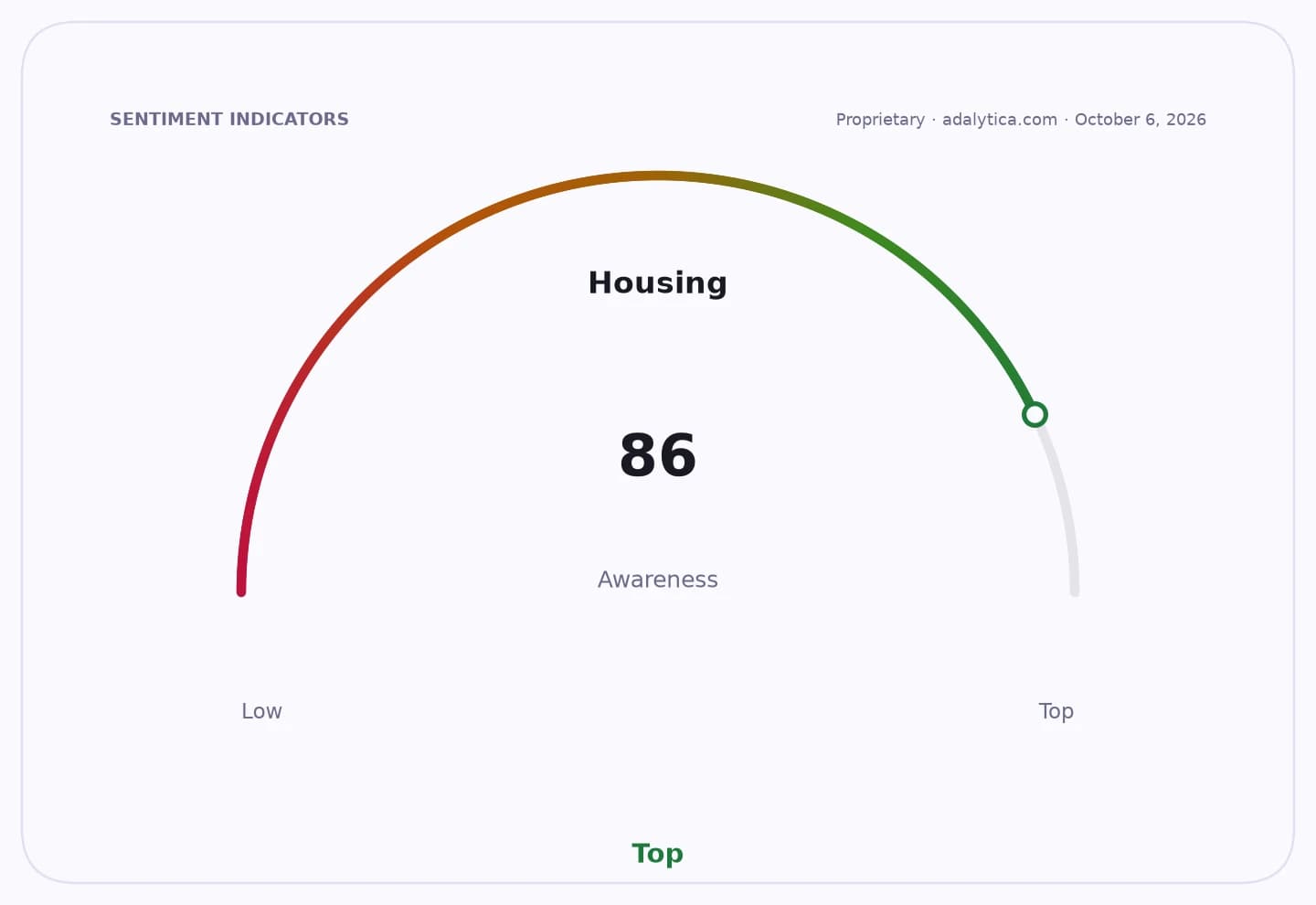
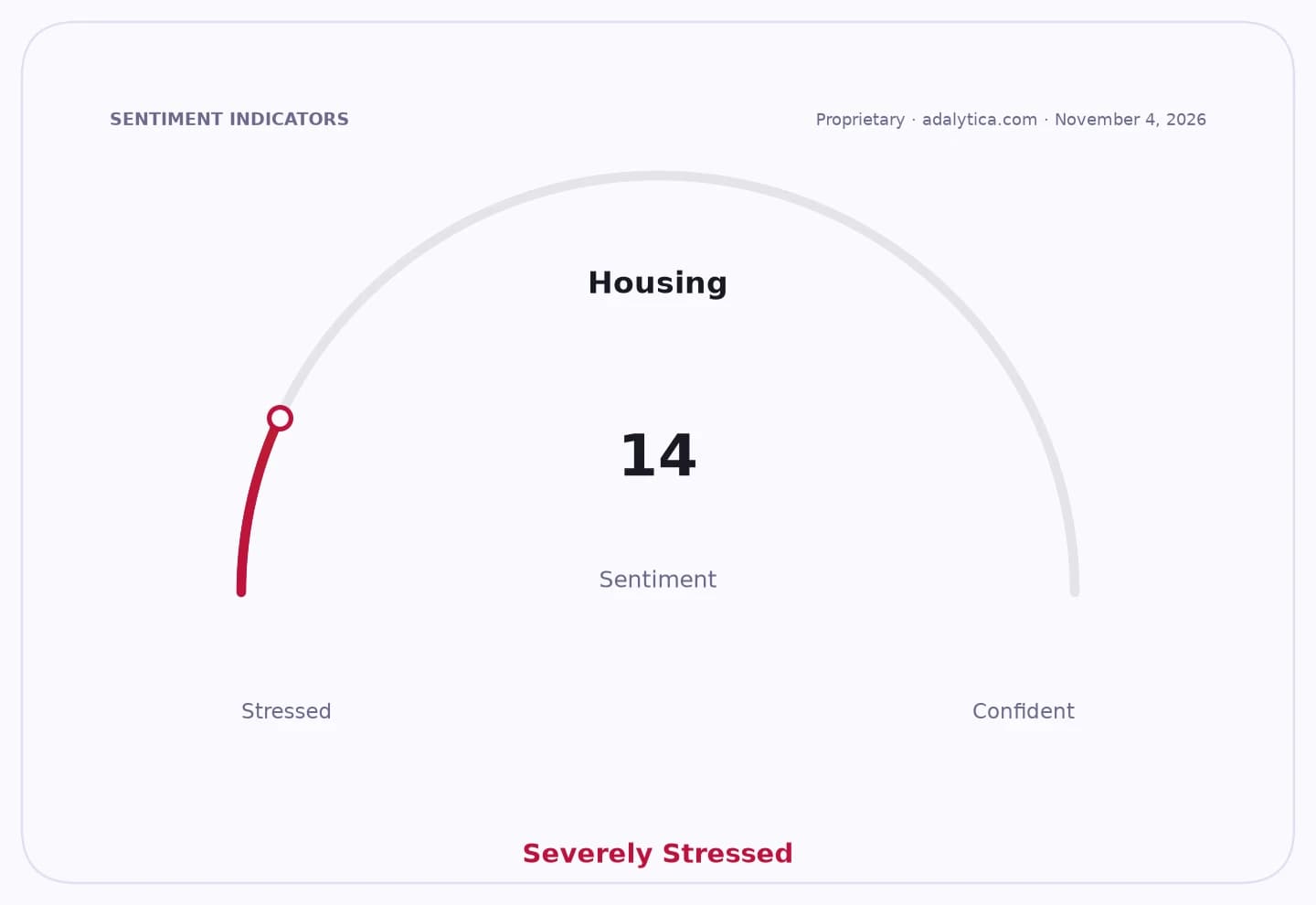
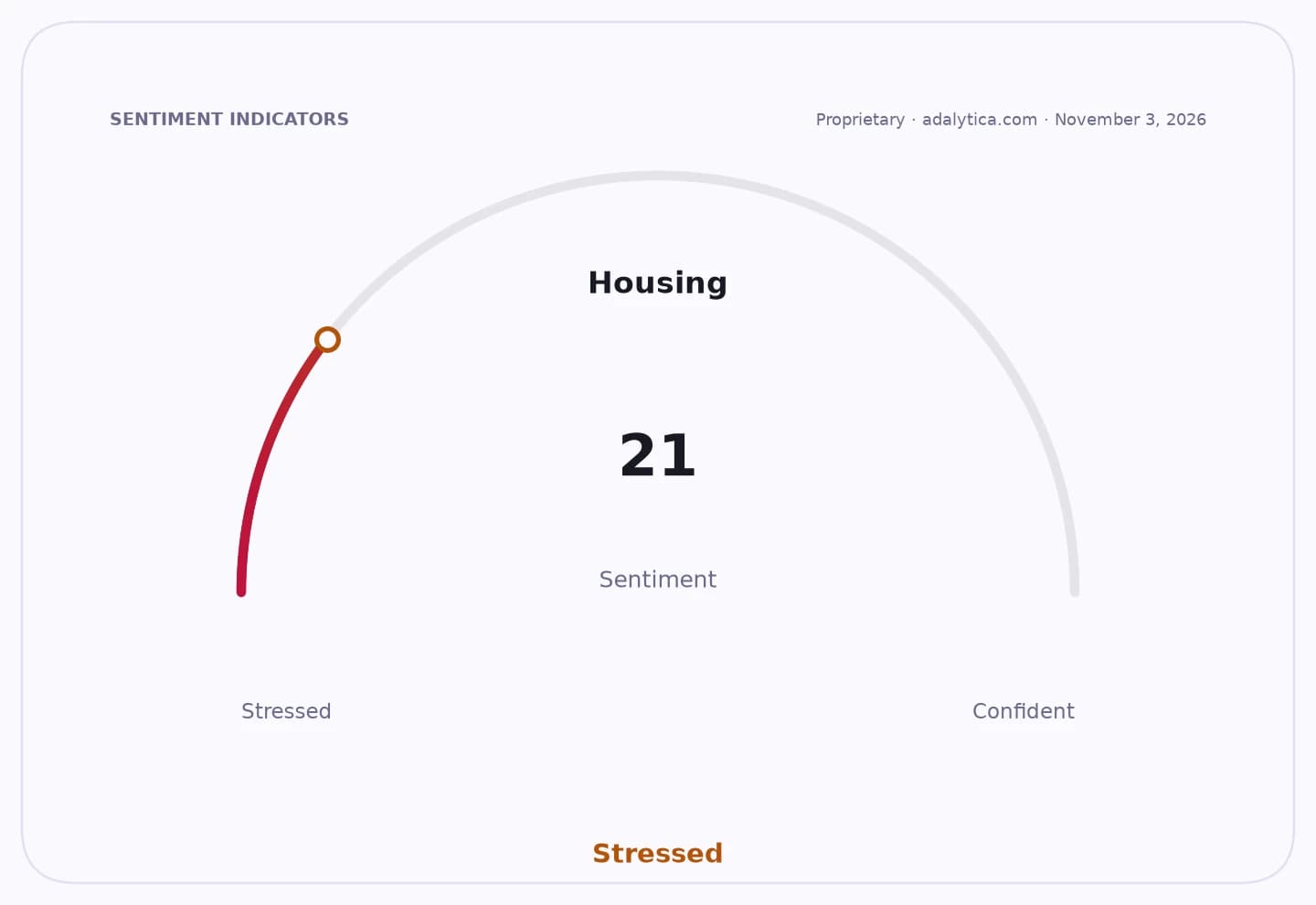
Czech households are heading into a painful refinancing cycle next year as apartment prices remain high and borrowing costs stay far above the ultra-cheap levels that powered the housing boom.
Czech households face higher mortgage refinancing costs
Housing
That is the key economic shift: the era of nearly free money has ended, but housing prices have not reset enough to offset it. For families renewing fixed-rate mortgages, the result is a sharp rise in monthly repayments that will drain disposable income, cool consumer spending and widen the gap between owners and renters.
Sentiment Indicators
The pressure is not isolated to the Czech Republic. A broad housing affordability squeeze is rippling across developed markets, with shortages, construction bottlenecks and sticky prices keeping shelter costs elevated even as central banks lean against inflation. In the Czech case, the currency has stabilized around 21.82 per dollar after trading near 20.15 earlier this year, while the 10-year U.S. Treasury yield sits near 4.85%, underscoring that global financing conditions remain restrictive rather than supportive.
That matters for investors because housing affordability is no longer just a social issue — it is a macro transmission channel. When mortgage bills jump by tens of thousands of koruna a year, households cut back on discretionary spending, retailers feel it, and banks may face higher repayment stress even if credit quality holds up for now. The housing squeeze also reinforces demand for rental assets, from Czech landlords to international residential REITs and multifamily operators that can reprice leases faster than owner-occupied homes.
The latest market signals point to a stubborn backdrop rather than relief. U.S. existing home prices, tracked by the S&P CoreLogic Case-Shiller index, have risen to 336.741, up from 308.055 in June 2022 and well above pre-pandemic levels. New home sales, meanwhile, remain volatile, with the latest reading at 1,221,000 annualized units after a temporary spike earlier in the summer, showing that higher rates have not produced a clean collapse in demand — only a more strained market.
That is the narrative investors should focus on: housing is becoming a capital-allocation battleground. Owners locked into low fixed rates are relatively protected, but anyone refinancing now is exposed to the full force of tighter monetary policy and persistent price gains. The market underestimates how long that squeeze can last, and that creates opportunity in rental housing, affordable housing developers, home improvement names and selective lenders with conservative balance sheets. For Czech households, the bill is coming due. For investors, the next leg belongs to businesses that profit when ownership becomes less affordable, not more.
| Entity | Gains | Losses |
|---|---|---|
| Rental housing owners | ▲Higher demand, tighter vacancies | ▼N/A |
| Mortgage borrowers renewing fixed rates | ▲N/A | ▼Much higher monthly payments |
| Banks with variable-rate exposure | ▲Higher lending yields | ▼More repayment stress |
| Affordable housing developers | ▲Stronger policy support | ▼Slow supply response elsewhere |