Mongolia is preparing to use public funds to buy down mortgage costs for the first three years of new home loans, a move that could unlock demand for thousands of apartments and revive a stalled housing market without directly financing fresh construction.
Mongolia plans mortgage subsidy for new home loans
The government plans to raise about $500 million, or 1.8 trillion tugriks, from international markets through banks and financial institutions, then cover the swap costs of converting the foreign currency into local currency and pay 6 percentage points of borrowers’ interest for the first three years. From the fourth year, the rate would rise to 12%, according to Finance Minister Z. Mendsaikhan and lawmakers working on the bill.
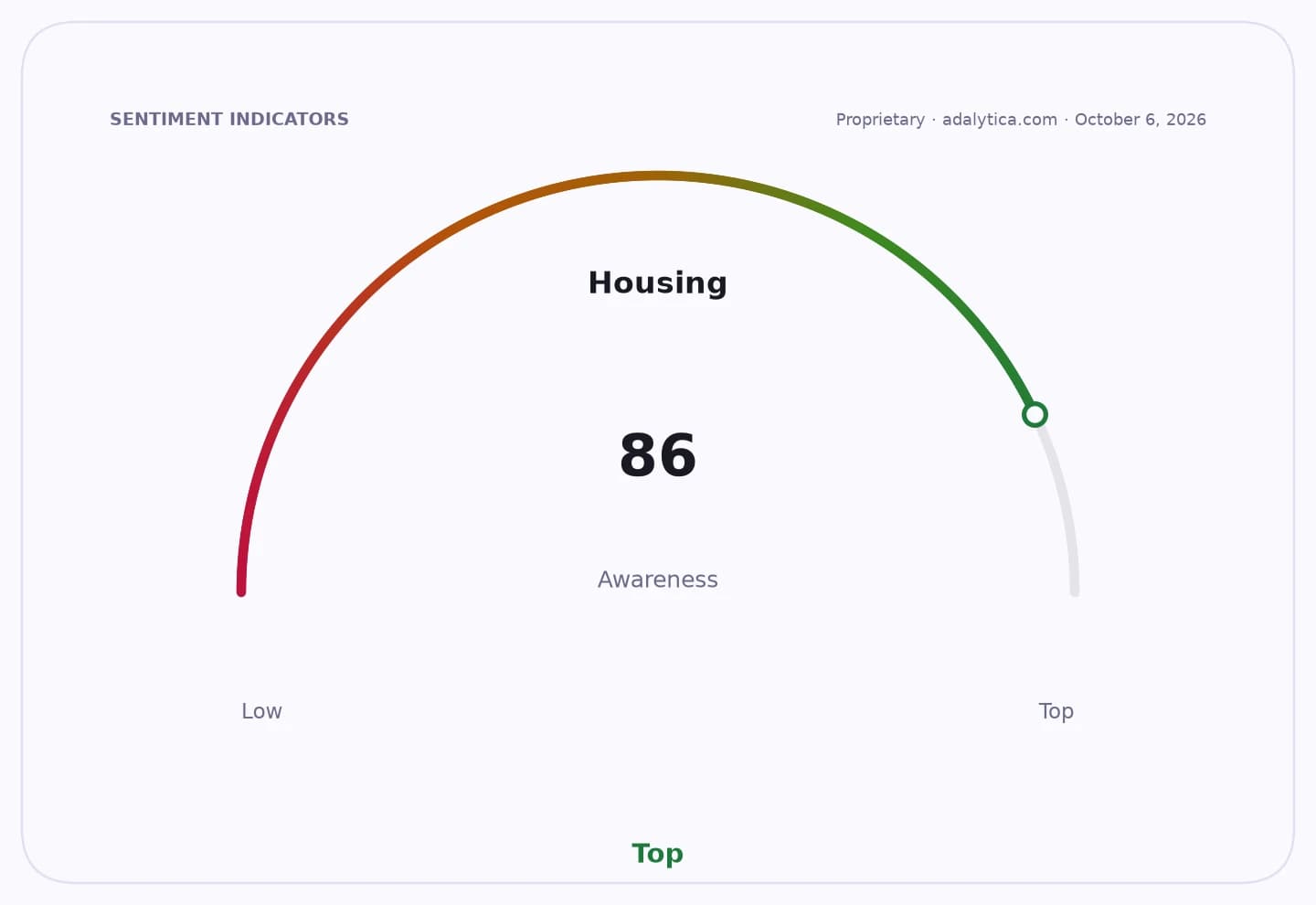
Sentiment IndicatorsⓘProprietary · adalytica.com · October 6, 2026
This is a snapshot — live sentiment, awareness and momentum for 130+ markets update continuously in the dashboard.Open AlphaPulse
That matters because Mongolia’s current mortgage system is constrained less by demand than by funding. About 45,000 people are waiting for access to subsidized housing loans, while commercial bank mortgage products run at 18% to 22%, far beyond what most households can absorb. By effectively bridging the gap between market rates and the state’s target rate, the government is trying to keep housing affordability alive without blowing out fiscal costs all at once.
The policy is also designed to work through the inventory that already exists rather than to stimulate a new building boom. The finance minister said roughly 9,000 completed units are already on the market and another 20,000 were built with foreign financing, with about 5,000 expected to come online next year and 16,000 more by 2027. If the program starts on Jan. 1, 2027, as planned, it could absorb unsold apartments, free up frozen projects and support jobs in construction and related industries.
For investors, the key signal is that the state is moving from a direct subsidy model toward a more structured housing-finance system. Lawmakers are pushing a specialized housing finance bank with a capital base of about 200 billion tugriks that could, in theory, leverage as much as 6 trillion tugriks in lending capacity. That is the kind of institutional plumbing that can deepen mortgage markets over time and create a repeatable source of demand for bonds, bank funding and mortgage-backed assets.
But the market should not mistake this for an easy fiscal fix. One lawmaker warned that subsidized lending will only work if inflation is brought down, arguing that broad state support for 6% mortgages can weaken the currency and push prices higher unless the budget is tighter. Mongolia’s inflation was cited at 12.5%, underscoring the tension between cheap credit and macro stability. If inflation stays elevated, the policy either becomes more expensive for the state or less effective for households.
That is why the real investment story is not simply home ownership — it is capital allocation. The winners are lenders, developers with finished inventory and holders of housing-linked financial assets if the program is executed cleanly. The losers are households left outside the quota system, and potentially the sovereign balance sheet if the subsidy expands faster than inflation falls.
The next catalyst is parliamentary approval of the housing legislation and the 2027 budget. If lawmakers back the plan, Mongolia will be signaling that it wants to turn housing from a social policy into a capital-market engine — and that could re-rate the entire mortgage ecosystem.
| Entity | Gains | Losses |
|---|---|---|
| Mongolia government | ▲Social support, housing stimulus | ▼Fiscal burden, currency risk |
| Banks and housing finance bank | ▲New loan demand, funding growth | ▼Margin pressure, policy risk |
| Homebuyers with approved mortgages | ▲Lower initial payments | ▼Borrowing limits, later higher rates |
| Unsold apartment owners/developers | ▲Inventory clearance, cash flow | ▼No benefit if inflation delays rollout |