Russia’s mortgage market saw a sharp surge in September as borrowers rushed to lock in subsidized home loans before changes to the family mortgage program took effect, lifting monthly issuance to about 600 billion rubles.
Russia Mortgage Issuance Jumps on Subsidy Deadline
That matters because housing credit is one of the clearest gauges of household demand in Russia, and this jump suggests buyers were willing to accelerate purchases rather than wait. For banks, it means a burst of loan volume in the near term. For the broader economy, it shows how heavily the market still depends on state support to keep housing activity moving.
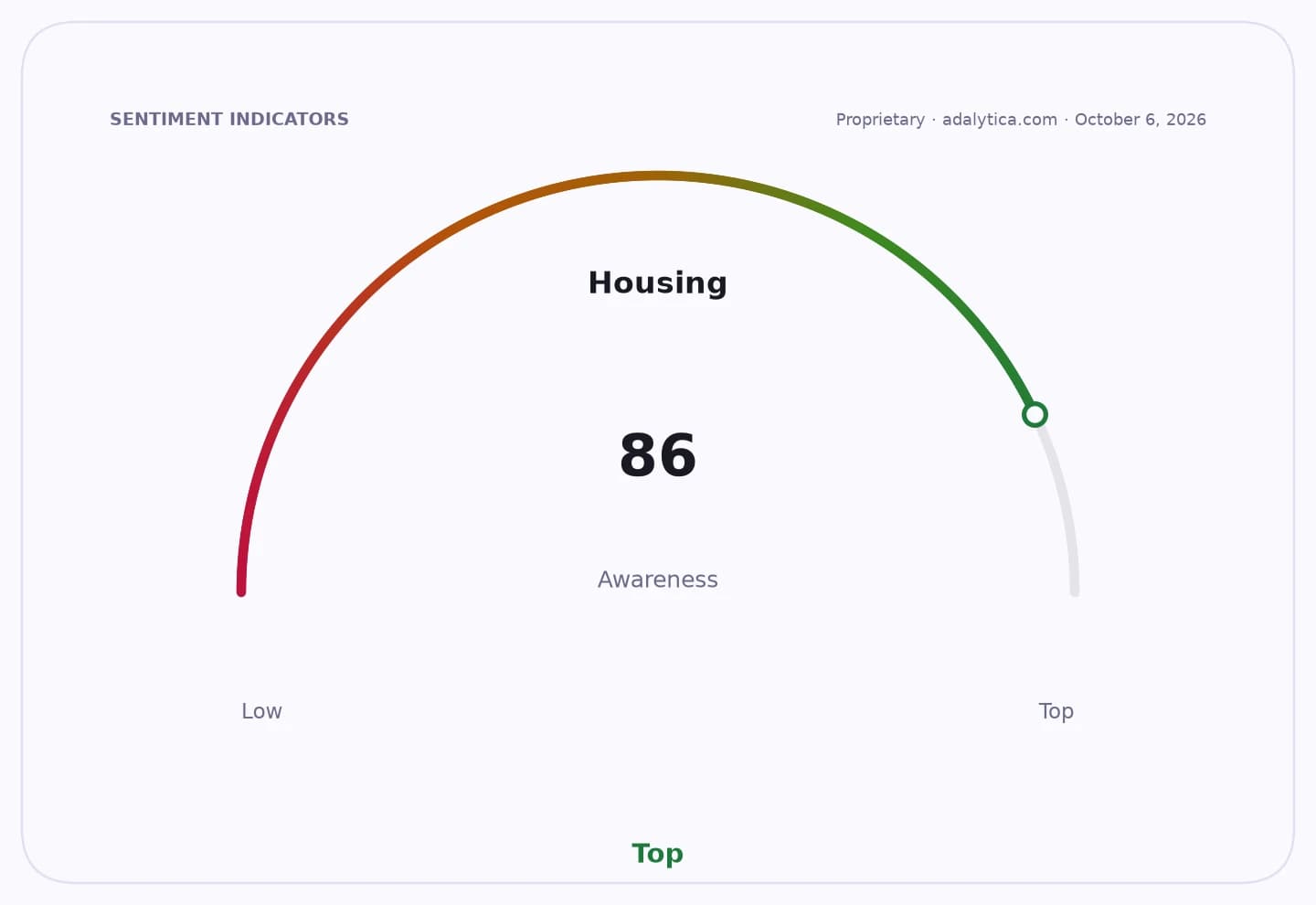
Sentiment IndicatorsⓘProprietary · adalytica.com · October 6, 2026
This is a snapshot — live sentiment, awareness and momentum for 130+ markets update continuously in the dashboard.Open AlphaPulse
VTB, one of Russia’s biggest lenders, said September issuance was up 60% from August and 50% from a year earlier, the strongest month since early 2026. The bank said family mortgages accounted for about 64% of total lending, underscoring how dominant the subsidized program has become in a market still constrained by high borrowing costs and policy uncertainty.
The rush was especially visible in the family mortgage segment, where VTB said lending roughly doubled from August to about 385 billion rubles. That topped June’s level and even exceeded January’s previous peak, a sign that households were not simply responding to lower rates, but to a deadline effect tied to the expected reset of program terms on Oct. 1.
For investors, the key point is that this is volume pulled forward, not necessarily a new sustainable growth trend. The bank itself expects September to be the high-water mark for the year, with activity likely to cool after the policy change. That makes the rally in mortgage issuance good news for lenders in the short run, but less convincing as a signal of enduring housing strength.
The bigger investment story is that Russia’s property market remains highly policy-driven. When subsidized credit dominates issuance, banks and developers benefit from government support, but the market becomes more vulnerable to any tightening in eligibility or cuts to incentives. That is why investors should treat this September spike as a reminder of demand elasticity, not as proof of a self-sustaining housing boom.
For long-term investors, the takeaway is simple: Russia’s mortgage market is still being steered by policy rather than pure consumer affordability. The lenders and developers most exposed to subsidized programs may see short-lived upside from these bursts, while the broader housing sector still faces the same question it has for months — what happens when the support is dialed back? Worth watching, but not yet a reason to chase.
| Entity | Gains | Losses |
|---|---|---|
| Russian banks | ▲Higher mortgage volumes | ▼Lower margin stability |
| Homebuyers rushing before Oct. 1 | ▲Access to subsidized loans | ▼Less time to wait for better terms |
| Developers | ▲Faster unit sales | ▼Demand may fade after policy change |
| Policy makers | ▲Housing activity boost | ▼Greater dependence on state support |