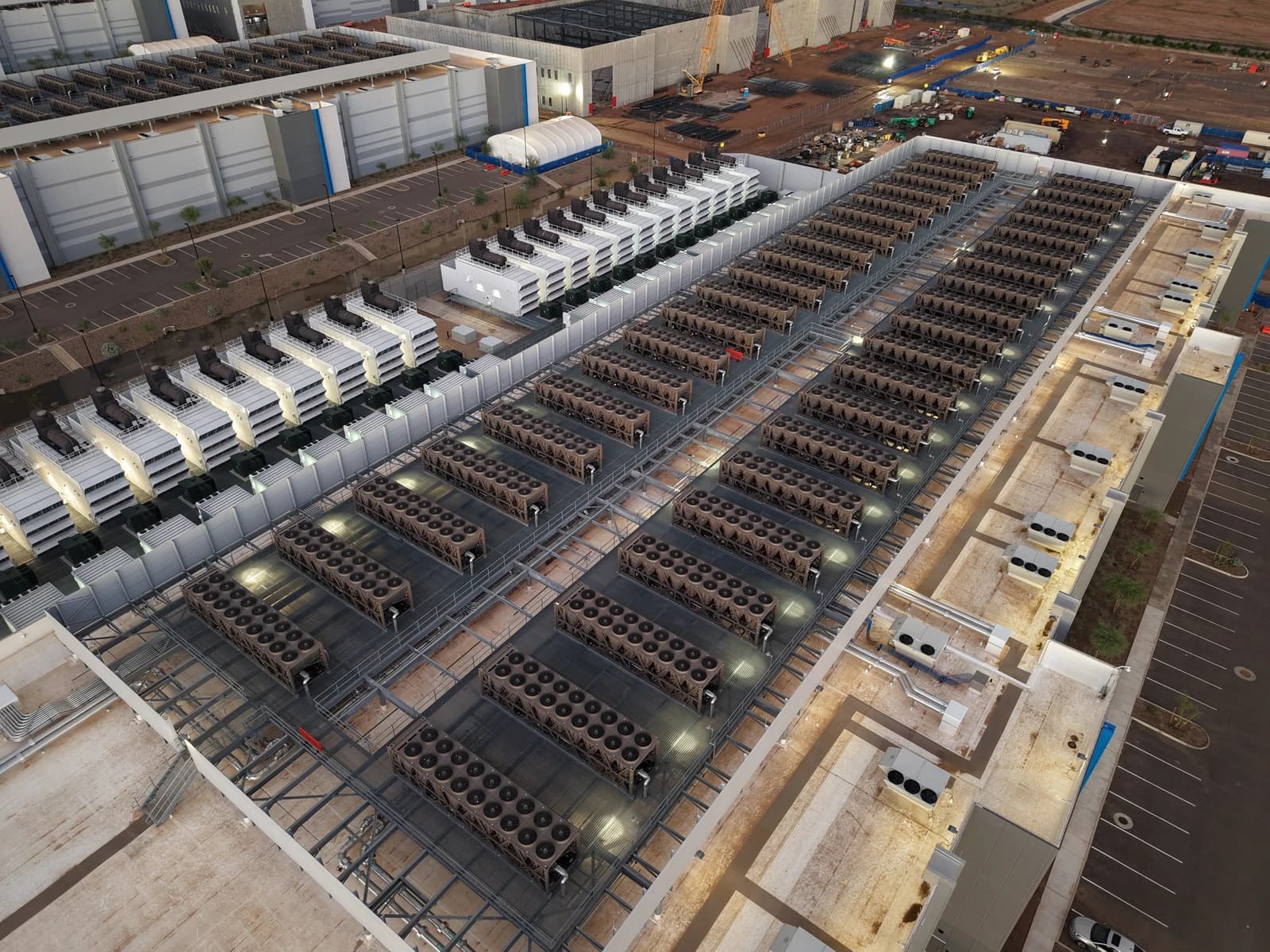
Global spending on data centers is set to roughly double over the next two years as AI buildouts, cloud demand and enterprise digitization force hyperscalers and operators to pour more money into servers, land and electricity, even as power constraints and policy uncertainty threaten to slow projects.
Data Center Spending Doubles on AI Demand
The spending surge matters because data centers are becoming one of the biggest capex drains in the AI economy, with the buildout now stretching beyond chips into grids, transmission and construction capacity. For countries and companies competing to host the next wave of computing, the race is no longer just about semiconductors — it is about who can secure enough power, permits and labor to turn demand into live capacity.
The investment wave is already visible in the earnings of the biggest cloud and infrastructure buyers. Microsoft and Amazon have both flagged rising pressure from datacenter expansion, with Microsoft warning in its latest filing that labor shortages, contractor bottlenecks and electricity constraints could delay deployments, while Amazon said its technology and infrastructure spending is tied to operating and expanding data centers.
That makes the boom a double-edged trade for investors. On one side are beneficiaries such as chipmakers, server suppliers, utilities and construction firms; on the other are cloud platforms and AI operators whose margins can come under pressure before the revenue payoff arrives. The squeeze is showing up in stock action too: Microsoft and Amazon have both seen sharp swings in recent months as the market reassesses how quickly AI spending can translate into returns.
Australia is emerging as a case study in the broader risk. The country’s $18 billion data center pipeline is facing growing uncertainty as federal policy remains unclear and community opposition builds, raising the chance that some projects are delayed or scaled back even as demand accelerates.
For investors, the key question is whether the spending boom keeps pace with available power and regulation. If governments streamline approvals and utilities expand capacity, the sector could support a multi-year capex cycle across tech and infrastructure. If not, the investment surge may turn into a bottleneck story — one that lifts costs, delays revenue and rewards only the best-capitalized operators.
| Entity | Gains | Losses |
|---|---|---|
| Chipmakers and server suppliers | ▲Higher AI hardware orders | ▼Capacity bottlenecks if builds slow |
| Utilities and grid operators | ▲Rising power demand | ▼Upfront infrastructure strain |
| Cloud giants | ▲More AI capacity and market share | ▼Near-term margin pressure |
| Australia project developers | ▲Growth opportunity | ▼Policy uncertainty and opposition |