For borrowers under pressure, the biggest decision is not whether to borrow more — it is whether to simplify what they owe or admit the debt has already gone too far. That distinction matters because consolidation can preserve a credit profile and lower monthly payments, while debt repair, or reparadora, is usually a last-ditch move after missed payments that can scar a borrower’s record for years.
Debt consolidation vs reparadora in Mexico
The economic logic is straightforward: when debt remains manageable, refinancing or consolidating it can keep households in the credit system and reduce the risk of default. When the debt load has already pushed a borrower into mora, the goal shifts from optimizing cost to stopping the damage. In that case, a reparadora may negotiate a haircut or restructuring, but the price is a negative mark that can linger in the credit bureau for up to six years.
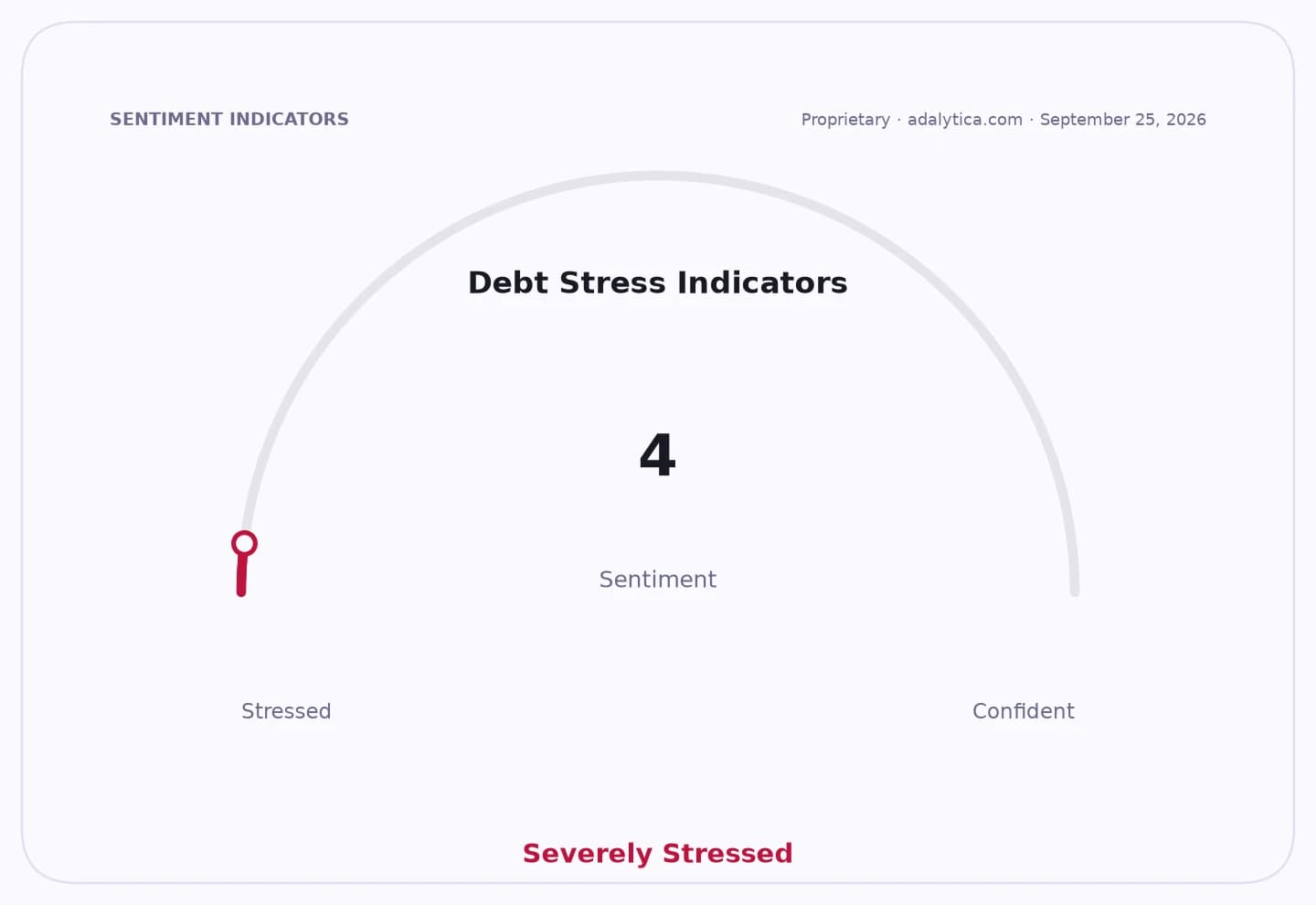
Sentiment IndicatorsⓘProprietary · adalytica.com · September 17, 2026
This is a snapshot — live sentiment, awareness and momentum for 130+ markets update continuously in the dashboard.Open AlphaPulse
That difference matters not just to consumers but to lenders and the wider financial system. Consolidation helps banks, Sofomes and online lenders preserve performance on existing accounts, while negotiated write-downs typically mean a loss on the original loan. In a high-rate environment, borrowers are especially vulnerable: Mexico’s funding benchmarks remain elevated, with the 10-year yield around 5% and the three-month rate near 3.9%, keeping the cost of revolving and unsecured credit high enough that bad borrowing decisions become expensive fast.
That is why experts say the first test is capacity to pay. If a borrower still has room in the budget and a decent payment history, consolidation can turn several high-interest balances — credit cards, payroll loans and personal loans — into one fixed payment, ideally at a lower annual rate and with more predictable terms. But the fine print matters. If the new loan’s CAT and other charges are too rich, the “simpler” structure can end up costing more over time than the original stack of debts.
Investors should see the broader lesson too. Credit quality is eventually a spread story. When households stay current, lenders keep earning interest income and losses stay contained. When they fall behind, every negotiation becomes a question of who absorbs the pain: the borrower, the lender or the intermediary. That is especially relevant for card lenders and consumer-finance names such as Capital One Financial, Synchrony Financial and American Express, which are more exposed when borrowers are forced from consolidation into restructuring. Capital One’s shares have also pulled back to about $203, just above the 200-day moving average, while Synchrony has slipped to roughly $74.88 and American Express to about $312.43, showing how quickly the market can price in credit caution when delinquency risk rises.
The long-term investor takeaway is simple: consolidation is the cleaner path when debt is still serviceable, because it preserves optionality and credit access. Reparadora is the emergency exit, not the first choice, and it should be treated that way. For households, that means using consolidation only after comparing the full borrowing cost and talking to the original lender first. For investors, it means watching consumer credit trends, because rising use of debt repair often shows up later as pressure on lender earnings, higher charge-offs and weaker loan growth. In other words, the best debt solution depends on how far the borrower has already gone — and once the damage is done, the recovery can take years.
| Entity | Gains | Losses |
|---|---|---|
| Borrowers with manageable debt | ▲Lower payments, simpler budgeting | ▼Higher costs if terms are poor |
| Borrowers in default | ▲Possible debt haircut | ▼Credit score damage, six-year mark |
| Lenders and Sofomes | ▲Retain performing loans via consolidation | ▼Take losses on negotiated write-offs |
| Consumer-finance stocks | ▲Better credit quality if consolidation succeeds | ▼Higher charge-offs if repair use rises |