DeepSeek has pushed the AI price war into a new phase, releasing two free, open-source models that it says can match OpenAI’s GPT-5 and Google’s Gemini-3 Pro on reasoning benchmarks while cutting inference costs by about half.
DeepSeek releases open-source V3.2 AI models

That matters because the biggest battleground in artificial intelligence is shifting from who can build the most powerful model to who can deliver that power at the lowest cost. If DeepSeek’s claims hold up, the model maker is not just another Chinese competitor — it is a direct threat to the economics of the global AI stack, where margins have been supported by expensive training runs, high compute demand and premium pricing for frontier systems.
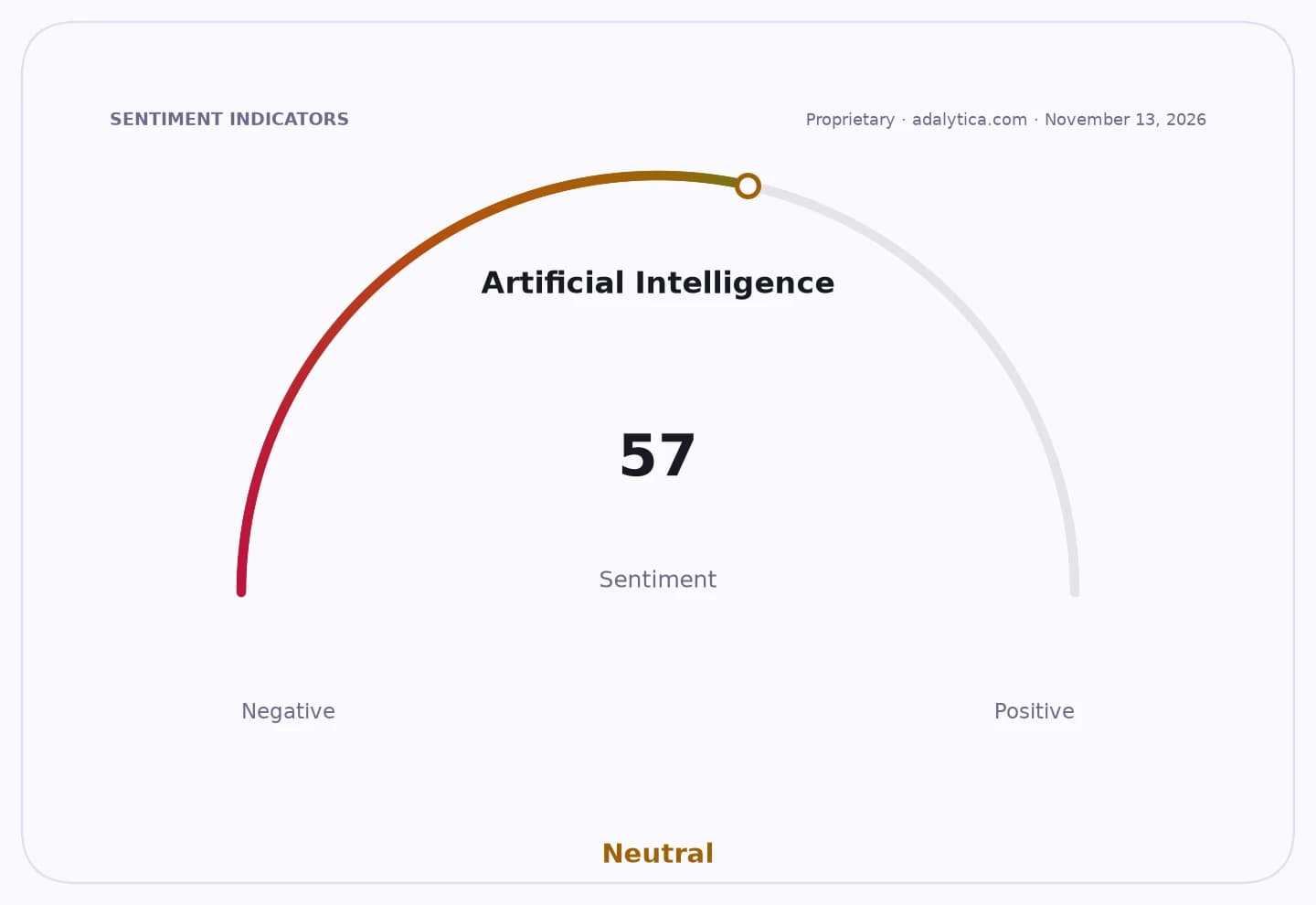
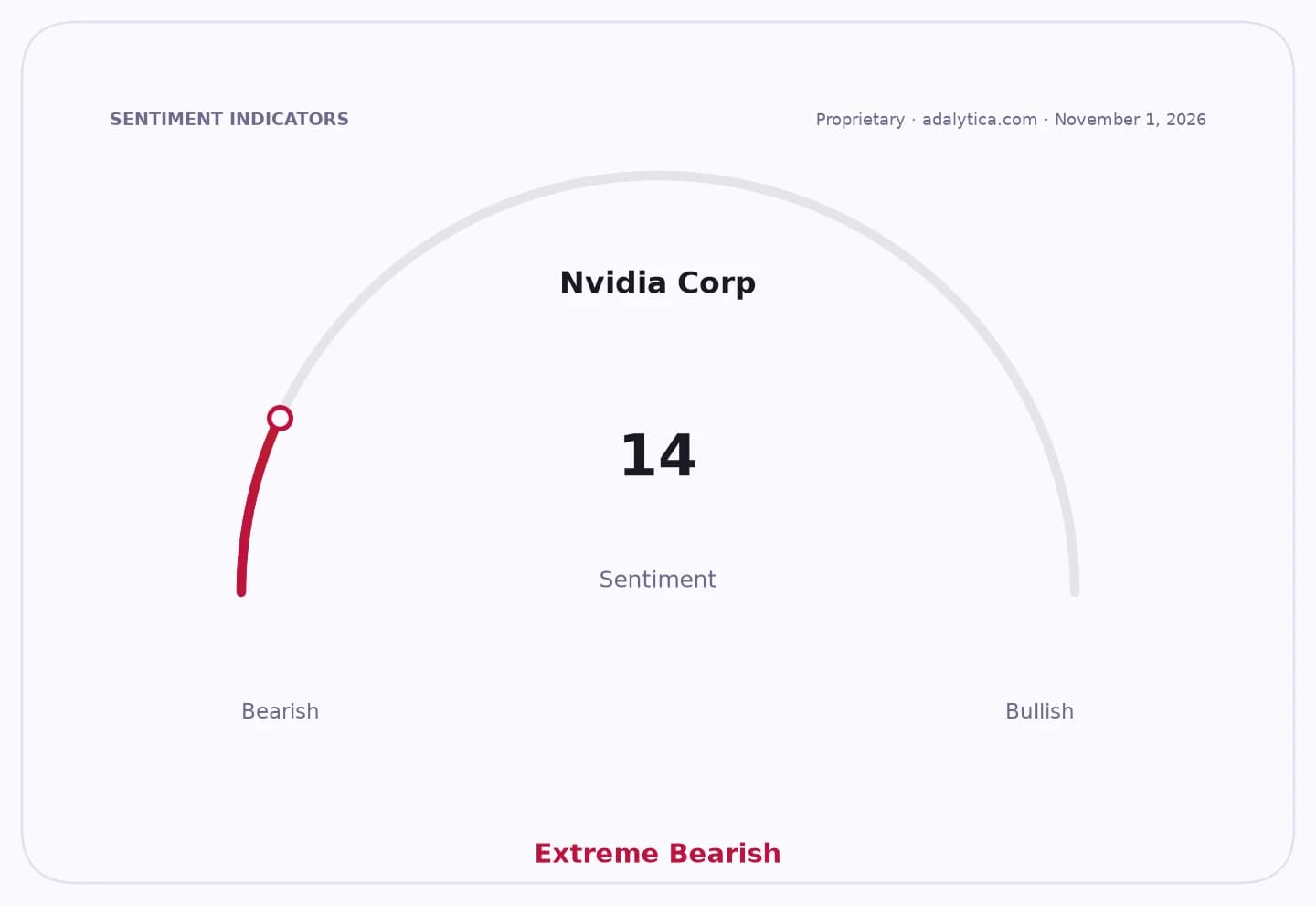
Sentiment Indicators
The new DeepSeek-V3.2 and V3.2-Speciale models are being released in open-source form, which is crucial for adoption. Developers and enterprises can inspect, adapt and deploy them without the licensing friction that often comes with closed systems. DeepSeek says the standard model matches GPT-5 in reasoning tests, while the Speciale version reaches Gemini-3 Pro-like performance and stands out in math and coding competitions. That combination of capability and accessibility is exactly what can pressure incumbents to keep cutting prices, bundling more features or absorbing lower margins to defend market share.
The most important technical advance is DeepSeek Sparse Attention, or DSA. The company says the architecture lets a 671 billion-parameter model activate only 37 billion parameters per token, extending context windows to 128,000 tokens while reducing inference costs by roughly 50%. In plain terms, DeepSeek is trying to make frontier AI cheaper to run at scale — a development that, if replicated broadly, could accelerate usage but also compress the economics of the companies selling AI access.
That is why investors should care. Nvidia has been one of the clearest beneficiaries of the AI buildout because every jump in model complexity has meant more demand for accelerators, networking gear and data-center infrastructure. But a model that can do more with less compute is a reminder that AI spending does not flow in a straight line forever. The market is still betting on relentless capex, yet lower-cost architectures can change who captures the value: the winners may increasingly be the infrastructure providers with the lowest-cost scale and the broadest deployment base, while software companies reliant on premium model pricing could see more competition.
The open-source angle also has geopolitical weight. China keeps narrowing the gap with U.S. AI leaders by focusing on efficiency, agentic workflows and lower-cost deployment rather than simply brute-force scale. DeepSeek says it spent more than 10% of pre-training on reinforcement learning and built thousands of synthetic tasks and environments to improve autonomous agent performance. That suggests the next wave of competition will be about practical usefulness, not just benchmark bragging rights.
For investors, the takeaway is that DeepSeek’s launch reinforces the case for owning the picks-and-shovels of AI rather than assuming model economics will remain inflated. Hyperscalers, chipmakers and data-center supply chains can still benefit from rising overall adoption, but the market should not underestimate the margin pressure on closed-model vendors if open-source systems keep closing the performance gap.
If DeepSeek’s new models are real at scale, the AI arms race is moving from scarcity to abundance — and that is often when the most attractive opportunities appear in the infrastructure layer, not the headline-grabbing app layer.
| Entity | Gains | Losses |
|---|---|---|
| DeepSeek | ▲Adoption and developer mindshare | ▼— |
| OpenAI | ▲— | ▼Pricing power |
| Google DeepMind | ▲— | ▼Benchmark lead |
| Nvidia and AI infrastructure | ▲More usage overall | ▼Potentially lower model compute intensity |