OpenAI is moving to build its first in-house AI chip, a step that could weaken its reliance on Nvidia and give the ChatGPT maker more leverage over the most tightly constrained part of the AI supply chain.
OpenAI Plans First In-House AI Chip
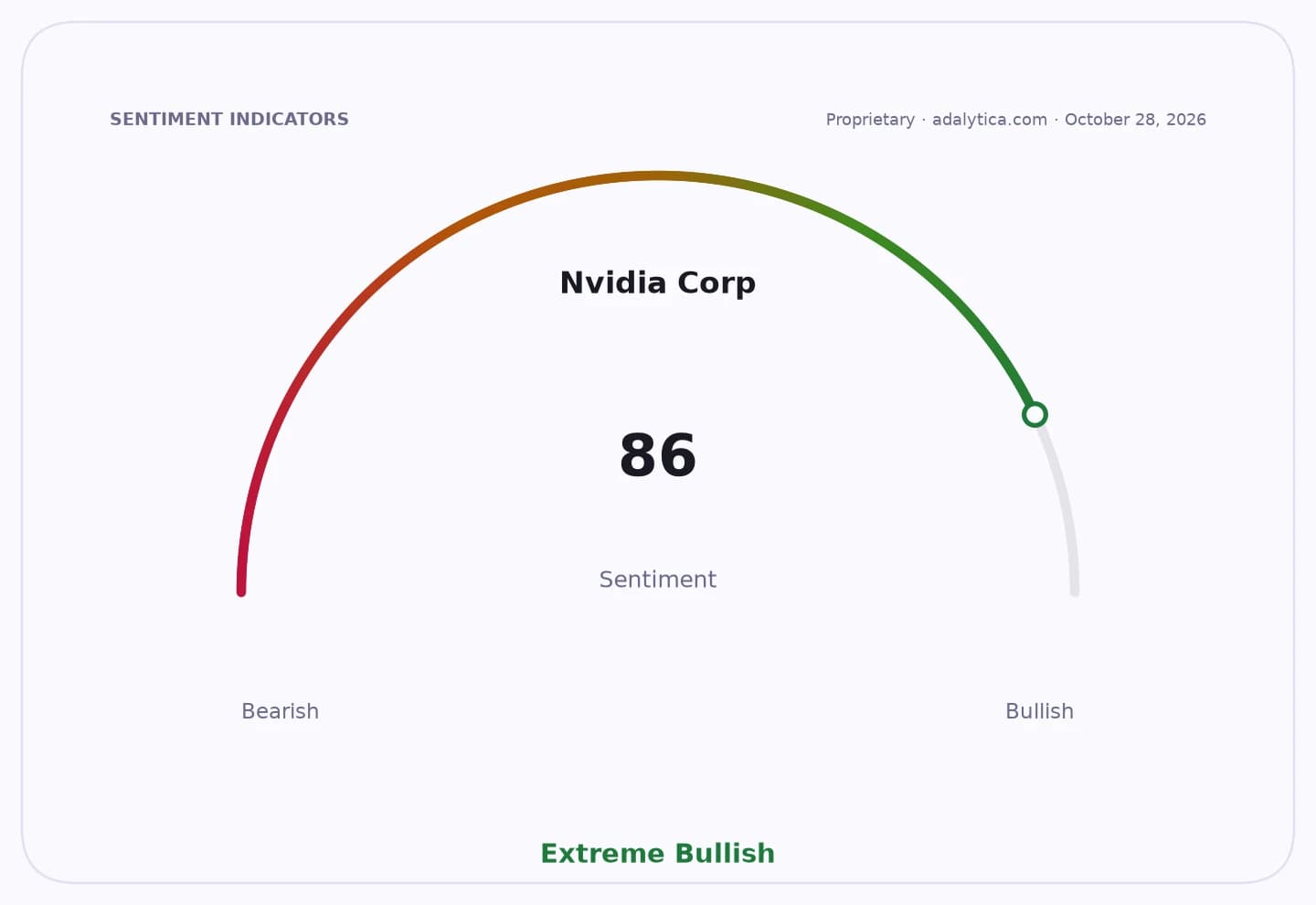
Nvidia Corp
The company is finalizing the design for its first silicon and plans to send it to Taiwan Semiconductor Manufacturing Co for fabrication in the coming months, according to people familiar with the matter cited by Reuters. The tape-out would put OpenAI on track for test chips later this year and, if development stays on schedule, mass production in 2026.
Sentiment Indicators
That matters because Nvidia still controls roughly 80% of the AI chip market and has become the default supplier for the data centers powering generative AI. OpenAI’s push is part of a broader industry shift as hyperscalers and model developers try to reduce exposure to a single vendor, manage soaring infrastructure costs and gain more negotiating power in chip purchases.
For investors, the move reinforces the risk that Nvidia’s customer base will gradually diversify its hardware stack even as demand for AI compute remains intense. Microsoft has said it plans to spend $80 billion on AI infrastructure in 2025, while Meta has committed $60 billion over the next year, showing that spending is still expanding even as buyers look for alternatives.
OpenAI’s chip effort is still early and limited in scope. The first version is expected to be used mainly for running models rather than training them, and the company would need to recruit hundreds more engineers to build anything on the scale of Google or Amazon’s internal chip programs.
The design work is being led by Richard Ho’s team, which has grown to about 40 people and is working with Broadcom. The chip is being designed on TSMC’s 3-nanometer process and uses architecture common in AI accelerators, including a systolic array and high-bandwidth memory.
The development lands as the AI trade faces more scrutiny over the pace and economics of infrastructure spending. Nvidia shares were last down 4.4% to $204.64 in recent trading, while TSMC fell 3.6% to $406.13; both stocks have been volatile as investors weigh extraordinary AI demand against the prospect of customer self-sufficiency. OpenAI’s next milestone is the tape-out, which will show whether it can turn an ambitious internal project into a chip that actually works.
| Entity | Gains | Losses |
|---|---|---|
| OpenAI | ▲More chip leverage | ▼Nvidia dependence |
| Nvidia | ▲Continued AI demand | ▼Customer self-sufficiency |
| TSMC | ▲New fabrication business | ▼No major downside |
| Broadcom | ▲Design partnership revenue | ▼Less strategic control |