A renewed push by militaries to bake artificial intelligence into early-warning systems and battlefield planning is creating a new procurement theme for the U.S. defense primes, with Lockheed Martin, RTX and Northrop Grumman positioned to benefit if Washington turns lessons from past wars into funded programs.
Defense primes and AI early-warning procurement

The strategic logic is clear: modern conflicts are exposing the limits of legacy command-and-control networks, while rising tensions in Ukraine, the Middle East and the Western Pacific are pushing defense ministries to spend more on detection, decision support and faster kill chains. That makes AI-enabled sensing and early warning more than a technology upgrade. It is a budget priority that can lift orders across missiles, sensors, integrated air and missile defense, and command systems.

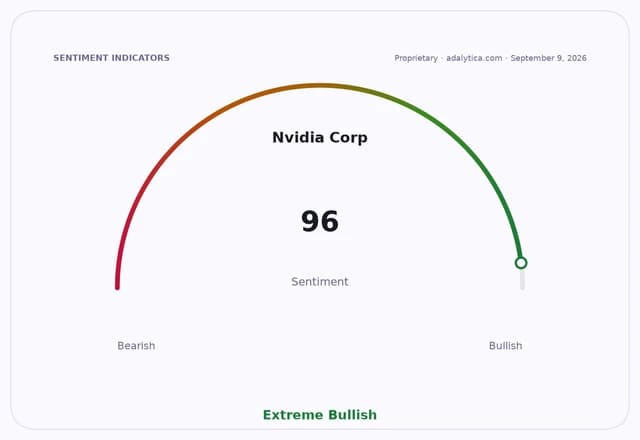
The market has started to reflect that shift. Defense names remain among the stronger parts of the broader equity market even as the S&P 500 has slumped into “Extreme Fear” in Adalytica’s trade-signal gauge. AI-linked names still attract heavy investor interest, with NVIDIA’s earnings sentiment in “Extreme Greed,” underscoring how quickly capital is rotating toward anything tied to automation and compute. In defense, the trade is not about consumer AI hype. It is about whether militaries will pay up for software that shortens response times and improves survivability.
That makes the big question for investors whether AI becomes a bolt-on feature or a core capability embedded in the next generation of U.S. and allied platforms. Northrop has been one of the clearest beneficiaries of demand for missile defense and sensing systems; RTX has exposure through radars, interceptors and electronic warfare; Lockheed carries the largest footprint in integrated air and missile defense and command systems. All three can capture more content per program if AI shifts from experimental tools to operational requirements.
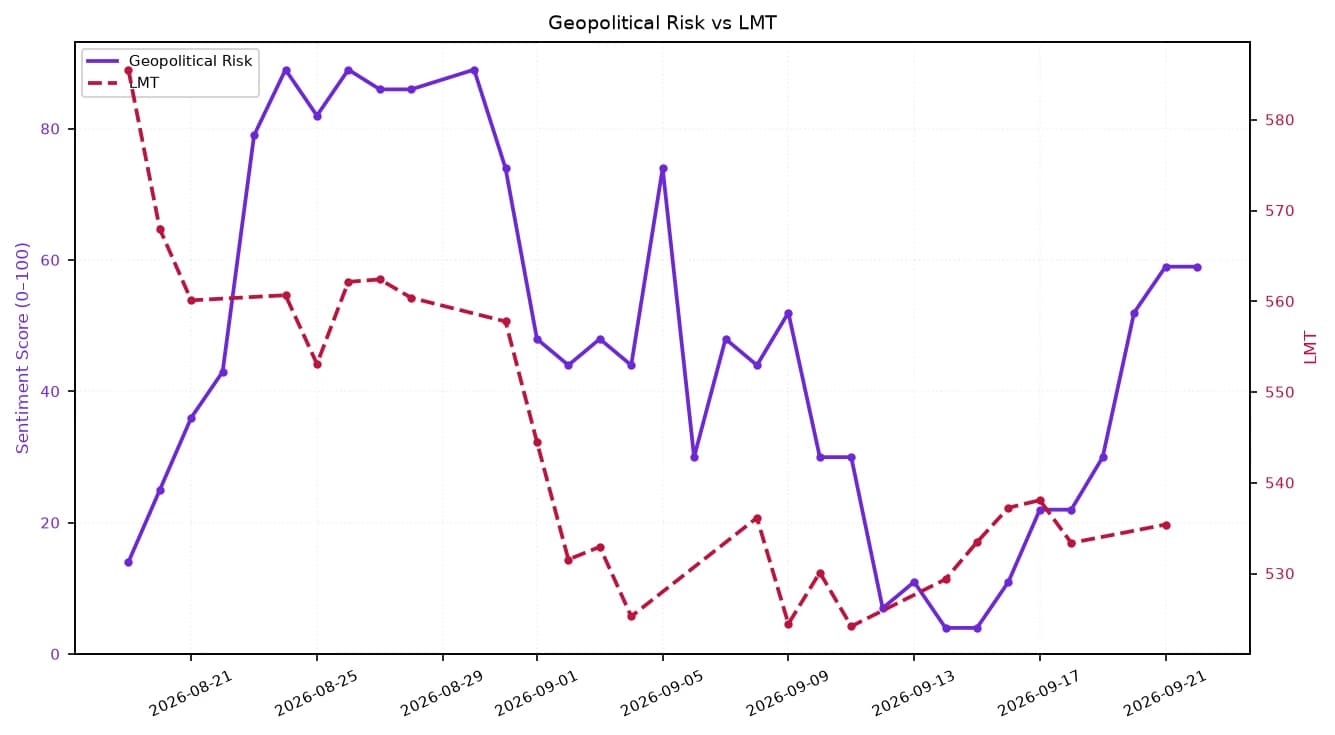
Artificial Intelligence vs LMTadalytica.com
Explore this data interactively — full history, time series and cross-market comparisons.Open AlphaPulse
Price action suggests the market is already pricing in some of that opportunity, but also some caution. Lockheed shares have retreated to $536.15 from above $668 earlier this year, leaving the stock just under its 50-day moving average and with a weak RSI reading near 20, a conventional technical indicator that points to severe oversold conditions. RTX has also pulled back sharply to $198.81 from an August peak near $225, while Northrop has fallen to $518.58 from above $760 in March and now trades far below both its 50-day and 200-day moving averages. The move lower has more to do with valuation reset and program timing than with any collapse in strategic demand.
The earnings backdrop remains mixed. Defense contractors continue to benefit from elevated geopolitical risk and the prospect of more U.S. and allied spending, but the pace of conversion from policy to contracts is uneven. Lockheed’s latest filing said the FY2027 proposal is still subject to congressional appropriation, meaning headline budget increases do not automatically turn into near-term orders. Northrop’s filing pointed to the impact of ongoing conflicts and higher global tensions on security requirements, but its recent price weakness shows investors are demanding evidence that that demand translates into margin and cash-flow growth.
For the bull case, AI in defense opens a structurally larger market for the primes: software, sensor fusion, autonomous targeting support and early warning can all be layered onto existing platforms, improving margins if implementation is disciplined. For the bear case, the opportunity can be slow-moving, politically constrained and vulnerable to procurement delays, while expensive development programs can pressure returns before the revenue arrives.
The lesson for investors is that the next defense cycle may be defined less by platform counts than by who controls the data and decision layer. If militaries decide that the next war will be won by earlier warning and faster interpretation rather than just more hardware, the winners will be the contractors that can combine AI, sensors and integration at scale.
| Entity | Gains | Losses |
|---|---|---|
| Lockheed Martin | ▲AI command systems demand | ▼Budget delay risk |
| RTX | ▲Radar and interceptor orders | ▼Margin pressure from timing |
| Northrop Grumman | ▲Missile defense content | ▼Valuation reset risk |
| Pentagon and allies | ▲Faster warning and response | ▼Higher tech procurement costs |