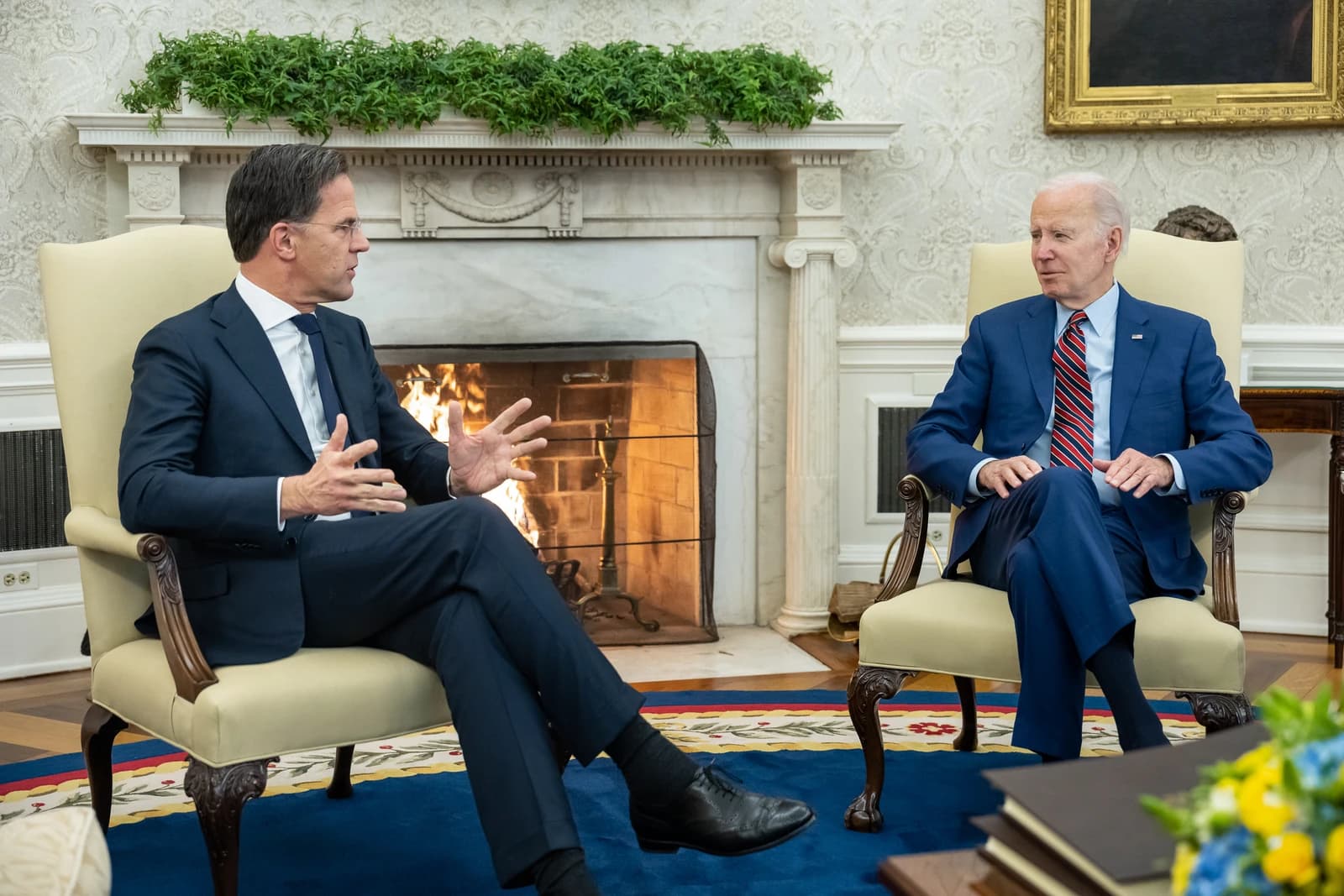
Europe’s defense buildout is turning from a political slogan into a sustained budget shift, and that is increasingly visible in the shares of the industry’s biggest suppliers. As leaders gather around NATO’s spending targets, the market is treating higher military outlays less as a one-off response to Ukraine and more as a structural change that can support procurement for years.
Defense spending lifts Lockheed, Northrop, RTX
That matters economically because defense spending is no longer sitting outside the fiscal debate. Ukraine has already signaled record-high defense spending for 2027, while Poland and Australia are committing to larger security budgets and Germany, France and the Czech Republic are being pushed to reconcile military needs with tighter public finances. The result is a broad reallocation of government resources toward weapons, air defense, munitions, cyber and readiness, with knock-on effects for industrial policy, labor demand and deficit dynamics.
For investors, the clearest transmission channel is the aerospace and defense complex. Lockheed Martin, Northrop Grumman and RTX remain the most direct listed beneficiaries of a longer defense cycle, though the recent price action shows how quickly expectations can swing. Lockheed Martin rose from $488.62 in late June to $668.17 on March 2 before sliding back to $526.89 on Sept. 22; Northrop Grumman climbed to $761.19 in early March before retreating to $518.22; RTX peaked at $225.49 in mid-August and has since fallen to $191.31. Those reversals underscore a market that has already discounted a lot of spending optimism, even as budgets keep rising.
The fundamental case is still intact. In filings, Lockheed said the U.S. government accounted for 70% of sales in the first half of 2026, while Northrop highlighted a 44% increase in the FY2027 defense budget request versus FY2026 enacted levels. RTX also pointed to a full-year funding package for most federal agencies and a proposed FY2027 defense budget of $1.5 trillion. In other words, the revenue base is tied to public spending decisions that are becoming larger, more explicit and more politically difficult to unwind.
The bear case is valuation and execution risk. Defense names have been volatile because the market is trying to distinguish between durable multi-year demand and temporary headline momentum. The recent pullbacks suggest investors are wary of crowded positioning, schedule slippage and the possibility that budget increases may be offset by inflation, industrial bottlenecks or slower contract awards. Even with geopolitical urgency, defense procurement tends to move in uneven bursts rather than in a straight line.
The currency backdrop adds another layer. Adalytica’s U.S. dollar trade signals show extreme greed and extreme fear in awareness terms, a sign of heightened positioning sensitivity as investors weigh whether stronger U.S. fiscal and defense spending can keep supporting the dollar while global governments divert more capital into security. That can help U.S.-based contractors in nominal terms, but it also raises costs for international buyers and complicates allied procurement.
The broader narrative is that defense is becoming a permanent line item in economic planning, not an emergency add-on. For governments, that means harder trade-offs with welfare, infrastructure and tax policy. For investors, it means the defense sector remains one of the few areas where budget visibility is improving even as overall macro visibility is not. The next catalysts are likely to come from NATO fiscal pledges, FY2027 appropriations, and whether contractors can turn record demand into cleaner execution and margin stability.
| Entity | Gains | Losses |
|---|---|---|
| Defense contractors | ▲Larger multi-year orders | ▼Margin pressure from execution |
| NATO governments | ▲Greater deterrence | ▼Tighter fiscal room |
| Taxpayers | ▲Potential security gains | ▼Higher budget burden |
| Non-defense spending | ▲Less immediate support | ▼Crowded out by rearmament |