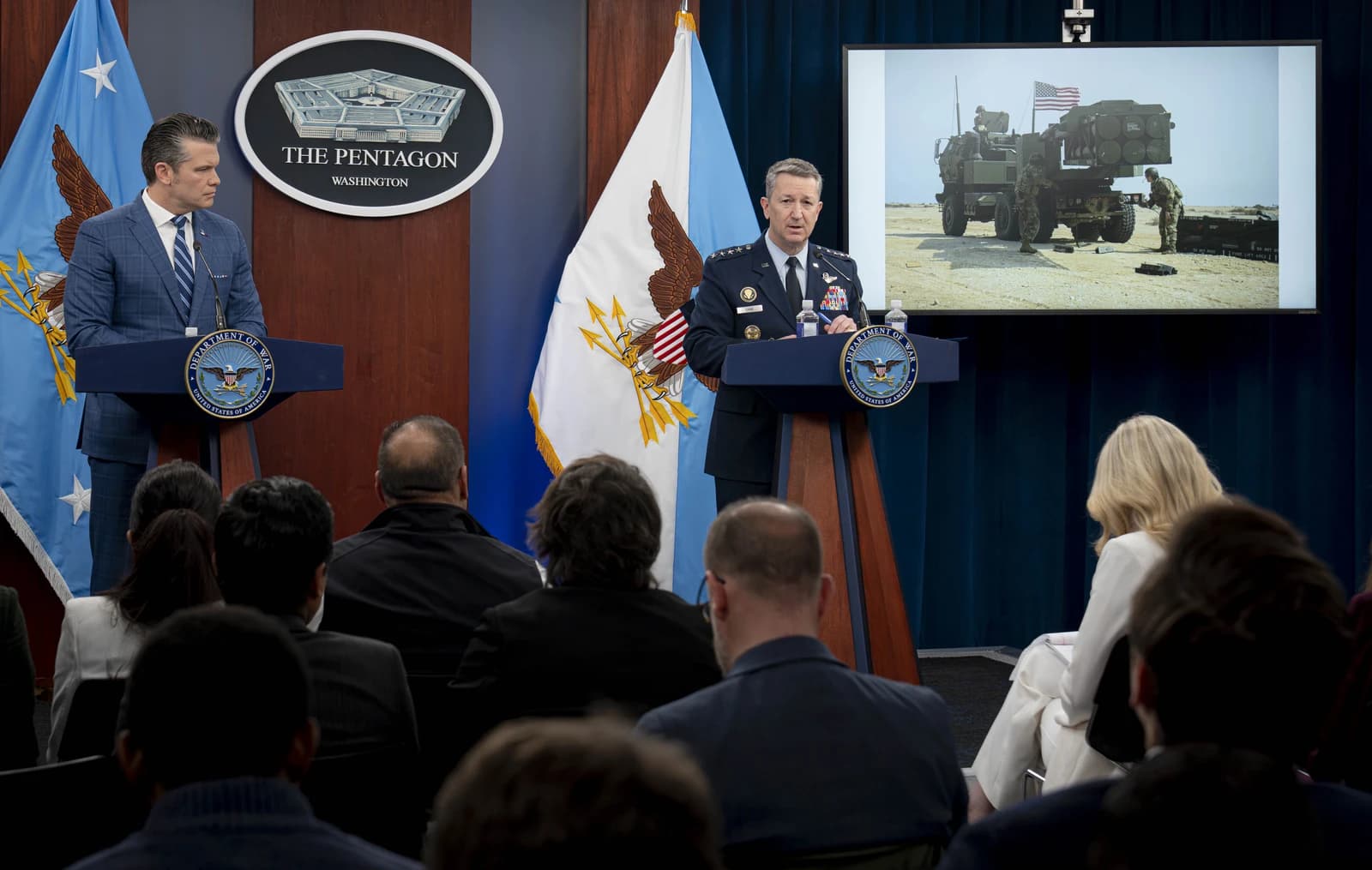
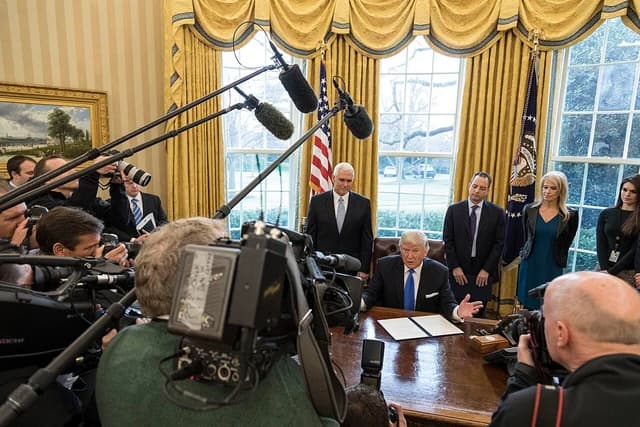
Donald Trump said the U.S. is unlikely to get pulled into a new war, but his remarks on Truth Social still mattered for investors because they reinforce a simple market truth: geopolitical tension is keeping defense spending, weapons production and military stocks in the spotlight.
Defense stocks fall as Trump comments on war risk

That matters economically because war risk is no longer an abstract headline for the defense industry. It shapes Pentagon budgeting, munitions demand, supply-chain investment and the valuation of contractors that benefit when governments rebuild inventories. Trump said the United States has “almost unlimited” supplies of medium- and high-end ammunition, underscoring just how central stockpiles and production capacity have become in any discussion of readiness and deterrence.
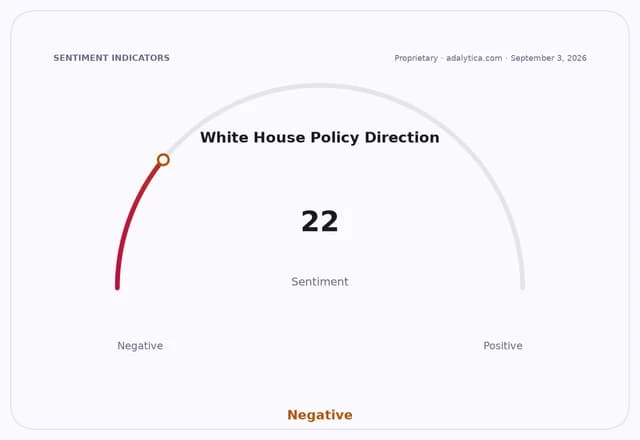
Sentiment IndicatorsⓘProprietary · adalytica.com · September 3, 2026
This is a snapshot — live sentiment, awareness and momentum for 130+ markets update continuously in the dashboard.Open AlphaPulse
The clearest market read-through is in the defense complex. The SPDR S&P Aerospace & Defense ETF, tracked here by XAR, has been volatile, but the long-term trend remains strong even after a sharp pullback from recent highs. XAR was last at 253.93, below its 50-day moving average of 273.28, while the RSI reading of 11.6 shows the fund is deeply oversold by conventional technical measures. That kind of setup often reflects fear more than fundamentals, and for long-term investors it can create opportunities if earnings and order books keep growing.
Individual contractors tell a similar story. Lockheed Martin slipped to 532.95 from levels above 600 in August, while RTX ended at 202.13 after running as high as 225.49 last month. Both stocks are still tied to the same core investment case: governments are spending more on missiles, air defense, sensors and replenishment, and those budgets tend to outlast any single flare-up in the Middle East. For patient investors, the bigger question is not whether headlines move these names day to day, but whether defense spending remains durable over the next 3 to 10 years. So far, the answer looks like yes.
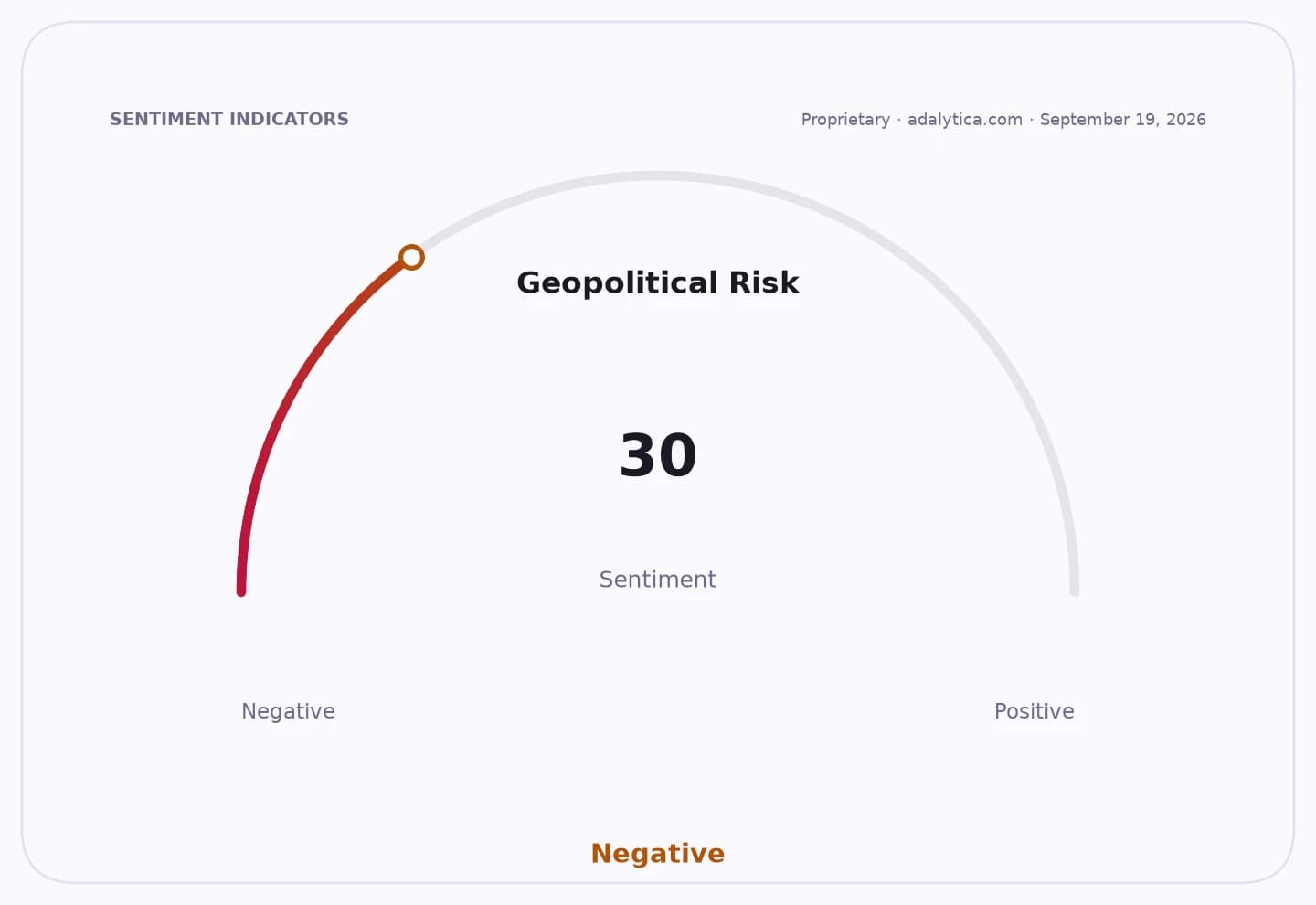
Geopolitical Risk — 30-day sentimentadalytica.com
Explore this data interactively — full history, time series and cross-market comparisons.Open AlphaPulse
There is also a wider macro angle. Adalytica’s Global Stability Sentiment remains neutral at 44, but its 30-day drop shows how quickly investors can move from complacency to caution when geopolitical risk rises. At the same time, Adalytica’s S&P 500 Trade Signals show extreme fear, suggesting markets are still discounting uncertainty rather than pricing in a clean resolution. That is exactly the sort of backdrop that tends to support defense spending, even if it does not always produce an immediate burst in share prices.
For investors, the takeaway is straightforward: Trump’s comments do not point to an imminent war, but they do remind the market that national security spending remains a powerful secular theme. If you want exposure, defense ETFs and the leading contractors are still worth watching, especially on weakness. In a portfolio built for the long haul, this is one of those areas where patience and diversification can pay off.
| Entity | Gains | Losses |
|---|---|---|
| Defense contractors | ▲Replenishment demand | ▼Peace dividend hopes |
| Defense ETF holders | ▲Long-term spending trend | ▼Short-term momentum traders |
| U.S. military | ▲Ammunition readiness | ▼Budget pressure |
| Geopolitical risk watchers | ▲More urgency | ▼Lower confidence |